Kaushik Tadvi (Kohak)
One prevalent theme I have noticed in the classrooms when it comes to Tribal, Adivasi, and oppressed caste studies is that marginalized students engage with these topics differently than students from upper-caste and upper-class backgrounds. Most of the former engage with these topics intimately, with lived experiences, and the latter, with academic interest. This interest comes from academic reading of papers, essays, and articles. In my essay, “Who gets to speak in the classroom?”, shrinking spaces for Tribal, Adivasi, and Dalit students in the classroom often keeps them out of classroom discussions. This prevents them from speaking up about their lived experiences or giving academic inputs. Lived experiences, as a pedagogical tool, can make one realize the harsh reality of caste and how it affects everyone. However, upper-caste and upper-class students are unwilling to give space or let oppressed students in the classroom have any kind of pedagogical tools to legitimize their space in academia.
This is academic untouchability. It invisibilises lived experiences and/or invalidates academic input from Dalit, Adivasi, and Bahujan students. Although there is nothing wrong with Savarnas learning from literature and media produced by Dalit, Adivasi, and Bahujan scholars, there is a physical and experiential distance between our scholars and upper-caste and upper-class students. In classrooms, these privileged students keep Dalit, Bahujan, and Adivasi students as far as possible, academically and socially. Therefore, their lived experiences (and sometimes even academic inputs) are thrown out of the window in these classrooms. This academic untouchability includes not critically engaging with professors from marginalized backgrounds. There may be genuine and valid criticisms against such professors’ academic practices, but these generally devolve into humiliation and casteist slurs. Aggressive and perverse attacks like “I will beat that professor and piss on them”(as a Savarna student was heard saying) become commonplace. The same students will go miles to defend a Sanghi professor by saying, “They are ideologically problematic, but a good teacher”. Such rationality is not extended to professors from marginal backgrounds. While these upper-caste and upper-class students perform a woke anti-caste stance, their perverted and closeted casteism often surfaces in such engagements.
To elaborate further on this performativism, I would like to mention a few additional points. Savarna upper-caste and upper-class students will academically use the Adivasi, Dalits, and other oppressed caste people and their experiences to be marked as progressive. They will even post at length about caste issues on their Instagram stories, but would fail to engage in anti-caste and Adivasi festivities, readings, and discussions. They will give a side-eye and take themselves out of these political gatherings, which give Adivasi, Dalit, and oppressed caste students a safe space and are grounded in lived experiences, approaching their issues in a multidimensional way. Their justification for not attending these gatherings is that they just prefer not to be in some social settings. Such preferences are often used to hide their socially exclusive tendencies. Usually, only the Savarna upper-caste, upper-class, and a performatively a/political bunch can make it to such social circles. Whatever mental gymnastics they perform to justify their privilege and rotten mindset are easy to see through. I often make jabs at this obviously privileged outlook, which makes them feel uncomfortable. Their casteist and racist habits are supposed to be innocent and oblivious behavioural patterns, but my attempt at pointing these things out does not sit right with them. They often complain that I keep talking about Adivasi and caste issues and cannot compartmentalize these things. However, savarna blindness does not know that for bodies like mine, caste and tribe are physical, institutional, academic, and mental, and constitute extremely embodied experiences. My outspokenness is translated into stubbornness and rudeness because we are only acceptable if we are small and timid.
I understand that classrooms are spaces for academic learning, but when it comes to caste and Adivasi issues, there should be space in these classrooms, or maybe even an experimental learning environment where Adivasi, Dalit, and oppressed caste students can have more say. In academic spaces, I expect Savarna upper-caste upper-class students to ethically and morally engage with students from marginal backgrounds. However, looking at where academia is headed in my own classrooms, I cannot even expect the bare minimum from these students.
~~~
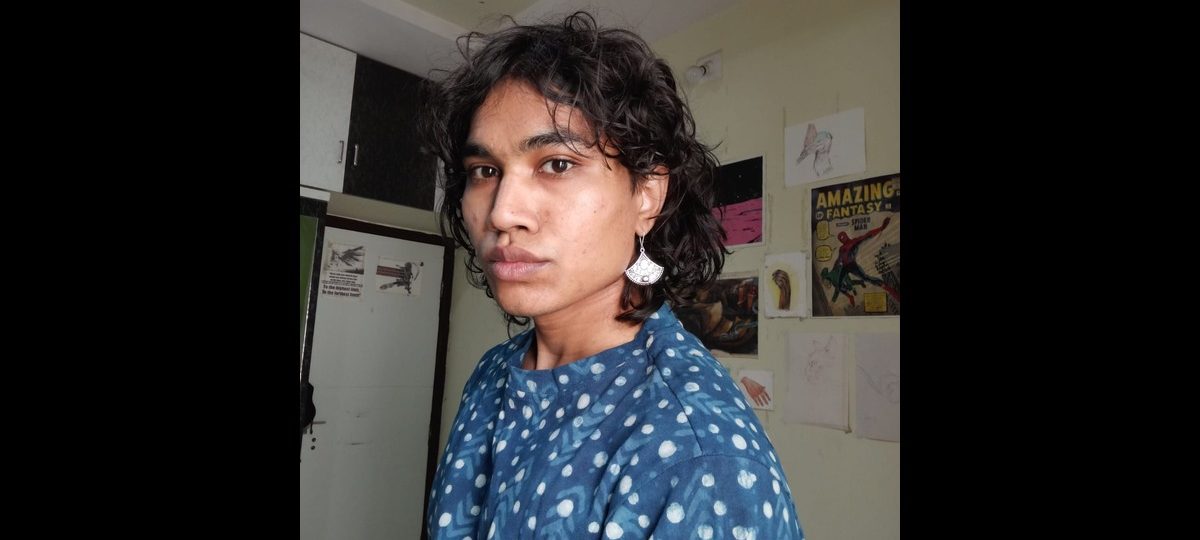
Kaushik Tadvi (Kohak) is a master’s student in Society and Culture at IIT Gandhinagar. They are a comic artist, mainly drawing from lived experiences. Their work explores experiences of being Adivasi in an urban city and engaging with caste critically. Apart from comics, they are also interested in writing critically about caste and mixing academia with art. Their work can be found on @kauushhik on Instagram.