Vikas Porika
The Supreme Court, as the apex judicial body in India, is the ultimate guardian of every citizen’s constitutional rights. It is the final arbiter of the Constitution and delivers judgments on all types of cases. The Court, comprising the Chief Justice of India and 33 other judges, functions effectively and guides the nation’s judicial system, thereby playing a key role in upholding justice and the constitutional rights of Indian citizens. The Chief Justice of India stands at the top of this integrated judicial system, serving as the face of the Constitution, justice, and democracy. The current Chief Justice, B.R. Gavai, is the 52nd CJI and, in the 79 years of Independent India, the second Dalit and first Buddhist to hold this office.
The attack on the Chief Justice of India on 6th October 2025 will be remembered as a dark day. Inside the Supreme Court, while the Chief Justice was hearing cases, a 71-year-old advocate named Rakesh Kishore attempted to throw his shoe at him. Security personnel immediately intervened and stopped him. As he was restrained, Kishore shouted, “Sanatan ka apmaan nahi sahega Hindustan” (We will not tolerate disrespect to Sanatan).
In that moment, the Chief Justice instructed the court to continue proceedings, stating, “Do not get distracted by all this. We are not distracted. These things do not affect me.” These words demonstrated his commitment, nobility, stability, judicial independence, and bravery. This was not an attack on Justice Gavai in his personal capacity. By his response, the Chief Justice showed remarkable resilience. At this critical juncture, the CJI’s composure was a radical act of resistance in contemporary times. This attack disrespects not only the marginalized sections of India but all citizens, including the Savarnas and followers of Sanatana Dharma who believe in the Constitution.
As a country of religious diversity, we should understand, admire, and respect the Constitution, which has enshrined the right to freedom of religion as a fundamental right. Instead, dominant groups often resent the Constitution because it was drafted by Dr. Ambedkar—a figure they immediately reduce to his social identity. This does not reflect genuine criticism but crude casteism. No dharma grants women the right to education; it is only the Constitution that does. Today, we have a woman from a marginalized community as our President, the first citizen of India. However, restrictions for women in selective places persist. It is the Constitution alone that upholds the rights of women as individuals who can access public spaces as equals; without it, they would remain chained to private spheres.
In my opinion, this attack on the Chief Justice occurred specifically because he comes from the Dalit community. We have seen many Chief Justices from so-called upper castes, but none faced such an attack. It is disheartening, shameful, and condemnable, especially as India celebrates 79 years of independence. It forces us to ask: would the advocate have conceived of this idea if the Chief Justice belonged to a dominant caste?
Such attacks are not new in the history of the Indian judiciary. In 1968, a man brandishing a flick-knife jumped onto the bench of Justices Mohammad Hidayatullah, C.A. Vaidialingam, and A.N. Grover. However, previous attacks did not come from within the legal fraternity. The legal community is aware that the Chief Justice is the supreme authority within the judicial system; yet, this advocate acted, flaunting his jingoism. The question is, are they unaware of the unequal treatment inherent in Sanatana Dharma against marginalized sections? They are aware, but they choose to promote Sanatana openly for political benefit.
The advocate has responded to various media channels, unapologetically defending his actions in the Supreme Court. When people in constitutional positions prioritize dharma over the Constitution, such attacks become common, and their actions indirectly encourage more in the future. A leader should prepare for the future and work in the present, but unfortunately, our leaders are preparing a worse future for the majority of India. Now is the time for leaders to promote the Constitution over various dharmas. I understand that following a dharma is a personal choice, but our personal choices should lead toward an egalitarian society. When our dharma holds us back, we must be critical, challenge it, and follow only those principles that lead to an egalitarian and rational society.
The actions of 71-year-old Advocate Rakesh Kishore attempted to undermine the judicial system, but the CJI’s response profoundly reinforced public trust and respect for it. His composure and calmness during the incident serve as an inspiration to all Indian citizens.
Rakesh Kishore has been suspended from the Bar Council of India and served with a show-cause notice demanding an explanation. If necessary, he should be charged with sedition rather than just being suspended. Such acts are dangerous to the country and its Constitution.
From my personal observations on social media, friends who follow Sanatana and belong to dominant groups are mocking this attack against a “Quotawala.” This is not just an attack; it reveals a hatred for people from Shudra communities—SCs, STs, and OBCs—who reach higher institutions in India. These same friends from dominant groups fail to recognize their caste privilege. If reading and writing are considered merit, what about the productive work done by productive communities? Producing food is not considered merit. Fishing, hunting, pottery, laundry, barbering, cleaning toilets, and collecting garbage—what is this work considered? Dominant groups never see these as merit. If this work stopped, what would be the use of so-called “merit”?
Historically, Ekalavya’s right thumb was demanded as Guru Dakshina for his perfection in archery. In the story from the Treta Yuga, the meditating Shambuka was ruthlessly beheaded for learning the Vedas. In another instance, Shurpanakha was humiliated by having her ears and nose chopped off for proposing to Rama. Today, the actions of Advocate Rakesh Kishore showcase the same hatred towards Shudra communities who are reaching greater heights in Indian institutions because of the Constitution. This also symbolizes the systemic violence against those from Shudra communities who dare to cross boundaries set by dominant groups by reading, writing, and fighting.
Dr. B.R. Ambedkar said, “Caste is not a physical object like a wall of bricks or a line of barbed wire… Caste is a notion; it is a state of the mind.” Today, caste has changed. We have modern forms of untouchability. We can see caste in our classrooms, when we search for rooms in urban spaces, in our food choices, and in how we eat. Ambedkarism is the only methodology we can use to deconstruct the concept of caste and ultimately eliminate it.
The Attack on Chief Justice of India Is an Attack on All of Us — Including Savarna Hindus, Unapologetic Sanatanis, and individuals who Believe in the Constitution.
It is the responsibility of every Indian citizen to protect the Constitution and respect the judicial system. Seeing such attacks on the CJI is disappointing, but we must not act against the Constitution in our personal spaces, responsible posts, or any limits. Citizens, students, teachers, lawyers, actors, and political leaders—let us all open our eyes and stand together to protect the Constitution and the judicial system. Only by standing together can we save our country’s democracy and resist attacks on the Constitution.
~~~
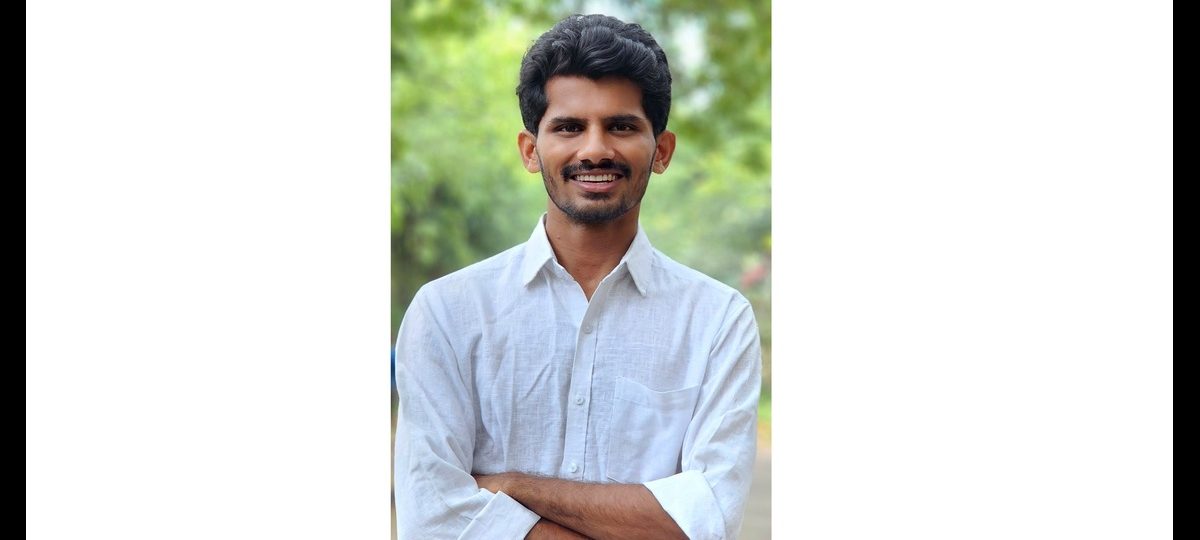
Vikas Porika is a first-generation learner from the Lambadi community, currently pursuing a Master’s in Spanish language and literature at The English and Foreign Languages University (EFLU), Hyderabad.