Akhilesh Kumar
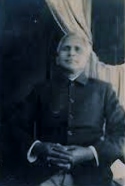
On the 19th Mahaparinirvan Diwas of Manyawar Saheb Kanshi Ram, we pay tribute to a visionary leader. He was a revolutionary leader who dedicated his entire life to awakening the deprived sections of society, those who have long been denied their rightful place in the nation’s social, economic, and political fabric. Saheb Kanshi Ram was born on 15th March 1934 in Ropar district of Punjab, in a Ramdasia Sikh family belonging to a Dalit community. Once he dedicated himself to the mission of social emancipation, he never turned back. He renounced family life and material comfort, taking an oath to work solely for the liberation of the oppressed sections of this country. His resolve was unbreakable, inspiring countless individuals to join the mission. Through his relentless efforts, he ignited a spark of self-respect and dignity among the marginalized. His life became a symbol of sacrifice, showing that true leadership is rooted in service to the downtrodden. Saheb Kanshi Ram’s legacy continues to guide those who strive for equality and justice. His vision remains a beacon for future generations seeking to dismantle systemic oppression.
Building a Movement: From Awareness to Organization
Saheb Kanshi Ram understood that awakening people’s consciousness was only the first step; the next was to organize that awakening into a structured movement. In 1978, he founded “The All India Backward and Minority Communities Employees Federation” (BAMCEF) to mobilize educated employees from marginalized sections. BAMCEF became the intellectual foundation for a broader struggle for social change. In 1981, he established the Dalit Shoshit Samaj Sangharsh Samiti (DS4) to take this mission to the masses. And finally, in 1984, he founded the Bahujan Samaj Party (BSP)—a cadre-based, Ambedkarite ideological party that became the political voice of the oppressed. Through these organizations, Saheb Kanshi Ram created a movement that gave political identity, representation, and confidence to those who had been historically denied them. It was through his farsighted vision and tireless efforts that Behan Kumari Mayawati became the Chief Minister of Uttar Pradesh—the most populous state of India. This historic milestone symbolized the political rise and empowerment of the oppressed. His strategic foresight ensured that these organizations worked in tandem to empower communities. By fostering unity among diverse marginalized groups, he built a robust platform for collective action. Saheb Kanshi Ram’s efforts laid the groundwork for a political revolution that challenged entrenched power structures. His organizational genius continues to inspire movements for justice across India. The success of BSP under his guidance demonstrated the power of collective will in reshaping society.
Empowering Independent Leadership
In a political landscape where dominant parties only treated the oppressed as vote banks, Saheb Kanshi Ram provided independent leadership, not dependent leadership. He believed that true empowerment begins when the oppressed speak for themselves. He often said that he wanted to create leaders among the oppressed. His mission was to give voice to those who had been systematically silenced and to ensure that the politics of India would reflect the faces, dreams, and realities of the marginalized who had long remained invisible. Saheb Kanshi Ram’s approach was revolutionary in its insistence on self-reliance and autonomy. He trained countless individuals to take up leadership roles, fostering a sense of ownership in the movement. His vision empowered communities to demand their rights. By creating a cadre of dedicated leaders, he ensured the sustainability of his mission. His legacy of independent leadership continues to inspire marginalized groups to assert their agency.
Vision for Social Transformation
Saheb Kanshi Ram’s vision went far beyond the idea of temporary justice or symbolic inclusion. He called for a complete social transformation—a restructuring of society. As he powerfully stated: “We don’t want social justice, we want social transformation. Social justice depends on the person in power. Suppose at one time, a good leader comes to power and people get social justice and are happy, but when a bad leader comes to power, it turns into injustice again. So, we want a whole social transformation.”
For Saheb Kanshi Ram, justice that depended on rulers or individuals was fragile. Transformation meant creating a system that guaranteed equality, dignity, and representation for all, regardless of who governed. His vision sought to dismantle the hierarchical structures that perpetuated inequality for centuries. He emphasized that true change required systemic reforms that empowered the oppressed permanently. Saheb Kanshi Ram’s ideas challenged the status quo, urging society to rethink its foundations. His call for transformation inspired millions to envision a just and equitable India. His legacy continues to fuel movements that demand structural change over superficial reforms.
Political Power as the Key to Liberation
Deeply influenced by Baba Saheb Ambedkar’s vision, Saheb Kanshi Ram believed that political power is the master key to unlock social and economic progress. He emphasized: “Until we are successful in politics and do not have power in our hands, the social and economic transformation is not possible. Political power is the key to success.”
He viewed political power not as an end in itself, but as a tool to achieve social and economic equality. His mission was clear—to make the oppressed sections of society the rulers of this country. Saheb Kanshi Ram’s focus on political empowerment inspired the oppressed communities to participate actively in governance. He believed that without political authority, the oppressed would remain at the mercy of others. His efforts gave marginalized groups a platform to influence policies that affected their lives. His vision continues to inspire political movements that prioritize the upliftment of the downtrodden. By emphasizing political power, he paved the way for a more inclusive democracy.
Addressing India’s Unique Social Reality
Saheb Kanshi Ram had a deep understanding of Indian society. He critically examined other ideologies such as Marxism, Socialism, and Communism, arguing that they failed to address India’s unique social structure built upon caste. He said: “Our intellectuals often think that the solution to all our problems is in Marxism, Socialism, and Communism. I strongly believe that in a country where Manuvad is present, no other ism can become successful. The reason being, no other ism is ready to accept the reality of caste.”
For Saheb Kanshi Ram, the root of inequality in India was not merely economic, but social and cultural. Therefore, no ideology could succeed here without confronting the question of caste. His analysis highlighted the limitations of imported ideologies in addressing India’s complex social fabric. Saheb Kanshi Ram lived by his mission. He travelled thousands of kilometres on a bicycle, reaching the remotest corners of India to awaken the oppressed. When others travelled in cars, he travelled on a cycle—but he carried with him the strength of conviction and the dream of liberation. He once took an oath that he would not return home until the oppressed became rulers of this country. His life was one of selfless service, unwavering faith, and extraordinary courage. After Baba Saheb Ambedkar, it was Manyawar Saheb Kanshi Ram who truly carried forward the caravan of social revolution. He revived the spirit of the Ambedkarite-Phule movement. He gave the oppressed sections of India something they had long been denied—a voice, a vision, and a vehicle of empowerment. Through his work, he made millions realize that political participation is not a privilege but a right; not a favor, but a necessity for self-respect. His sacrifices inspired a generation to take up the mantle of social change. Saheb Kanshi Ram’s humility and determination made him a true leader of the masses. His life exemplified the power of commitment to a cause greater than oneself. His efforts continue to motivate millions to fight for their rightful place in society. The caravan he led marches on, carrying his vision forward.
Leader of the Masses
Manyawar Saheb Kanshi Ram was truly “The Leader of the Masses.” He was a torchbearer, awakening, political empowerment, and collective dignity. Saheb Kanshi Ram will always be with us—in our struggles, in our consciousness, and in our march toward true social transformation. Saheb Kanshi Ram not only showed the path—he walked it, and in doing so, made it possible for generations to follow. His legacy inspires countless individuals to continue the fight for justice and equality. His teachings remain a guiding light for those who seek to transform society. Saheb Kanshi Ram’s vision of empowerment continues to resonate across India. He remains an eternal symbol of resilience and hope for a just Society.
~~~
Akhilesh Kumar is an Ambedkarite activist and a PhD scholar at Jamia Millia Islamia, New Delhi, pursuing his research at the Centre for Dalit and Minorities Studies.