Buddhapal Dumane, Bhavna Shahare
In India, people prefer private preschools over government-run anganwadis. This reflects divides based on caste, gender, income, and culture. The shift to English-medium options, which are often unaffordable for low-income families, perpetuates inequalities. The ASER 2023 report indicates that private setups achieve better learning outcomes despite gaps in foundational skills. This article uses a pedagogical framework to challenge caste-based divides. It draws on pedagogy to advocate for transformative education policies that bridge the gap between anganwadis and elite preschools.
Here, pedagogy refers not only to teaching methods but also to systemic interventions that address structural barriers. In rural Maharashtra, parents favor private English-medium playgroups over anganwadis due to perceived quality, English exposure, and structured grading, believing, “Bachche angreji bolega toh naukri milegi.” Even lower-middle-income families pay fees of ₹500–1,500, eroding public enrollment amid caste-income gaps; reforms need a multilingual curriculum.
Quantitative Disparities
Data from the National Family Health Survey, ASER, and NSSO underscore caste disparities. In Maharashtra, while 64% of Scheduled Castes’ children rely on anganwadis, general category families show 57% attendance. This indicates a flight to other options among higher castes. Nationally, the National Family Health Survey reveals rural and income-based gaps, with the richest quintiles twice as likely to access private preschools.
The NSSO 75th Round data on education expenditure confirm this: upper-income quintiles spend 3–5 times more on early childhood education, correlating with caste, as Scheduled Castes and Scheduled Tribes households cluster in the lowest quintiles. The ASER Early Years 2023 highlights perceptions driving choices: private preschool attendees score marginally higher in cognitive tasks, fueling the myth of superiority despite anganwadis’ free nutrition and holistic care.
In Maharashtra, urban divides amplify this—children from the general category access English-medium preschools at rates 40% higher than those of rural Scheduled Castes and Scheduled Tribes. These datasets form a foundation showing how income mediates caste effects: a 20–30% rural-urban gap shrinks when controlling for household wealth and parental education.
Gender intersects here, too. Girls from Scheduled Castes and Scheduled Tribes backgrounds face compounded barriers, with the National Family Health Survey noting 5–10% lower preschool enrollment than boys in low-income rural areas. The NSSO reveals households prioritize boys’ private enrollment, viewing English-medium as a mobility tool amid biases favoring male education.
Socioeconomic and Caste Determinants of Choice:
Studies like “Public or Private? Determinants of Parents’ Preschool Choice” reveal that parents weigh facilities, instruction medium, and distance. Higher-income, educated parents—often from general or Other Backward Classes—prefer private schools for perceived job advantages even if public options are free. “Caste as a Determinant of Educational Attainment” quantifies this: Scheduled Castes and Scheduled Tribes test score gaps widen over the years due to resource disparities, narrowing only with socioeconomic parity.
In Maharashtra, “Regional and Socioeconomic Inequalities” using National Family Health Survey data shows that Scheduled Castes and Scheduled Tribes overcrowding in anganwadis stems from exclusion, not choice. Income quintiles dictate that the poorest rely on anganwadis (80% attendance) while the richest shun them (20%). Cultural forces compound this—English symbolizes mobility rooted in colonial legacies, where higher castes monopolized elite education.
Pedagogically, this demands reframing anganwadis. The Maharashtra Early Childhood Care and Education Policy 2022 aims at upgrades but lacks caste-sensitive training, allowing private growth to be unchecked. The NITI Aayog’s 2024 report notes implementation gaps: untrained workers and poor infrastructure drive 30–40% of parental shifts to private providers.
Cultural and Gender Forces in Parental Preferences:
Cultural aspirations propel English-medium preference. Gaon Connection reports that rural Maharashtra parents favor playgroups for “gradation systems” and English rhymes, viewing anganwadis as stagnant despite mother-tongue benefits. Experts note this trend permeates villages, with parents equating English with capital.
These challenges are very real for caste-based inequalities. They are found in pedagogy in India’s preschool choices. Caste-based inequalities can be addressed through pedagogy in India’s preschool choices. Children from caste-oppressed homes are often burdened by domestic roles. Families prioritize Anganwadis but aspire to private schools for their daughters to counter marriage market biases.
Yet the National Sample Survey Office shows gender gaps in expenditure, with boys from oppressed castes accessing private schools more. The Hindu Centre report “Challenging Caste-based Inequalities Through Pedagogy” offers a framework. It includes modules in teacher training to foster critical awareness of caste-gender links.
In Kerala, such pedagogy trials reduced biases among educators. It is adaptable to anganwadi workers via activities on discrimination. Pedagogical interventions inspired by Freire and Ambedkarite frameworks challenge these forces.
We propose three things. First, integrate caste modules in anganwadi training using the National Family Health Survey data for discussions on disparities. Second, create curricula blending Marathi and English to democratize access. Third, implement gender quotas in subsidies for Scheduled Caste and Scheduled Tribe girls. This includes upgrading anganwadis with foundational components and monitoring. Pilot intersectional programs should be measured using Annual Status of Education Report metrics.
Evidence supports the efficacy of pedagogical interventions. They boosted equity awareness by 25–30% in trials. Scaling via Early Childhood Care and Education frameworks could equalize attendance, reducing caste gaps per National Family Health Survey benchmarks.
Policies must target root causes. They should subsidize English in anganwadis for low-income castes and enforce equity in expenditures tracked by the National Sample Survey Office. They should leverage Maharashtra’s framework for responsive pedagogy.
Gender-focused scholarships and cultural campaigns can debunk myths of superiority. NITI Aayog should prioritize anganwadi audits with caste and gender disaggregation.
Ultimately, bridging this divide requires a pedagogy that unveils structural forces, empowering marginalized parents. Transform anganwadis into sites of equity, fulfilling the National Education Policy 2020’s Early Childhood Care and Education promise.
References:
-
National Family Health Survey 5 Maharashtra: http://rchiips.org/nfhs/NFHS-5Reports/Maharashtra.pdf
-
National Family Health Survey 5 India: https://dhsprogram.com/pubs/pdf/FR375/FR375.pdf
-
Annual Status of Education Report 2023: https://asercentre.org/wp-content/uploads/2022/12/ASER-2023-Report-1.pdf
-
National Sample Survey Office 75th Round: http://mospi.gov.in
-
Inequalities: https://pmc.ncbi.nlm.nih.gov/articles/PMC10123015/
-
Public/Private Choice: https://www.academia.edu/82791366
-
Caste as Determinant: http://www.ecineq.org/wp-content/uploads/SHISHIR.pdf
-
Maharashtra Early Childhood Care and Education Policy: https://education.maharashtra.gov.in/wp-content/uploads/2022/NEP_Task_Committee_GR.pdf
-
NITI Aayog 2024 Report: https://www.niti.gov.in/sites/default/files/2025-02/Annual%20Report%202024-25.pdf
-
Gaon Connection: https://en.gaonconnection.com/
-
Challenging Inequalities: https://journals.sagepub.com/doi/10.1177/2455328X251355812
~~~
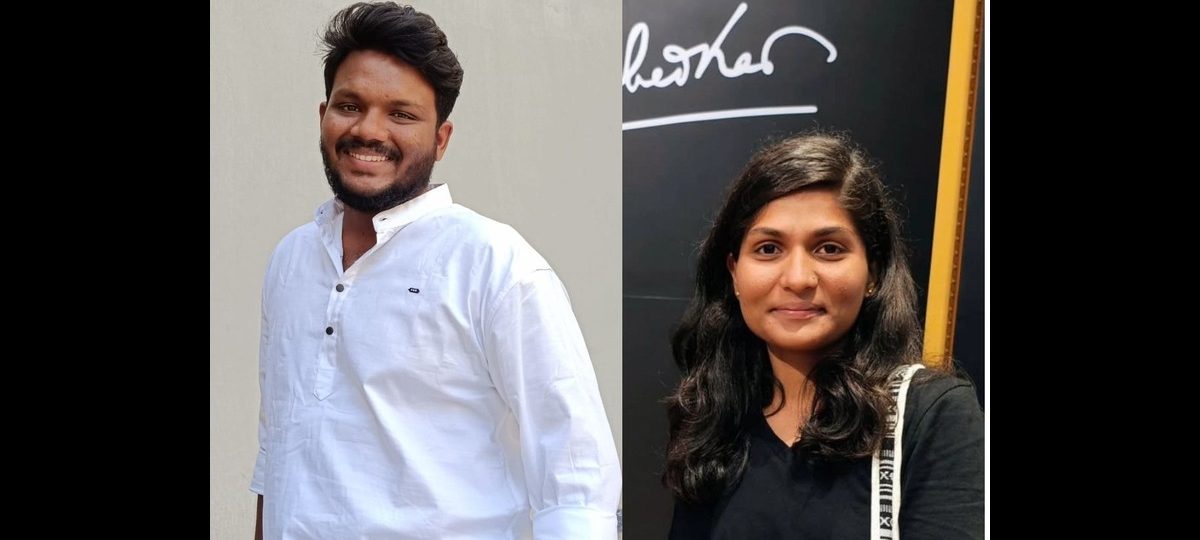
Buddhapal Dumane is a development professional and researcher currently working as a Project Associate with Muktangan Education Trust in Mumbai.
Bhavna Shahare is an education practitioner working in the public education ecosystem, with a focus on Early Childhood Education and Anganwadi transformation initiatives in Nanded district, Maharashtra.