Showing 815 Result(s)
Features

Artificial Intelligence in Education: Opportunities and Challenges for Marginalized Students
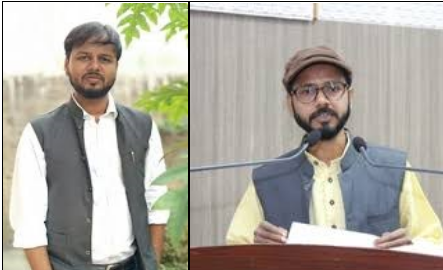
tabrez and afroz

Dr. Md Tabrez Alam & Dr Md Afroz Introduction: Artificial Intelligence (AI) is reshaping the education sector, offering new opportunities for accessibility, personalized learning, and administrative efficiency. However, for marginalized students, AI presents both advantages and challenges. While AI-driven tools can help bridge learning gaps through adaptive learning, language translation, and assistive technologies, structural barriers …

Features

Caste, Landownership, and Its Historicity: The Redistribution Question

Santosh Rasve Land ownership in India is entwined with caste hierarchies, reflecting thousands of years of structural inequality and exclusion. Dalits, Adivasis, Lower OBCs, and other marginalised communities are landless or marginal landholders. Dr. B.R. Ambedkar emphasised that land is not merely an economic asset but a marker of social status and dignity. Historical and …

Features Uncategorized

Phule: A Cinematic Ode to Social Reform in a Polarized India

neeraj bunkar

Neeraj Bunkar Phule—a film directed by Ananth Mahadevan faced significant opposition from Brahmanical ideologues. The film chronicles the revolutionary lives of Jyotiba and Savitribai Phule, whose fight against caste oppression and gender inequality remains strikingly relevant. A Historical Canvas with Contemporary Resonance The film opens in 1897, Poona, during the bubonic plague, with an elderly …

Features

CBFC: Censoring Caste, Condoning Hate

Ganesh Ashok Pandit When Chhaava hit screens in 2025, it ignited riots in Maharashtra, leaving a trail of communal hate. Yet, the Censor Board (CBFC) allowed it without hesitation. At the same time, Phule, a film that celebrated the life and struggles of Jyotirao and Savitribai Phule against caste discrimination, was cut to pieces. The …

Features

Who Truly Benefits from the Creamy Layer in Reservation Policies

Dr Govind Dhaske  After the Supreme Court’s judgment last year, the creamy layer concept has gradually been extended to the reservations for Scheduled Castes (SCs) and Scheduled Tribes (STs). Originally, the creamy layer concept was introduced for Other Backward Classes (OBCs) following the recommendations of the Mandal Commission, mainly to respond to the massive upper-caste …

Assertion

RINPAS or the place which wastes your time (Part 1)

Milind X Before the reader gets on with this essay, I have to say, that I have been admitted to the RINPAS (Ranchi Institute of Neuro-Psychiatry and Allied Sciences) wards a total of 4 times over the years. So the reader must assume they’re reading something by a somewhat “sane” person. Additionally, they should ignore …

Features

Ennore: Testament to Environmental Casteism in South India

Aishwarya Gajendran Ennore, a coastal town located in North Chennai, Tamil Nadu, stands as a testimony to environmental casteism and its catastrophic impact on the lives of marginalized communities. More than 90% of Ennore’s population belongs to Scheduled Castes, Scheduled Tribes, and Other Backward Classes. Environmental injustice across the world connects to the history of …

Assertion

Performative Allyship and Performing Caste

Kavya Harshitha Jidugu “If you have come here to help me you are wasting your time, but if you have come because your liberation is bound up with mine, then let us work together.” — Lilla Watson Caste is deeply rooted in the Savarna psyche and is an insidious phenomenon; whether enacted in conservative contexts …

Features

Savarna Saviour Psychosis: A Reflection on Rahul Gandhi’s Visit to a Dalit Kitchen

Vaibhav Kharat Recently, Rahul Gandhi’s visit to a Dalit kitchen and his interaction with the Dalit family was broadcast on his YouTube channel, which has millions of subscribers. It was framed as an act of inclusion, meant to bring attention to the everyday lives of Dalits, particularly their food culture. The visit showcased his conversations …