Harish Suna
Every August 15, the flag goes up over the Red Fort, the anthem plays in every school and University for a day to celebrate being free. We call it Independence Day — the day India stopped being ruled by the British after two hundred years. And I celebrate it too. But every year, sitting with it a little longer than a headline or a holiday usually gets, one question won’t leave me. Free from what, exactly, and free for whom? The British extracted our wealth, silenced us, and treated us like subjects and inhumane instead of people. They eventually left. But did the thing they left behind actually go with them? Seventy-five-plus years later, many people are still living under a kind of threat, inhuman, and subject to no major change, and the political power is transferred from one hand to another. That time, foreign rule, and the present time, the elite and the oppressed class. caste, patriarchy, or social hierarchy systems- nobody ever really dismantled them, just handed them down like inheritance. The face in charge changed. For too many people, the situation underneath it didn’t. None of this is me rejecting the freedom we won or the people who died for it. It’s me refusing to let “freedom” become something we wave on a flagpole once a year without looking at who still doesn’t have it. After independence, many have hope for major change. We are ruling ourselves at least; nobody discriminates against us, but it is only theoretical, not practical.
Value of the Constitution
We, the people of India, aren’t one religion. We’re not just Hindu, or just Muslim, or Christian, or Sikh — and the Constitution doesn’t lean on any of that in its opening line. It says: “India, that is Bharat, shall be a Union of States.” That’s a bigger sentence than it looks. India was never built to belong to one group. Many people are sacrificing their lives, their homes, their hope, their relatives, etc., every family, every tongue, every tradition, without asking anyone to give up who they are to be let in. The Constitution doesn’t just govern us. It protects the different ways we live, our culture, tradition, and language. But that raises a fair question: why does a free people need a document telling them how to live? If human beings are born free, shouldn’t that be enough on its own? For most of history, freedom on paper and freedom in real life were two completely different things. Before the Constitution, millions of people on this land weren’t fully recognized as human, and they were denied all human rights. No education, no right to object to injustice out loud, no fundamental rights. treated as animals; they were not counted as citizens. Two hundred years of British rule made all of that worse, and many people gave everything to end it. Even now, it’s worth asking: is that independence something everyone actually gets to feel, or is it still a promise some people are still waiting on? The Ambedkar Constitution is not just a rulebook. They wrote down a vision; it is a way of life, what Ambedkar called Prabuddha Bharat, an “Enlightened India” where every person could live with dignity and respect, no exceptions. A constitution isn’t a book or a scripture. It’s that imagination of a glorious society, made enforceable.
When Dr. B.R. Ambedkar and the others wrote the Constitution, they weren’t just setting up a government. They were imagining a civilization. Ambedkar called it Prabuddha Bharat — an Enlightened India — where a person’s caste, gender, religion, or birth wouldn’t determine how freely they could move, speak, or live. Liberty, equality, and fraternity weren’t supposed to just sit in the preamble looking nice. They were supposed to be alive. On the eve of the Constitution’s adoption, Ambedkar warned that India was walking into a life full of contradictions — political equality on paper, and deep social and economic inequality in daily life. He said if that contradiction were allowed to go unaddressed, the people suffering under it would eventually blow up the whole structure of political democracy. That warning is still hanging over us, mostly ignored. Caste wasn’t invented by the British — it existed long before them, and it outlived them too. Dalits and Adivasis still face discrimination in villages, in workplaces, in schools, and even in death — separate cremation grounds, separate wells, and separate seating still exist in parts of this country. People still get attacked over things as small as riding a horse to their own wedding, wearing certain clothes, or drawing water from a well someone decided wasn’t theirs to touch. This is the unfinished part of independence. A country can’t call itself free while entire communities are still told that the country is suffering from caste, gender, and social discrimination, where they’re allowed to sit, who they’re allowed to love, and how far up they’re allowed to rise. The mentally still unfree, just as it was, Paper India Independence
Odisha, 2026
If anyone thinks untouchability is a thing of the past, look at what happened this year in Nuagaon village, Kendrapara district, Odisha. A Dalit woman, Sharmistha Sethy, was hired as a helper at the local Anganwadi — the government center that cooks and feeds young children. Several upper-caste families in the village decided their kids wouldn’t eat food she cooked. They stopped sending their children there entirely. They stayed shut for almost three months. Small children went without meals they were entitled to — not because the food was unsafe, but because a Dalit woman had touched it. This wasn’t a one-off. This news highlights the national level. Children were denied food because adults couldn’t accept that a Dalit woman was allowed to feed them. That’s untouchability, alive and working exactly as intended, in 2026. Some students and professors sit in the AC room, and they give a talk about caste discrimination; they share some food with some Dalit friends and students, and they think untouchability does not exist. It is not true; it is only an illusion. The caste system exists, not enforced by any law, but by the quiet, stubborn conviction of people who continue to believe some human beings are too impure to serve others food. Now, more danger: inter-caste marriage. Where young people, often from different castes, are murdered by their own families for loving outside the lines that hierarchy drew for them. “Honor” is just a nicer word for control over women’s choices, over caste purity, over who gets to exist next to whom. A country that lets a family kill its own child in the name of social norms; freedom isn’t just the absence of a foreign ruler. It depends on how you live in society: a life of respect and dignity, without injustice and social hierarchy. It’s the right to choose who you love, how you live, and what you believe.
I’m not writing this from newspapers and social media. This is personal experience. When my brother married someone from another caste, upper-caste people in our own community didn’t just disapprove. They threatened to kill our family. Not that they were upset. They didn’t want to talk to us. They threatened to kill us over a marriage that is, on paper, completely legal. The Indian Constitution gives every citizen the right to choose their own life partner under Article 21, and the right to move and live with dignity anywhere in the country. These aren’t Favors handed out by a community. They’re rights, guaranteed by the highest law in the land. And yet the moment my family used that exact right, we weren’t met with acceptance; we were met with the threat of death from people who felt entitled to punish us for crossing a caste line. This is what I mean when I say the British left, but the mentality didn’t. Power changed hands in 1947, from a colonial government to an Indian one. After British rule, building an equality-based society was very difficult because India is a diverse country with many cultures, languages, and traditions. The kind that decides who gets to love whom, who gets to eat with whom, who gets to live without fear — that power was never actually redistributed. It just changed uniforms, Dr. Ambedkar said. Caste is a notion of the mind. It is not material things; the caste system is part of Hindu mythology and rituals. Caste and patriarchy work like a quieter, more intimate version of the same thing; they don’t need a flag or an army because they’re already enforced inside homes, families, and marriages. Women in India, across every class and caste, are still negotiating their safety, their choices, their education, their own bodies, against a mindset that treats them as lesser participants in their own lives. Dowry harassment, restrictions on where a woman can go, unequal inheritance, workplace discrimination, the constant policing of how a woman behaves — none of that is history. It’s current events. And it doesn’t just hurt women. It teaches every child watching — sons and daughters both — that hierarchy is natural, that some people are born to lead and others born to obey. A lesson learned at home doesn’t stay at home.
Who Decided Who Gets to Be Close to God?
Here’s a question: if everyone is supposedly equal in the eyes of the divine, why do certain castes get to claim they’re closer to it than others? Why are some people told they need to go through someone else, a priest, a “higher” caste, to reach the sacred, instead of just reaching it themselves? That’s not a spiritual arrangement. It’s a social one wearing spiritual clothes. Hierarchy didn’t fall out of the sky. It was built, on purpose, over centuries, by the people who benefited from sitting at the top of it. If a divine power made all of humanity, that power didn’t build the ladder. People did. Think about how many belief systems use the same image — God as a mother to all of humanity, everyone her child. But a mother, by definition, doesn’t rank her children. She doesn’t love one and despise another. She doesn’t seat one at the table and send another outside to eat off a separate plate. She doesn’t send one child to fetch water for the rest. A mother who discriminated between her children- would we still call her a mother? And if the divine is imagined that way, then any system that discriminates by caste, gender, or birth can’t honestly claim to be built in her image. All this is about power and position. Something basic got forgotten: duty. Karma, in its original sense, was never about reward and punishment handed down from above — it was about responsibility, about how we treat each other here, now, on this earth. A lot of people chasing proximity to power — social, religious, political forget the duty that’s supposed to come with it: to serve, to lift people, to protect the vulnerable. When a class remembers its status and forgets its duty, it stops serving anyone but itself. That isn’t leadership, and it isn’t spirituality. It’s just hierarchy protecting itself.
Imagine a freedom
Dr. Ambedkar imagined Prabuddha Bharat, the constitution, not just a legal document or a date on a calendar. It’s a Dalit, Adivasi, Women, Minority protected weapon; they are walking into any school, any office, any street, without discrimination. A woman choosing her own partner, her own career, her own life, without needing her family’s permission just to exist safely. A young person allowed to question a belief rather than hide inside it out of fear. A society where nobody needs an intermediary to be worthy of dignity and myths. A nation where duty means more than status. That’s what the Constitution actually promises: a fair, just society where people live without fear of injustice or the social rules built to enforce it- the society of equity and justice.
Imagine independence
On August 15, 1947, British rule ended. It did not end the older, deeper rule of caste and patriarchy and social hierarchy that existed long before the British. Before many revolutionaries fought for equality and a fair society, there were figures such as the Buddha, Jaina, Kabir, Jyotirao Phule, Savitribai, Fatima, Bhima Bhoi, and Dr. Ambedkar. Still, the people are fighting for their rights and justice. Independence was a starting point, not a finish line. The Constitution handed us the blueprint for Prabuddha Bharat and an ideal state, an enlightened, equal India — but a blueprint is only as real as the people willing to build it. People sacrifice their lives, their homes, their families for independence. Independence means not only political power but also the ability to live in a fair society, without any social norms. Honoring Independence Day for real isn’t just flying a flag. Real independence won’t be complete until every Dalit, Adivasi, woman, minority, and every ordinary person can live, love, question, and exist without fear of the people who share their soil. The freedom fighters are sacrificing their life for India, like Ambedkar, Bhagat Singh, and Birsa Munda. Still, every university student is fighting for their basic rights: education, a job, fees, etc.
~~~
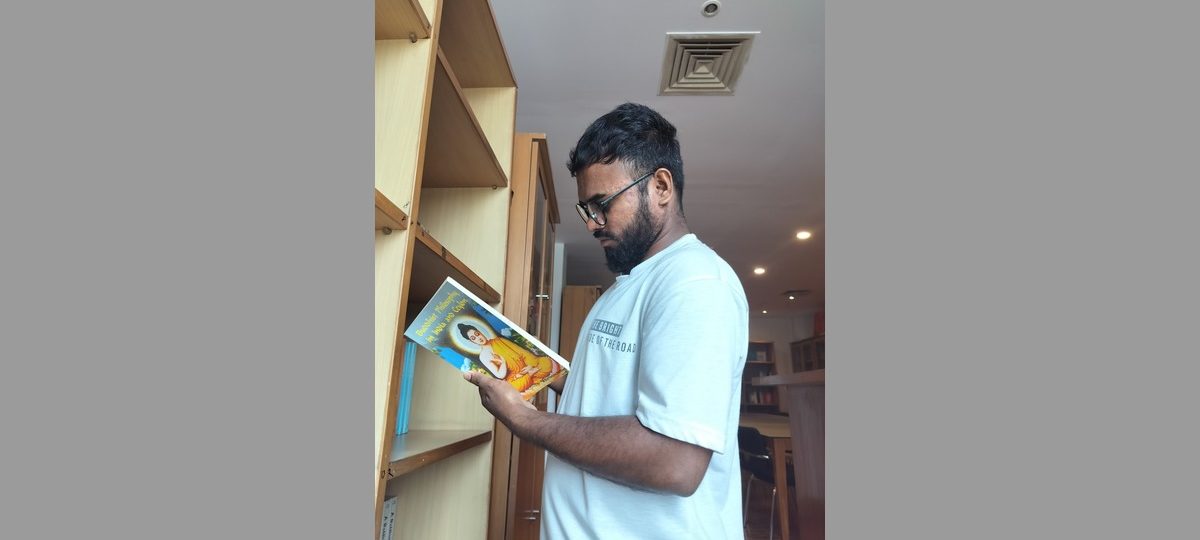
Harish Suna is pursuing a PhD at Indira Gandhi National Tribal University, Madhya Pradesh.