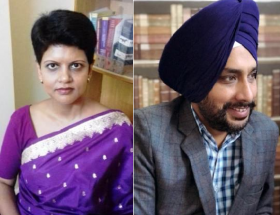

Neeraj Bunkar & Ratnapriya Singh
Bollywood has long projected itself as a space that embraces modernity. Over the years, Hindi cinema has increasingly shown women drinking alcohol, living independently, pursuing careers, entering live-in relationships, and openly discussing intimacy. Yet, beneath these seemingly progressive images, many films continue to uphold deeply conservative ideas about gender. Women who conform to emotional stability and domestic respectability are rewarded, while women who openly express desire are often framed as disruptive or morally questionable. Cocktail 2 becomes the latest example of this contradiction.
Directed by Homi Adajania and written by Tarun Jain and Luv Ranjan, Cocktail 2 revisits familiar territory: urban relationships, friendship, attraction, and emotional betrayal among young cosmopolitan Indians. At first glance, the film appears to engage with contemporary questions about trust, commitment, and intimacy in long-term relationships. But beneath its polished visuals and modern relationship dynamics lies a familiar patriarchal structure, one that continues disciplining female desire while idealizing male virtue.
Bollywood’s Familiar Formula in a New Packaging
The original Cocktail (2012) revolved around Veronica, Meera, and Gautam, creating a love triangle that quietly positioned two contrasting versions of femininity against one another. Veronica represented sexual freedom, spontaneity, and emotional vulnerability, while Meera symbolized stability, care, and domestic respectability. Although Cocktail 2 initially appears more nuanced, it ultimately repeats the same formula.
Diya is introduced as a successful, independent working woman in a long-term relationship with Kunal. Ally enters as the adventurous, rebellious, and sexually expressive figure who embraces freedom and unpredictability. At first, both women appear equally legitimate in how they navigate love and desire. Yet, as the story progresses, the same old hierarchy begins to emerge. The woman associated with emotional stability becomes the acceptable choice, while the sexually liberated woman is gradually pushed into the role of disruption. The aesthetics may look modern, but the moral framework remains strikingly familiar.
Female Desire Continues to Be Treated as Dangerous
One of the most revealing aspects of Cocktail 2 is the way it frames female sexuality. Ally is positioned as someone who represents freedom, experimentation, and openness toward intimacy. Initially, even Diya encourages Ally to participate in a plan that tests Kunal’s loyalty. Yet, the moment Ally begins developing genuine feelings, the narrative slowly turns against her.
Her desire suddenly becomes excessive. What began as participation within a mutually constructed situation is reframed as moral transgression. Throughout the film, Kunal repeatedly calls Ally a “Narbhakshi” or “man-eater,” invoking a familiar cultural stereotype that portrays sexually autonomous women as threatening or socially disruptive. This pattern is hardly new in Bollywood. Women are often allowed to embody freedom only until that freedom begins to challenge accepted social norms. The moment female desire becomes self-directed rather than desirable to others, it is treated with suspicion. The problem here extends beyond one film. Popular cinema constantly participates in teaching audiences which forms of femininity deserve acceptance and which forms deserve punishment.
The Idealization of Male Virtue
While the film disciplines female desire, it simultaneously elevates masculinity as morally superior. The entire conflict begins when Kunal casually remarks that successful infidelity can remain hidden from a partner. Understandably, this triggers insecurity in Diya and raises uncomfortable questions about trust within a sixteen-year relationship. Yet instead of interrogating Kunal’s problematic attitude toward fidelity, the film gradually shifts attention toward Diya’s inability to trust. The issue is no longer male accountability but female insecurity.
By the climax, Kunal is transformed into the ideal partner. His final monologue reframes responsibility as love itself, presenting loyalty as unquestionable proof of devotion. The ambiguity surrounding commitment, habit, and obligation disappears entirely as the narrative positions him as the emotional and moral center of the story. This familiar pattern reflects a recurring tendency within mainstream Bollywood where male protagonists are repeatedly portrayed as rational and virtuous while women are positioned as emotionally unstable, insecure, or disruptive.
Even the Music (Re)enforces Gender Politics
The politics of Cocktail 2 become even clearer when we examine its music. Diya’s romantic track frames Kunal as the devoted and ideal lover, (re)enforcing emotional security and commitment. In contrast, Ally’s introduction song Mashooqa constructs her through seduction and temptation, reducing her narrative role to someone who exists to test male loyalty. The same dynamic returns in Jag Se Laaj, where Ally’s return during Kunal and Diya’s wedding visually associates her with transgression and rebellion against accepted social boundaries.
On the surface, these songs appear glamorous and empowering. But together they quietly create a moral hierarchy between the women. One woman becomes associated with commitment and emotional stability, while the other is reduced to temptation and disorder. Cinema often performs ideological work through aesthetics, and music here becomes one of the film’s most effective tools for reinforcing patriarchal expectations.
Why This Matters Beyond Cinema
What makes Cocktail 2 troubling is not simply its individual storyline but what it represents within a larger cultural pattern. Bollywood frequently presents urban, upper-class women as symbols of modernity. They drink alcohol, travel internationally, pursue careers, and appear sexually confident. Yet despite these progressive surfaces, many narratives continue rewarding women who ultimately conform to traditional expectations around commitment, emotional labor, and domestic stability.
Sexual freedom remains acceptable only as long as it does not disrupt established social norms. This raises an important feminist question: who is Bollywood really allowing freedom to? Even within elite urban spaces where women appear independent, cinema repeatedly signals that women who openly pursue desire outside acceptable boundaries remain morally suspect.
Equally striking is the film’s erasure of female solidarity. Unlike Cocktail (2012), where Veronica and Meera’s friendship carried emotional depth, Cocktail 2 sidelined the relationship between Diya and Ally. Both women are ultimately defined through their relationship with Kunal rather than through each other. In doing so, the film once again centers male validation as the structure through which women are understood.
Modern Aesthetics Cannot Hide Conservative Politics
The central contradiction of Cocktail 2 lies in its attempt to appear progressive while quietly preserving older patriarchal values. Its characters live together before marriage, discuss attractions openly, and navigate contemporary relationships. Yet every major moral decision within the story rewards conventional femininity and punishes women who express autonomous desire. The woman associated with emotional stability and domestic commitment is validated. The sexually liberated woman is isolated. The male protagonist becomes the final authority on what counts as love, loyalty, and moral correctness.
Finally, Cocktail 2 reminds us that representation alone does not equal progress. A film can look modern, speak the language of freedom, and still reproduce deeply conservative ideas about gender. And perhaps that remains Bollywood’s most persistent contradiction: women are allowed modernity, but only within limits patriarchy finds acceptable.
~~~
Dr Neeraj Bunkar is a researcher specializing in caste and cinema.
Dr Ratnpriya Singh is a researcher working on Gender, Culture and Sexuality Studies.