Km Raksha
This article investigates the enigma of India’s economic growth and the enduring caste-based inequalities. While India has experienced robust GDP growth since the 1991 economic reforms, caste continues to play a significant role in shaping access to resources, education, employment, and political power. Drawing on data from the NSSO, NFHS, NITI Aayog, and recent academic studies, the article highlights the continued disadvantage of Scheduled Castes (SCs), Scheduled Tribes (STs), and Other Backwards Classes (OBCs) across various socio-economic indicators. The deep-rooted structures of caste hierarchy limit the distributive potential of growth, despite state-led interventions such as reservations and welfare schemes. The article argues that the gap between economic expansion and social equity will persist unless economic policies are accompanied by social reforms. It emphasises the need for inclusive development strategies that integrate caste-sensitive approaches into India’s growth model.
Since the early 1990s, the economic growth of India has been celebrated globally. India is one of the fastest-growing large economies in the world, with significant improvements in per capita income and poverty reduction. However, the persistence of deeply entrenched social inequalities persists, particularly along caste lines. The caste system, a long-standing and rigid structure of social hierarchy, still continues to determine access to opportunities, resources, and mobility. This article explores how caste influences economic outcomes, highlighting the disparity of progress in the absence of genuine equality.
Historical Background
For centuries, caste and economic inequality have been intertwined in India. Caste hierarchies were reinforced through land ownership patterns, taxation, and administrative practices during the colonial period. Post-independence, untouchability was abolished by the Indian Constitution, and affirmative action policies such as reservations in education, public employment, and political representation were introduced by the Government. Despite these reforms, caste continues to operate as a tool of exclusion. Various studies, such as Ambedkar (1936), and later scholars have shown how caste identity shapes not only social relations but also economic opportunities.
Economic Growth After Economic Reforms
The Economic Reforms were a turning point in India’s economic trajectory. GDP of India grew at an average rate of 6–7% annually over the next three decades, lifting millions out of poverty. The service sector, particularly IT, saw tremendous growth; it emerged as an engine of growth. However, the distribution of the benefits of liberalisation was uneven among the different strata of society. While the middle class expanded, marginalised caste groups remained excluded from high-growth sectors, as NSSO and World Bank data suggest. Occupational mobility was limited, and Wage disparities persisted.
Caste and Inequality
Caste continues to play a significant role in determining access to resources- land, capital, and employment. Data from NSSO (2018) shows that landlessness is disproportionately high among SCs and STs. In labour markets, Dalits and Adivasis are overrepresented in low-paying, informal sector jobs. In education, data from NFHS-5 (2019-21) highlight disparities in school attendance and higher education enrollment among SCs and STs. Additionally, Caste also intersects with gender, amplifying disadvantages for Dalit and Adivasi women.
Trends
The Periodic Labour Force Survey (PLFS) 2020-21 reveals that Scheduled Castes (SCs) and Scheduled Tribes (STs) experience higher unemployment rates than upper castes. According to NITI Aayog’s Multidimensional Poverty Index (2021), poverty levels among SCs and STs are almost double the national average. Additionally, data from the NFHS-5 indicate worse maternal and child health outcomes among marginalised caste groups. These disparities suggest that while India’s GDP has risen, social inequalities persist.
State Interventions
Affirmative action policies, such as reservations in education and employment, have facilitated upward mobility for some members of marginalised castes. Various welfare schemes like MGNREGA, mid-day meals, and scholarships have also contributed to reducing poverty. Nevertheless, challenges in implementation, social discrimination, and elite capture often dilute their effectiveness. Critics contend that economic reforms without social reforms are likely to reproduce existing inequalities.
The Dichotomy of Growth without Equality
In India, High economic growth and persistent caste inequalities coexist, which represents a paradox. While opportunities have been expanded by liberalisation, structural disadvantages have also been reinforced by it. For example, access to credit and entrepreneurship is disproportionately in favour of upper castes, which limits the ability of marginalised groups to participate in India’s growth story. Moreover, the rise of the private sector, which largely operates outside the scope of reservation policies, has further entrenched caste disparities in employment.
Conclusion and Way Forward
India’s growth story is incomplete if we ignore the persistent caste-based inequalities because this undermines its foundation. Inclusive development demands integrating caste-sensitive policies into economic reforms. This means not only expanding affirmative action into the private sector, but also investing in quality education and health for marginalised groups, ensuring land reforms, and strengthening anti-discrimination laws. As Ambedkar cautioned, political democracy without social and economic democracy is incomplete. For India to achieve sustainable growth, it must ensure that development is not only rapid but also equitable for all.
References
Ambedkar, B R (1936). Annihilation of Caste.
Jodhka, Surinder S (2015). Caste in Contemporary India, Routledge.
National Family Health Survey-5 (2019–21). Ministry of Health and Family Welfare, Government of India.
NITI Aayog (2021). National Multidimensional Poverty Index Report: Baseline Report 2021, Government of India.
NSSO (2018). Employment and Unemployment Situation in India, 2011–12, Ministry of Statistics and Programme Implementation.
Oxfam India (2023). Survival of the Richest: The India Supplement, Oxfam India.
Periodic Labour Force Survey (PLFS) 2020–21. National Statistical Office, Government of India.
Thorat, Sukhadeo and Katherine Newman (eds) (2010). Blocked by Caste: Economic Discrimination in Modern India, Oxford University Press.
World Bank (2020). Poverty and Shared Prosperity Report 2020: Reversals of Fortune, Washington DC: World Bank.
~~~
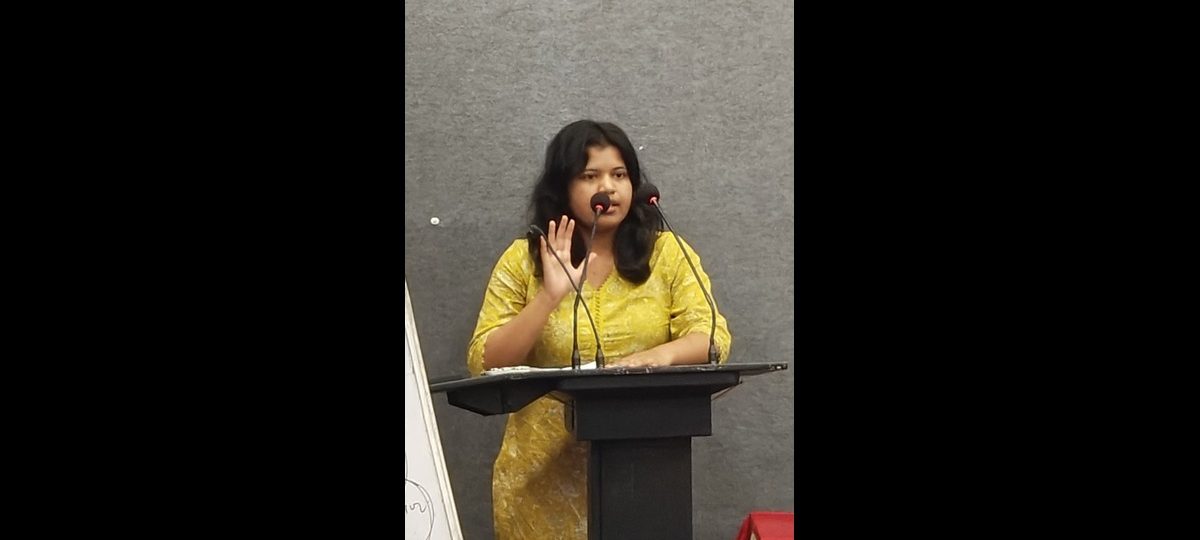
Km Raksha is a PhD scholar in Economics at the University of Allahabad.