Sanjana
I am from Pune and studied at some of the more famous colleges, such as Fergusson College and Gokhale Institute of Politics and Economics. Why mention this? What is the use of this academic information? Maybe I want to portray that as a milestone. Like a few other students in this prestigious college, I felt a feeling of specialness. I was so happy. I always wanted to get higher education from better colleges within the state. Everything was sweet. One day, at a lunch table where everyone was introducing their native places, I did the same. And suddenly, my best friend said to me in the nastiest way, “Don’t shine just because you are a native of Pune. Don’t forget your locality is from the basti (Bhawani Peth, Pune).” I was shocked, insulted, devastated, and unable to speak. I had no idea that Pune has types of Pune under the same sky, within the same traffic jams, and below the same drainage pipeline. I had nothing to say. Years later, this incident was never resolved from her side. But deep down, I wanted to solve this for my own peace, at least on my side. We are no longer friends. Losing that friendship is not just a personal loss but also evidence of how caste erodes trust between people. But it never diminishes my thirst to know why this gap exists.
Over time, my curiosity about theories and on-the-ground applications led me to understand this a little better. Historically, Pune is known for its Peth culture, and 17 Peths were classified by caste, occupation, and social status. In my childhood, I recall names like Mangwada, Maharwada, etc. This wada system was common in Pune, and my ancestors used to live in Maharwada, which has since become a basti (slum). By knowing these facts, there was confusion in my heart: should I take pride in being Mahar (Dalit), or feel shame about being a Mahar (Dalit)? And here, the process of becoming Ambedkarite began for me. I started to decode my understanding of caste. I used to flaunt being a student of a prestigious institution and being one of the few from the so-called social status. This flaunting became silent, and it raised a loud question about the educational institution: Why do only a few prestigious colleges exist? What does it take to be prestigious? But obviously, the quality of education, the standard of staff, and the infrastructure are key factors in establishing a better educational institution. But again, questions like why quality of education and access to education are lacking among other colleges? Why only a few numbers? And I questioned myself: Is becoming a representative of the few the source of pleasure, or do I want to stand as a contributor so that I can fill this gap by intermediating my research tools, literacy skills, and critical analysis? To be precise, I would like to serve as a bridge between Dalit communities and academic research, translate theory into an accessible language, and learn from and mentor students from the basti. The point is that becoming Ambedkarite is not the beginning of a few but studying, decoding, and asking loudly why only a few have this privilege. This constructive change should not be limited to asking only questions, but also towards finding solution-based answers with operational skills. Ambedkarite is not only associated with Dr. Ambedkar as an individual. It is a blend of radical rebel and systematic reform. This process may take a round of confusion, but I am sure one will not end up with a mess, but only with development.
To conclude my journey in a few words: from once being proud to be one of the few Dalits studying at a prestigious Pune college, to the concern about why there are so few. This process taught me that becoming Ambedkarite does not mean submerging into identity; it means turning my education into a tool to straighten out the structures that made me odd and then to dismantle them.
~~~
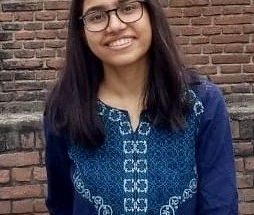
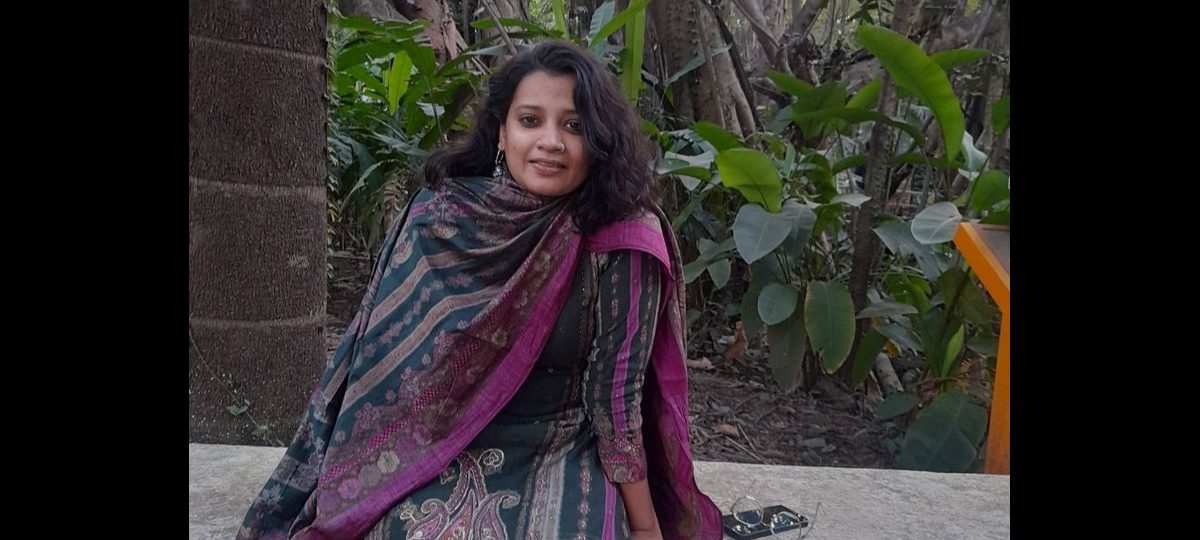
Sanjana, is from Pune, a researcher interested in investigating policy and research gaps, and aspires to contribute to Dalit literature.