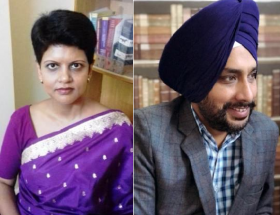
Santhosh Juvvaka
Article 17 of the Indian Constitution abolished untouchability in 1950 and declared its practice in any form a punishable offence. Seventy-five years later, the Telangana Socio-Economic, Education, Employment, Political and Caste (SEEEPC) Survey 2024 — the most ambitious caste enumeration exercise undertaken by any Indian state in the post-independence period — surveyed nearly a million households, ranked 242 castes on a 42-parameter deprivation index, and produced two volumes of analysis on what caste does to life outcomes. Across those 312 pages, untouchability appears as a constitutional aspiration, a theoretical framing, and a methodological footnote. It does not appear as data. This essay asks why and argues that the omission is neither accidental nor easily corrected, but reflects a structural failure in how Indian social science has approached the measurement of stigma-based discrimination, with consequences that reach directly into the policy uses to which this survey will now be put.
There is a particular kind of absence that is louder than presence. In the two volumes of the Telangana SEEEPC Independent Expert Working Group Report, the word “untouchability” appears — but only at the margins. It surfaces in Justice Sudershan Reddy’s prefatory note as a constitutional wrong to be overcome, in Prof. Kancha Ilaiah’s theoretical framing as a structural feature of the Hindu caste order, and in a brief methodological acknowledgement that the survey instrument “did not capture untouchability in daily life adequately.” That last sentence — buried in a limitations paragraph — is among the most consequential in the entire report. Because what it concedes, without fully reckoning with the concession, is that the Composite Backwardness Index (CBI) — the survey’s central analytical contribution, its claim to methodological advance over seven decades of inadequate caste measurement — is built on a foundation from which the most intimate and violent dimension of caste deprivation has been largely excluded.
This essay argues three things. First, that untouchability is not merely one parameter among many but a structuring condition that shapes the meaning of every other parameter the CBI measures. Second, the survey’s failure to adequately capture untouchability is not incidental but reflects deep and largely unresolved problems in the sociology and methodology of measuring stigma-based discrimination. Third, that without a serious measurement framework for untouchability, any deprivation index applied to Scheduled Caste communities will systematically understate the depth of their disadvantage — and that this understatement has direct consequences for policy design and constitutional interpretation.
What is untouchability, and why is it so difficult to measure? The term refers, at its narrowest, to the practice of treating certain caste groups as ritually polluting — forbidding physical contact, shared dining, shared water sources, and entry into spaces (temples, wells, kitchens, homes) that other communities may access freely. At its broadest, it refers to an entire order of social relations in which certain bodies are marked as degraded and in which that marking is reproduced across every domain of social life: residence, occupation, marriage, speech, gaze, and gesture.
B.R. Ambedkar understood untouchability not as an aberration of caste but as its logical terminus — the point at which social hierarchy becomes bodily inscription. In Annihilation of Caste (1936), he argued that untouchability could not be reformed away because it was not a practice separable from the belief system that generated it. Louis Dumont’s structural account in Homo Hierarchicus (1966), whatever its limitations, made a similar point from a different direction: purity and pollution are not incidental features of caste but its generative grammar. More recently, Gopal Guru (2009) and Suraj Yengde (2019) have argued that untouchability is best understood as a form of social death — a condition in which the person is recognised not as a subject with claims but as a surface upon which the caste order inscribes its logic.
All of these point to a central methodological problem. Untouchability is not a discrete event that can be counted like school enrolment or land ownership. It is a relational condition — it exists not in the behaviour of the untouched alone but in the encounter between the untouched and the untoucher. It is reproduced not only in extraordinary acts (a Dalit beaten for wearing shoes, a well sealed after a Dalit draws water) but in the ordinary texture of daily interaction: the plate set aside, the seat not offered, the name not used, the greeting withheld. These are not events with a frequency that a survey enumerator can record. They are the ambient atmosphere of a social world.
The SEEEPC survey’s treatment of untouchability reduces it to two parameters within the Composite Backwardness Index (CBI)’s “discrimination” category: temple entry restrictions and inter-caste marriage. Both are real indicators of caste-based social exclusion. Neither is adequate as a proxy for untouchability in the fuller sense.
Temple entry is a high-visibility, politically contested flashpoint of caste discrimination — and for precisely that reason, it is also among the forms most susceptible to underreporting. A respondent in a door-to-door survey, asked by a state enumerator whether their community faces temple entry restrictions, faces multiple incentives to underreport: fear of local social reprisal, uncertainty about whether their experience constitutes a “restriction” in the formal sense, and the general tendency of survey respondents to normalise conditions they have always lived with. The same logic applies to inter-caste marriage, which the survey uses as a proxy for social integration — but which, in much of Telangana’s rural geography, remains so rare among certain community pairs that asking about it measures social aspiration more reliably than social reality.
What the survey does not ask about is more revealing than what it does. There are no parameters for:
Residential segregation — whether SC households are clustered in separate colonies (cheruvu veedhi, mala palli, madiga palli) physically separated from the main village settlement, a feature so ubiquitous in Telangana’s rural districts that it has its own geographic vocabulary.
Shared resource exclusion — access to common wells, water tanks, tea stalls, barber shops, and public seating, all of which continue to be sites of routine caste-based exclusion documented in state human rights commission reports.
Occupational stigma — the coercive restriction of SC communities (particularly Madigas and Malas) to specific occupations (manual scavenging, leather work, drum beating at funerals) through social sanction rather than legal compulsion, and the social consequences of attempting to exit those occupations.
Verbal and gestural humiliation — the use of caste slurs, the denial of honorifics, and the forms of enforced deference (standing when upper-caste persons sit, speaking in a lowered register) that constitute what Guru calls the “grammar of humiliation.”
Violence and its anticipatory effect — the SC/ST (Prevention of Atrocities) Act 1989 exists because these are not marginal events. Telangana consistently records among the highest rates of atrocity cases per lakh SC/ST population among Indian states. The threat of violence, even where violence does not occur, shapes where Dalit families live, where they send their children to school, whether they contest panchayat elections, and whether they report discrimination to survey enumerators.
The CBI, in other words, measures outcomes — educational attainment, income, occupation, land ownership — many of which are themselves downstream consequences of untouchability. But it does not measure untouchability as a cause. This is not a minor gap. It is the difference between measuring the wound and measuring the bleeding.
Why did the survey not attempt to measure these dimensions? The IEWG report’s honest answer — that such data is hard to capture through a door-to-door instrument — is correct as far as it goes, but it does not go far enough. The difficulty is real, but it is not insurmountable, and it has not been treated as a research priority in Indian social science in the way that, say, poverty measurement or educational attainment has been.
There are established methodologies for measuring discrimination and stigma that the SEEEPC exercise does not engage with. Audit studies — in which matched pairs of applications (differing only in caste markers) are submitted to landlords, employers, or schools — have been used effectively in India (Thorat and Attewell, 2007; Jodhka and Newman, 2007) to measure discrimination in rental housing and formal sector employment. Qualitative georeferencing of Dalit residential settlements relative to main village cores can produce spatial measures of segregation. Life history interviews with SC community members in sentinel villages can generate rich, longitudinal accounts of discrimination that cross-sectional surveys cannot. None of these methods are simple, inexpensive, or amenable to the scale of a state-wide household census. But the absence of any engagement with them in a survey of this ambition suggests that the decision not to measure untouchability was made before it was fully examined.
There is also a political economy of measurement at work. Caste surveys are commissioned by governments, conducted by state machinery, and analysed by expert groups appointed by governments. The communities most likely to face retaliation for honest reporting of untouchability are precisely those that state enumerators visit. The social conditions that make untouchability possible — the local power of dominant castes, the economic dependence of Dalit agricultural labourers on upper-caste landowners, the absence of effective legal protection in rural settings — are also the conditions that make honest self-reporting of untouchability by Dalit respondents to state-appointed surveyors structurally compromised.
This is not a reason to abandon measurement. It is a reason to design measurement instruments that account for these power asymmetries — and to be honest, in reporting, about the undercount that results from failing to do so.
The consequences of this omission are not merely academic. The CBI is being positioned — both by the IEWG report and by the political discourse surrounding it — as an instrument for revising welfare targeting and potentially for informing reservation sub-categorisation. If the CBI systematically understates the deprivation of communities that face the most severe untouchability — and the argument above suggests it does — then using the CBI as a policy instrument without accounting for this undercount will reproduce, in the very architecture of social justice, the same erasure that the survey was meant to correct.
A Madiga community whose members cannot enter the main village, cannot use the common well, and cannot access the local tea stall without incident will record a certain CBI score. That score will reflect their educational attainment, their income, their land ownership, their access to finance. It will not reflect the social condition that explains those outcomes — the condition that Ambedkar named, that the Constitution prohibited in Article 17, and that the SEEEPC survey, for all its ambition, could not find a way to count.
Measuring the unmeasurable is not a reason for methodological despair. It is the central challenge of social science in a society where the most consequential forms of inequality are also the most intimate, the most ambient, and the most fiercely denied. The SEEEPC exercise has advanced the measurement of caste-based deprivation significantly. The next advance — the harder one — is to find a way to measure the wound itself, not only its scars.
References
Ambedkar, B.R. (1936). Annihilation of Caste. Self-published.
Dumont, Louis (1966). Homo Hierarchicus: The Caste System and Its Implications. University of Chicago Press.
Guru, Gopal (2009). “Archaeology of Untouchability.” Economic & Political Weekly, 44(37), 49–56.
Jodhka, Surinder S. and Katherine Newman (2007). “In the Name of Globalisation: Meritocracy, Productivity and the Hidden Language of Caste.” Economic & Political Weekly, 42(41), 4125–4132.
Thorat, Sukhadeo and Paul Attewell (2007). “The Legacy of Social Exclusion: A Correspondence Study of Job Discrimination in India.” Economic & Political Weekly, 42(41), 4141–4145.
Yengde, Suraj (2019). Caste Matters. Penguin Viking.
Government of Telangana (2025). SEEEPC Independent Expert Working Group Report, Volumes I and II. Hyderabad.
~~~
Dr Santhosh Juvvaka, is an independent scholar based in Hyderabad.