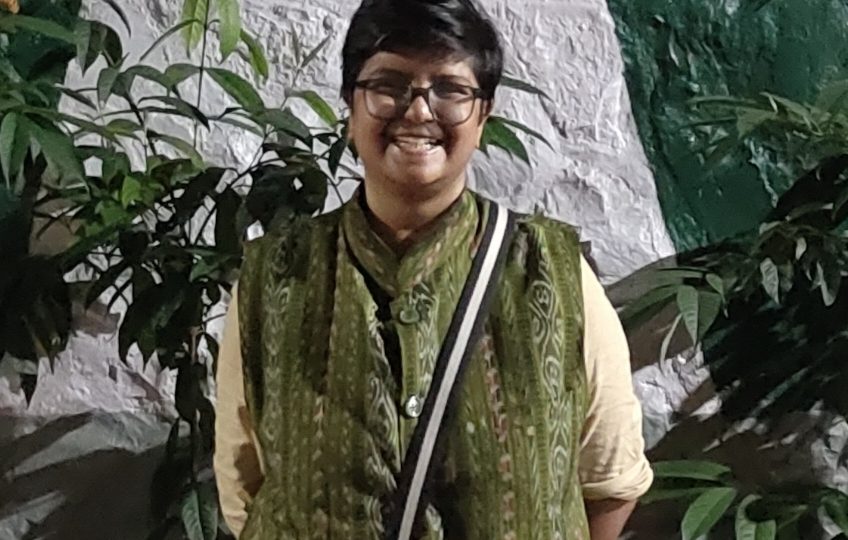
Debasmita Das
“Your father’s family is Mahishya, which means those born of a Kshatriya father and a Vaishya mother.” My mother lowered her voice and continued, “But rumor is they are Shudras. They are agrarian essentially, that’s why many in the family aren’t that well-off.” This was an answer many years in the making – previous attempts to ask about our caste had yielded answers ranging from “We descended from the Mongol Dravidians” to “Bengalis don’t have caste.”
The Mahishyas are an agrarian caste comprising a quarter of Bengal’s Hindu population. Their large numbers make them the locally dominant caste in certain districts. But their varna status has been in a state of revision since the mid-19th century. In this article, I describe how Mahishyas positioned themselves as Bhadralok and ritually pure by differentiating themselves from castes lower in the hierarchy and aspiring to Brahminical ideas of respectability, both of which happened through shifts in social norms, especially through Mahishya women, in a way that served the ascendancy of the caste.
Once at the dinner table, my sister and I tentatively mentioned that Mahishyas might get OBC status. My aged grandmother suddenly said, “Ora amader SC dakto.” “They used to call us Scheduled Caste.” The Mahishya have their roots in the caste called Kaibartas, which was divided into the Jaliyas Kaibartas, who were fishermen (now categorized as Scheduled Caste), and the Haliyas/Chasi Kaibartas, who were agriculturalists. The Haliyas began separating themselves from the Jaliyas, claiming superiority in the 19th century, and renamed themselves Mahishyas. The movement to be recognised as a caste separate from the Kaibartas gained momentum in 1897 when Mahisyas formed the “Jati Nirdharani Samiti.” The 1921 census included Mahishyas as a “depressed class” (which, after independence, became Scheduled Caste) as Chasi-Kaibarta. Still, affluent individuals refused to accept this, believing it would jeopardize their attempt to be seen as “high caste Hindus”. Through active campaigning, they managed to get recorded under the new caste name Mahisya.
Once I knew the name of our caste and Googled it, I found out about its history. When I asked my father if he knew that the Mahisyas were called Chasi Kaibartas, he said he didn’t. My grandmother was born sometime around the 1930s. How did a caste go from being categorized as a Depressed Class in 1921 to renaming and rebranding themselves as general caste Hindus in 2024? How does one teach entire generations to change their caste name and see themselves as not being lower in the caste hierarchy? One way was through women. Snippets of this can be seen in a journal called Mahishya Mahila, which began in 1911 under the editorship of a Mahishya woman, Krishnabhabini Biswas.
Sekhar Bandyopadhyay’s book “Caste, Culture and Hegemony: Social Domination in Colonial Bengal” mentions how Mahishya women were urged to participate in the social movement for uplifting their caste. The Mahishya Mahila, in 1912, wrote, “Men have become involved in the Mahishya movement. We should also participate in it. Otherwise, the movement will not be successful. The wife has no other dharma; the husband’s dharma is her dharma.”
The Mahishya Samaj prescribed women’s duties in the movement—to behave like respectable women, use the surname ‘Devi’ like high caste women did, and teach their children, relatives, and other women who were not aware that their caste name was Mahishya and not Chasi Kaibarta. It asked women to perform rituals that could establish them as a respectable caste. It was upon the women to reproduce the Brahmanical ritual codes to establish the caste’s status as high enough in the Hindu caste hierarchy.
Someone in my family once admitted to practicing untouchability – she told us how she had dragged her son away from playing with another kid his age, possibly of a different caste. Some of our family did not eat pork, which we thought was a personal preference. Later in a research paper, I read that in a village dominated by Mahishyas and with Namasudras as the minority Dalit caste, the Namasudras were looked down upon for being a caste that eats pork. Ideas of religiosity and purity were upheld by many women in the family, which initially made me think we must also be Brahmin because of our relatively more conservative approach to women and religion. The Mahishya claim to upper caste status was strengthened by maintaining caste boundaries. In the 1921 Census, the Chashi-Kaivartas were distinguished from the Jelia-Kaivartas and given Mahishya status. When Jelia-Kaivartas also tried to get Mahishya status and Patnis sought ‘Lupto-Mahishya’ status – both claims were vehemently criticized by the Mahishyas, who wanted to dissociate themselves from these ‘lower castes.’ To distinguish themselves from castes lower in the hierarchy, it was declared that Mahishyas who married out of caste would be socially ostracized, and they started following a fifteen-day mourning period for their dead instead of a month.
The last time we went to Mahishadal, my Thamma (grandmother) told me how Gandhi had sat in their living room. Her family had produced scientists and doctors – the new literate generation that was precisely the one that was mobilizing towards respectability. As a teenager, my grandfather was asked to guard the house where Gandhi was living for a few days. Even now, there are statues of freedom movement leaders like Sushil Kumar Dhara and Satish Chandra Samanta, and the caste members’ active involvement in the freedom movement is seen as a matter of pride. The Mahishya participated in large numbers in the freedom struggle. Unlike other Depressed Castes who didn’t trust the elite upper-caste led Congress to address their needs, they joined Gandhi’s Non-Cooperation Movement readily, perhaps because it made sense in their aspiration towards respectability. Sekhar Bandyopadhyay mentions, “In their journal, Mahishya Samaj, the word jati was frequently used interchangeably to mean both nation and caste, and the liberation of one became homologous to the emancipation of the other.”
The respectability of the caste was not just in the hands of those literate men who were shifting to professions that could designate them as bhadralok. The burden fell on women, too, through the adoption of moral and behavioral codes of upper-caste Hindu society.
My grandmother was married at 16. Much of her life revolved around taking care of her family and especially her husband, to the point that we were afraid of what would happen to her when my grandfather died. She died very soon after him. A lot of her sense of self came from being the figure of a devout woman, devoted to her husband and kids. I often wondered why, but some of the Mahishya Mahila’s words written just 20-30 years before her birth reveal the context in which this devoutness must have been forged. In 1911, Mahishya Mahila wrote, “Devoted wives must always follow their husbands, dead or alive, because it is only by serving the husband that a woman can reach heaven.” Another editorial in the Mahisya Mahila said, “It is only the ignorant who think that only a Brahman woman is supposed to observe brahmacharya (asceticism) at her widowhood.… It is a compulsory practice for the widows of all the varnas. By performing this dharma, they can attain salvation and get a worthy husband in the next life.”
As sections of castes entered professions that the bhadralok solely occupied, they had to embrace some amount of colonial modernity because of the emergence of social reform discourse. So by the 1920s, there were campaigns to discontinue child marriage or dowry in the journals that approached the question of women’s uplift, but largely from the perspective of the progress of the family, community, and nation.
He also says that while the journals reflect the universalization of Brahmanical gender codes being espoused by the literate bhadralok, women didn’t necessarily lose their autonomy completely. Many women took part in the Quit India movement, like Matangini Harza, who led a procession of 6000, mostly women, supporters, to take over Tamluk police station and was shot by the police while chanting Vande Mataram. Overall, there was an inverse tendency between social mobility and the status of women – where the burden of following norms to attain respectability was borne by Mahishya women.
One of the most popular Mahishya icons is a woman, Rani Rashmoni, the widow of a Mahishya zamindar known for her business acumen and philanthropy, who managed to outwit British colonial forces at one point. However, more than her business skills, she is known for her devotion, demonstrated by how she set up Dakshineswar Kali Temple in Kolkata and remained closely associated with (and in service of) Sri Ramakrishna, the temple priest at that time. It is popularly known that Brahmins refused to become priests at a temple constructed by a woman from the Shudra caste, and as a solution, she had to donate the land and temple she built to a Brahmin priest for the deity to be installed finally. It can be argued that her reputation as a spiritual icon belonging to the community and her ability to demonstrate devoutness more than Brahmin priests aided the respectability of the Mahishya caste.
One can see by the popularity of Rani Rashmoni, the participation of Mahishya women in the freedom struggle, and the values espoused by their journals about their role in both the Mahishya and the freedom movement.
While many dominant castes publicly have no fear and only pride in mentioning their caste, things were a bit different in the bhadralok culture of Bengal. I was told the name of our caste only when I asked about it at a much later age, when I had already demonstrated some knowledge of caste and its politics. Once, I overheard my family say, “I didn’t know he was also Mahishya” after returning from someone’s funeral. Those who grew up in the village seemed to know their caste easily, but young people like me who grew “caste-lessly” in urban areas were not told. Even my senior school certificate mentions Kayasth as my caste, even though that is my mother’s caste, since my ambiguous surname allows for that.
Post-independence, the Mahishyas were present in large enough numbers in the Congress and the CPI(M), occupying senior positions but not publicly referring to their caste identity. While all the Chief Ministers in Bengal have emerged only from the top 3 castes, at the panchayat level and even in state politics, Mahishyas were accommodated.
In the 1980s, when the Mandal Commission came to Bengal, Jyoti Basu is famed to have said that ‘there is no caste, only class in Bengal.’ Both Chasi Kaibarta and Mahishya were included in the castes listed by the Mandal Commission. It was only much later, in 2010, in the 7th report of the West Bengal Commission for Backward Classes, that people who could provide evidence of being Chasi Kaibarta were given OBC status, but not those named Mahishyas, who were considered to be relatively forward. One of the reasons was that in the hearings itself (as recorded in the Commission’s report), some people from the community provided evidence of their backwardness and wanted OBC reservation, others were bitterly against them being included as OBC citing their long participation in the freedom struggle and presence in bhadralok professions as evidence of respectability.
I asked my father once about the proposal for including the Mahishyas in OBC – wouldn’t it have made it easier for some of our extended family struggling with funding their children’s education? “He would not have taken the caste certificate because we know you get looked down upon. As long as we have enough money to study, there is no need.” It seemed like there was an awareness that forgoing the benefit of reservation could be made up by the social benefits of being able to exist in upper caste society without being identified publicly as OBC or Shudra. In the last few elections, the casteless cover of the Mahishya has been blown ever since both the TMC and BJP have proposed the inclusion of Hindu farming castes (recommended by Mandal) like Mahishya, Tili, and Sadgop into the OBC list. While there is a communal agenda behind the BJP proposing this, who says that the TMC government has been giving OBC status only to Muslims and not Hindu farming castes, some journalists are referring to this churn as Bengal’s mini Mandal moment.
Coverage by the Dalit Camera shows that there are calls among Bahujan groups to set up a Bahujan Commission in Bengal and demands for a caste census across India. In a recent survey of OBCs in West Bengal carried out by Mamata Banerjee, questions of castes like Mahishyas being included have re-emerged. But a caste that has so far relied on an alliance with upper castes and imitation of respectable Brahminical values for its social mobility, will it be able to acknowledge its shudra history, which it has systematically hidden or even erased from both public view and private memory? Unlike other Indian states that have seen non-Brahmin movements, there aren’t many records of any anti-caste movements among the Mahishyas that articulate a sense of difference or resistance towards the traditional three upper castes of Bengal. Through the Mahishyas, we can see how the erasure of one’s caste and adopting Brahminical practices and alliances with upper castes aided the social mobility of a caste that was almost categorized as a “Depressed Class” at the turn of the 20th century and the significant role of women in respectabilizing the caste in society’s eyes. What remains to be seen is whether the recent churns around OBC identity will be able to introduce anti-caste consciousness and thought in the Mahishyas (and if that is even possible given our history), or will we be yet another agrarian caste upholding the caste?
References
Acharya, A. (2021, June 20). The Shudra queen Rashmoni and a sacred river. The Hindu. https://www.thehindu.com/society/the-shudra-queen-rashmoni-and-a-sacred-river
Bandyopādhyāẏa, Ś. (2004). Caste, Culture and Hegemony: Social domination in colonial Bengal. In SAGE Publications eBooks. http://ci.nii.ac.jp/ncid/BA70055725
Dalit Camera: Through Un-Touchable Eyes. (2021). We demand full #CasteCensus in the forthcoming census and a Bahujan. . . (n.d.). https://www.facebook.com/DalitCameraDC/videos/demand-full-castecensus-in-the-forthcoming-census-a-bahujan-commission-in-bengal/364833185186260/
Jyoti, D. (2021, April 5). In Bengal, the battle for Mahishya vote and the politics of turning OBC. Hindustan Times. https://www.hindustantimes.com/elections/west-bengal-assembly-election/in-bengal-the-battle-for-mahishya-vote-and-the-politics-of-turning-obc-101617600433681.html
Mukherjee, P. (2021). Seeking new identity: The Mahishya caste movement in Midnapore, 1896-1921. Journal of People’s History and Culture, 7(1), 126-136.
Roy, I. (2021). Critique of Sanskritization from Dalit/Caste-Subaltern perspective. CASTE: A Global Journal on Social Exclusion, 2(2), 315–326. https://doi.org/10.26812/caste.v2i2.292
Sarma, J. (1980). Caste dynamics among the Bengali Hindus. In Firma KLM eBooks. http://ci.nii.ac.jp/ncid/BA07924657
WEST BENGAL COMMISSION FOR BACKWARD CLASSES. (1996). Seventh report. https://wbcbc.gov.in/advice/7th-rpt.pdf
~~~
Debasmita Das is a student of MA Women’s Studies at TISS Mumbai. She has previously studied and practiced illustration & design and worked in the sexual and reproductive health sector.