Deepika Meena
During the rural immersion program organized by my institute, I participated in a two-day field visit to two districts in Rajasthan, Jhunjhunu, my hometown, and the neighbouring district of Sikar. Although the visit was brief, it offered me a valuable opportunity to view my own district through a new lens and to unlearn certain preconceived beliefs. Because of my deep familiarity with both places, their geography, local culture, and traditional values, I initially assumed the experience would be a simple revisit to familiar locations, primarily to guide students. However, the immersion turned out to be far more enlightening than I had anticipated.
I began my visit in Sikar, approximately 100 KM from my home. My initial expectation was to act mainly as a facilitator for students. Yet, within a few hours, I realized the experience was unfolding layers of understanding I had never encountered before. The exploration began with discussions about the village’s name and how it reflected local linguistic and cultural ideologies. Local officials then guided us to the Samashana Ghat (cremation ground) of the village, which had recently been reconstructed using government funds. The site appeared well-developed, with proper roads, boundary walls, and water facilities. However, what struck me most was not the visible infrastructure but the social realities embedded within it. Curious about whether such spaces had become more inclusive over time, I asked whether the cremation space was still divided according to caste. To my surprise, the villagers confirmed that this practice remained unchanged; in fact, members of lower castes still had separate cremation grounds. This revelation challenged my assumptions about social progress, especially in the context of educational and infrastructural development. When I visited another village the following day, I discovered that similar caste-based divisions existed there as well. My cousin accompanied me during these visits, and unlike me, he was not surprised by these realities. His familiarity stemmed partly from his gender being male; he had visited these places before, whereas women are traditionally not permitted to enter the shamshana ghat. For me, it was the first time stepping into this space, which deepened my understanding of my community’s cultural practices and gender norms.
Over the two days, we also visited several old temples and explored their historical and cultural significance. In one village in Sikar, we visited a 960-year-old Hanuman temple, after which the village was named. The temple had historical connections to India’s freedom movement, having served as a refuge for national leaders who once hid their weapons there. Similarly, in a village in Jhunjhunu, we visited a 600-year-old Sati Mata temple located near the shamshana ghat, a site that villagers regard as a place of safety and spiritual protection.
Beyond these observations on tradition and culture, our conversations with residents revealed a strong emphasis on education. Across both districts, families demonstrated considerable commitment to their children’s schooling. Many young people from the region are now pursuing higher education in renowned institutions such as IITs and medical colleges. Sikar has rapidly developed into a major coaching hub in Rajasthan. While exploring the area, we noticed an abundance of coaching centres, advertisements, school buildings, and bustling markets filled with young students.
Overall, this rural immersion experience allowed me to critically reflect on the intersection of development, tradition, caste, and gender within familiar spaces. It transformed not only my understanding of these districts but also my perception of social change and continuity in rural Rajasthan.
~~~
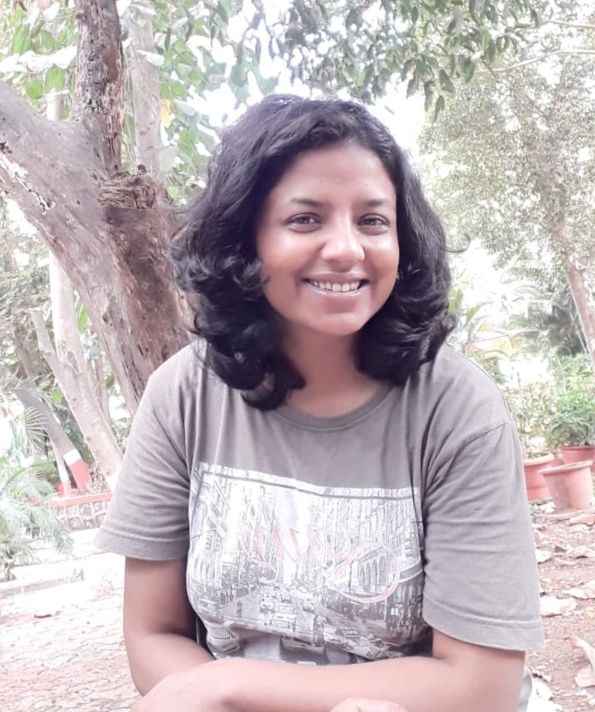
Deepika Meena is an Assistant Professor at MICA, Ahmedabad. She holds a PhD from IIT Gandhinagar.