
Milind Babasaheb Thokal
In 2017, after completing my Higher Secondary Certificate (HSC), I faced the daunting task of securing admission to prestigious and reputed institutes in Pune. What struck me most during the process was the constant mention of the word “merit”—a term I had heard repeatedly but couldn’t fully grasp in context. I had no idea what it truly meant. This was all for a humanities degree, where the merit cut-off was as high as 95% to 99%. This frequent invocation of “merit” prompted deeper reflection on its implications and the role it plays in shaping academic trajectories. It raised pressing questions: Why has merit become such a determining factor in our educational system? Why are we not free to choose whatever we wish to learn or study? Is it really our right to education, or is it the rigid construct of merit that dictates our path? Is the concept of merit a casteist tool that reinforces oppression and denies basic rights to marginalized communities?
To understand this better, let’s examine the origin and evolution of the concept of ‘merit’ and ‘meritocracy,’ particularly in the context of Indian society, and analyse whether this system truly serves the best interests of students.
The Origins of “Merit” and “Meritocracy”
The word “merit” has its roots in Latin, originating from the word mereo, which means “to deserve, obtain, or earn.” Over time, it evolved into the Old French term merite, meaning “having positive qualities,” and eventually made its way into the English language, carrying the meaning of “being worthy or deserving.” Essentially, merit has always implied an evaluation based on one’s qualities or capabilities.
On the other hand, meritocracy is a term introduced by British sociologist and political theorist Michael Dunlop Young in his book The Rise of Meritocracy (1958). In this satirical work, Young critiqued the idea of a merit-based society, predicting that meritocracy would lead to a dystopian society where inequality persists in a new guise. In his vision, society would come to value “merit” so much that those at the top, while believing their success is based on merit alone, would perpetuate a cycle of exclusion and inequality. His theory has since become an important lens through which we examine the implications of merit-based systems.
Merit in the Indian Context: A Sociological and Philosophical Exploration
To understand the dynamics of merit in India, we must first recognise the foundational structure upon which Indian society is built. For that, let’s consider Karl Marx’s theory of the base structure and superstructure, which is an effective way to examine this. Karl Marx theorised that the base consists of the economic forces and relations of production, which in turn shape the superstructure—including culture, ideology, politics, and education.
In the context of Indian society, the economic base is heavily influenced not by capitalist dynamics but by the caste system, which is deeply embedded in its social and economic fabric. The caste system is rigid, dictating not only an individual’s social standing but also their occupation and access to opportunities. Dr B.R. Ambedkar described caste as an “enclosed class,” meaning one’s caste defines their potential for mobility in society. This rigid structure has left a profound impact on India’s education system.
When the British colonised India, the upper-caste Hindus who collaborated with the colonisers were given the privilege of translating religious and philosophical texts into English, thus gaining access to the global educational discourse. After India’s independence, the country’s educational system largely retained its colonial characteristics without addressing the inherent social inequalities caused by the caste system.
Meritocracy in the Indian educational system is profoundly influenced by the caste system. While merit in theory is supposed to be based on individual achievements and abilities, in practice, it often reflects social and economic privileges. This creates a paradox: the system claims to reward merit, but in reality, it often rewards those who have had access to better resources, which are disproportionately available to upper-caste communities and elites.
For example, students from marginalized communities—whether Dalits, Adivasis, or Other Backward Classes—often face systemic disadvantages. These students may have no access to quality education, coaching centres, and even basic resources like books and the internet. The high cut-offs for prestigious colleges in metropolitan cities (tier 1 colleges), often hovering around 95–99%, may exclude a significant number of talented students from these communities, even though they may possess the intellectual capacity to succeed.
Has Meritocracy Been Effective in Reducing Inequality?
A meritocratic system assumes that everyone starts on an equal footing, but this is far from reality in India and the world. The reality is that caste-based inequities shape access to education and career opportunities in profound ways. In fact, the concept of meritocracy in India often becomes a tool for reinforcing existing hierarchies and oppression. Those in power—the upper-caste Hindus—can perpetuate their privilege by keeping high barriers to entry in educational and professional spaces, masking these barriers under the guise of “merit.”
Reports and data on educational inequality in India corroborate this. According to the 2018 India Human Development Survey (IHDS), students from lower-income families and marginalized communities are far less likely to attend high-quality institutions or even complete higher education. Furthermore, the increasing reliance on private coaching classes, which are often financially out of reach for marginalized students, further exacerbates these inequalities.
Does the Current Merit System Serve the Purpose?
While meritocracy intends to reward talent and hard work, the current merit-based system in India has largely failed to level the playing field. Instead of being a fair system that truly recognises merit, it often serves to maintain the status quo, where social capital (in the form of caste, class, and wealth) plays a disproportionate and unequal role in determining one’s educational and professional success.
Meritocracy, as it is practiced today, often overlooks the socio-economic and historical contexts that affect an individual’s ability to succeed. Without addressing these foundational inequalities, merit-based systems can perpetuate and even worsen societal divisions. For example, while the idea of competitive exams like the JEE (Joint Entrance Examination) and NEET (National Eligibility cum Entrance Test) seems fair on paper, the reality is that students from affluent families have access to resources—like private tutors and coaching institutes—that give them an advantage over their less privileged peers.
The notion of merit as a universal and objective criterion for assessing individual capability becomes deeply problematic within the socio-historical context of India. The Indian social fabric has been shaped by centuries of caste-based hierarchy, exclusion, and systemic deprivation, wherein large sections of the population—particularly those from marginalized and oppressed communities—have been denied equitable access to resources, education, and opportunities for social mobility. In this context, the concept of merit cannot be understood in isolation from the structural inequalities that continue to define the lived realities of these communities.
To invoke merit as a neutral or purely individual attribute disregards the historical injustices and socio-economic handicaps that have constrained the development of marginalized groups. The idea of merit, therefore, functions less as a measure of innate ability and more as a reflection of accumulated social advantage and social capital. Those born into privileged castes and class positions have, over generations, benefited from access to quality education, stable livelihoods, and networks of social capital—all of which contribute to what is later valorised as “meritorious achievement.”
Conversely, students from historically oppressed communities often reach elite educational institutions through extraordinary perseverance and struggle, overcoming barriers that their privileged counterparts seldom face. Yet, upon entering these institutions, they frequently encounter discrimination, hostility, and caste-based prejudice, which undermines their sense of belonging and dignity. Such experiences reveal how the discourse of merit operates as an ideological tool to maintain existing caste hierarchies, delegitimizing affirmative action and social justice measures aimed at redressing inequality.
In a society as diverse and historically stratified as India, therefore, the concept of merit must be reconceptualised not as a fixed or absolute measure of individual worth, but as a socially contingent construct that can only have meaning when situated within the broader framework of justice, equity, and historical context. True meritocracy, if it is to exist, must account for the unequal starting points created by centuries of oppression and exclusion.
To truly foster an educational system based on merit, it’s essential to address the inequities that currently pervade the system. This could involve a more holistic approach to evaluating merit, one that goes beyond rote memorisation and standardized testing to include factors like creativity, critical thinking, critical analysis, and social awareness. Moreover, greater emphasis must be placed on providing equal opportunities for students from all walks of life, regardless of caste, class, religion, language, etc. The ultimate goal should not be a society where only the privileged succeed, but one where everyone has an equal chance to thrive based on their abilities—and not by their birth.
Conclusion
The meritocratic system, as it stands today, has significant flaws that need to be addressed. By examining the sociological roots of merit and its intersection with caste in Indian society, it becomes clear that a true meritocracy cannot exist without first addressing the inequalities built into the system—and therefore, the system of merit is nothing but a casteist idea in itself. To make education truly equitable, we must move beyond rigid definitions of merit and work toward creating a system that recognizes the diverse talents and potential of all students, regardless of their socio-economic background. Only then can we ensure that merit serves its true purpose: to reward hard work and potential, not to perpetuate existing social hierarchies and caste-based oppressions.
~~~
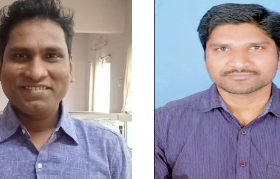
Milind Babasaheb Thokal has completed B.A. (English Literature), LL.B., LL.M. (International Commercial Arbitration), and is currently pursuing an M.A. in Philosophy. He is an Advocate at the Bombay High Court and the District and Sessions Court, Pune.