Dr Rinzing Ongmu Sherpa
Laryoo abo laryo laryo (she will fall, she will now fall).
Audience at the Inox West Point Mall, 4th June 2026
The Security Guard: Baini, what kind of work do you have outside at this hour of the night?
Where are you coming from?
Incident April 2025, Sikkim
The 21st Century is obsessed with appearing ‘progressive and egalitarian’. The idea of empowering women, or what we call ‘women empowerment’, has become synonymous with mainstream culture. There is a crazy obsession with it; I see it everywhere through social media, billboards, marketing apps, magazines, you name it. Every other individual, irrespective of their orientation, has a say on the subject. Digital media in particular has become a powerful platform through which they perform and promote it further, which not only gains them attention but also pays off. They curate their lives carefully, like the aspired and envied ‘21st century individuals’ who are independent, in control and committed to empowering the rest. Each one of us, in a way, represents this ‘21st century woman’. But where are these women in real life?
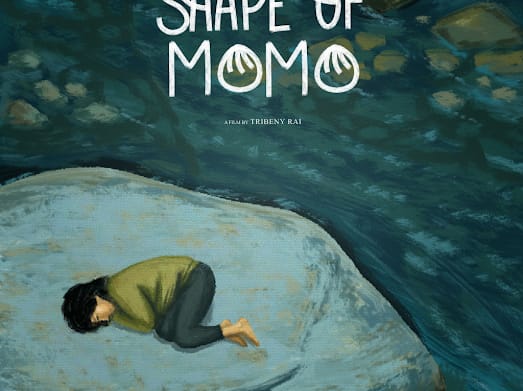
The two instances mentioned at the start of the article are from different times and different contexts, yet they highlight the same underlying intolerance that society carries towards its women and their agency and autonomy. My most recent movie watch, Shape of Momo, directed by Tribeny Rai, is a movie of female rage and her everyday resistance. The first instance I refer to comes before the movie closes, where Bishnu, the main protagonist played by Gaumaya Gurung, is once again shown doing her morning rounds of running, free and unhindered. While her people tried to confine her to ‘expected limitations’, Bishnu seeks a life beyond. While the scene played out, a few men seated behind in the auditorium remarked that ‘now she would definitely fall’. Their loud voice and their tone were enough to convey that a woman such as Bishnu would one day fall due to hyper-independence of her own making. Our society may still not be ready to accept women such as Bishnu. Her ‘difficult’ nature and her rage, which she carries over her sleeves, are a threat to the hypocrisy our society hides behind. While it celebrates the rhetoric of her empowerment, it enjoys the power and control it has had over her. And Bishnu is a woman who sees through it and, most importantly, is angry about it. Thus, there is a troubling contradiction that lies beneath the celebratory banner of ‘women empowerment’. The narrative of empowerment is encouraged, as long as it does not challenge the age-old established structure of patriarchy and sexism in our society.
When we think of home, we think of familiarity. It’s a culmination of several emotions – of belonging, of comfort and of warmth. A place where you derive your utmost strength from and to which you can return each time, either broken or healed, it accepts you. Returning home to Sikkim in 2023, after several years in Delhi, brought forth many emotions – of anticipation, of hope, of love and also of grieving for the place I was leaving behind. Delhi had been a place of growth and self-discovery. A place which at times broke me to my lowest, yet each time remembered to help me crawl back. I learned to navigate life on my own terms, though it was always the tougher way. As a Sikkimese woman living in Delhi, I am subjected to multiple layers of discrimination: as an ‘outsider’, a North Easterner, and as a woman. I was acutely aware and reminded of my vulnerabilities each day. However, while its people judged and held me down, the city and its anonymity gave me the space to breathe.
Though home was supposed to be different, the closer I went, the more it revealed the same prejudices and inequalities we often imagine exist elsewhere. The second context mentioned in the opening line is of my own experience in Sikkim. Like Bishnu, in that moment of confrontation with the security guard, I found myself longing for the autonomy and anonymity that I had just left behind. Several similar everyday instances that followed before and after compelled me to confront yet another difficult question. Is home necessarily synonymous with familiarity or belonging?
The ‘male patron’ is an ever-present figure throughout the movie, where even in their absence, their presence remains constant. Sometimes through Bishnu’s deceased father, who still holds power over the household and outside. At times, as her potential partner Gyan (played by Rahul Mukhia), who even starts taking over the role of the patron, and sometimes through the teenage boy of a migrant labourer, who deems it his duty to protect the house and its women. The idea of a ‘male patron’, however, often obscures deeper questions about power and control. The sheer concept of a ‘protector’ has always brought forth an unhealed rage. It questions our agency, our right to consent and outrightly mocks our potential. Exercising our ‘empowerment’ is used against us, where we are labelled as those welcoming harassment and violence. So, why is a woman’s agency a problem? And most importantly, who or what are they protecting us against, while being entitled to disrespect, humiliate, and cross our personal boundaries as and how they please to. So, are they the ‘protector’ or the ones we should actually be protecting ourselves against?
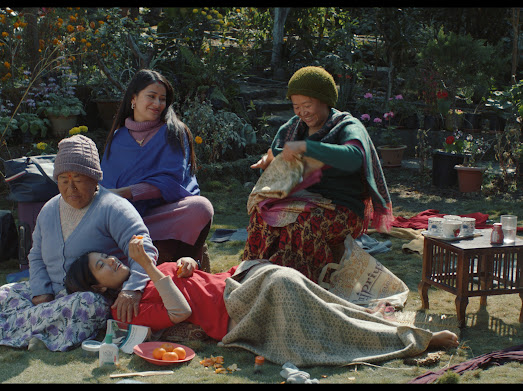
Therefore, would it be wrong to say that we as a society have given birth to these young, angry and ‘difficult’ women that Bishnu has so commendably portrayed. Her character emerges as a product of the everyday workings of our society. Bishnu embodies the frustrations of countless women whose lives are shaped by incessant surveillance, control, and paternalistic notions of care. Thus, the social structure has a huge role to play in bringing forth and perpetuating patriarchy, misogyny and chauvinism.
~~~
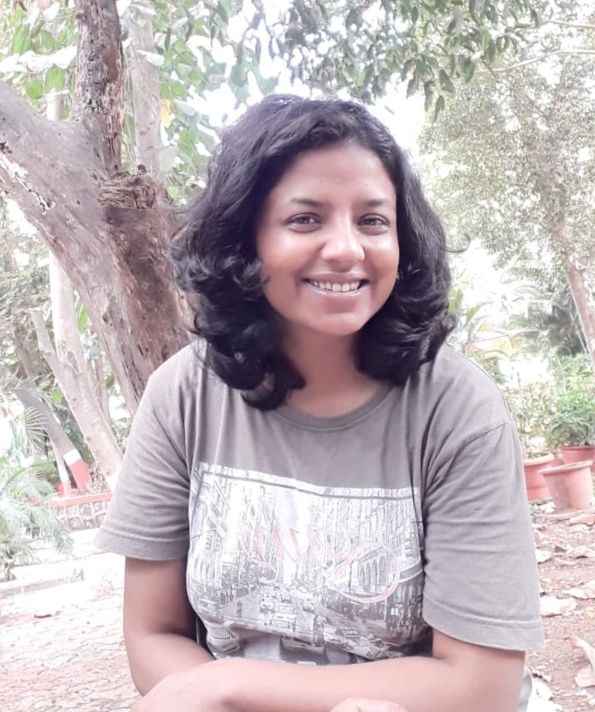
Dr. Rinzing Ongmu Sherpa is an Assistant Professor of Sociology at the Centre for Distance and Online Education (CDOE), Sikkim Manipal University, East Sikkim. She earned her PhD in Sociology from Jawaharlal Nehru University (JNU), New Delhi, in 2023.