
Dinesh Govindaraj Kamalam
For the first time in its history, the Viduthalai Chiruthaigal Katchi (VCK) has a minister sitting in a Tamil Nadu Cabinet it did not help elect as the senior partner. Vanni Arasu’s appointment as the state’s first-ever Minister for Social Justice, with charge of Adi Dravidar Welfare and Hill Tribes, is being read, reasonably, as a landmark. Asked how he felt about it, Vanni Arasu called it “our dream,” telling South First that after thirty-seven years since VCK’s founding, the party finally felt it was moving toward the very purpose for which it was created. This is a remarkable admission given that, as he recalled, VCK had spent its first years boycotting elections altogether under the slogan “None of you are honest; our votes are for no one,” before Dr. Thirumavalavan steered the movement toward the ballot. That is the image. An Ambedkarite reading of this moment has to ask what this implies.
Dr. Ambedkar did not write in the abstract about representation. He fought, lost, and wrote about a specific question: when a numerically small, historically oppressed group enters a political arrangement with a numerically and socially dominant one, on whose terms does that arrangement run?
His sharpest formulation of the danger came from his own defeat. The Communal Award of 1932 gave the Depressed Classes separate electorates—the right to elect their own representatives without depending on caste-Hindu votes. Gandhi began a fast unto death against it, and under that pressure, Dr. Ambedkar signed the Poona Pact, trading separate electorates for reserved seats within joint constituencies. Scholars of that episode have since pointed out exactly what was lost in the trade: in reserved constituencies with a large caste-Hindu electorate, the dominant community remained able to determine which Dalit representative got elected, since the seat was reserved for a Dalit candidate, but the voters choosing among Dalit candidates were not. That is the distinction Dr. Ambedkar spent the rest of his political life trying to repair—between a Dalit representative elected by Dalits, accountable to them, and a Dalit representative who owes his position, in practice, to a majority’s consent.
He returned to this problem with more precision in the Constituent Assembly’s minorities sub-committee, where he argued that “the danger of communal discrimination by majority against minorities forms an ever-present menace to the minorities,” and pressed for minority representation in the executive—the council of ministers, not merely the legislature—to be proportionate to minority representation in the legislature, so that government would draw its mandate not only from the majority but also from the minorities.”1 Almost all of these proposals were rejected by the Constituent Assembly. Writing decades later, commentators have noted that reserved legislative seats for Scheduled Castes have remained largely symbolic for this reason: representatives often win on a majority party’s ticket and depend on the majority community’s votes to get there.
On the underlying purpose of seeking power at all, Dr. Ambedkar was direct. The test he leaves us with is not whether a Dalit party holds a ministry. It is whether the power behind that ministry was seized and is now wielded independently, or whether it was given and remains revocable by the formation that holds the rest of the Cabinet.
How VCK Actually Arrived at This Cabinet Seat
The public narrative of “VCK left DMK and joined TVK” does not survive scrutiny of the documented sequence of matters. According to the Election Commission schedule, the Tamil Nadu Assembly election was held on 23 April 2026, with results declared on 4 May 2026. TVK emerged as the single largest party with 108 of 234 seats—short of the 118 needed for a majority.
Facing a hung Assembly, VCK held internal consultations and extended outside support to Vijay’s government formation. Dr. Thirumavalavan was explicit about the reasoning: the move was meant to prevent President’s Rule and to honour the electorate’s mandate for the largest formation to attempt government, and he stated plainly that it would not affect VCK’s standing alliance with the DMK, whose leadership had already been informed.
What followed was not an immediate Cabinet entry. VCK initially declared it would follow the same path as the CPI and CPI(M)—outside support only, distinct from joining the government. Vijay was sworn in as Chief Minister on 10 May 2026, and his government passed the floor test on 13 May, without a VCK minister in the Cabinet. It was only later, during a cabinet expansion, that the question of VCK joining the government was settled. Vanni Arasu and the IUML’s A.M. Shahjahan were sworn in together, with Vanni Arasu allotted the new Social Justice portfolio.
This ordering is the load-bearing fact. A seat negotiated as the price of votes, before those votes are cast, is one thing. A seat offered after the votes have already secured the government’s survival, with no precondition recorded at the time support was given, is a different thing—closer to the model of nominal representation Dr. Ambedkar fought against than to the model of enforceable, proportionate executive representation he tried and failed to build into the Constitution.
A Party That Was Already Making This Argument About a Different Party
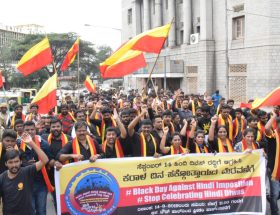
VCK’s very existence is a documented Ambedkarite critique of Dravidian politics, which makes the present arrangement harder to assess generously, not easier. Scholarship on VCK’s emergence in the 1990s describes it plainly: the party arose because Dravidian politics had turned ineffective at handling Dalit concerns and caste issues, with the DMK and AIADMK having travelled a long distance from Periyar’s self-respect movement, trading his social radicalism for a Tamil-nationalist cultural politics that left caste largely untouched while romanticising the antiquity of Tamil language and culture instead. Dr. Thirumavalavan built VCK’s politics explicitly around Dr. Ambedkar as well as Periyar; this included the public reciting Dr. Ambedkar’s twenty-two conversion vows and organising protests against attempts by Hindutva groups to recast Dr. Ambedkar as a Hindu icon rather than its sharpest internal critic.
This is not incidental detail. It means VCK’s historic complaint against Dravidian rule was never really about which party held office. It was structural: Dravidian-pedigree governments, regardless of which one, retain the vocabulary of social justice while leaving the material levers of caste power—land titles, the caste composition of the police and bureaucracy, the intermediate-caste electoral coalitions both major Dravidian parties depend on—substantially undisturbed. A separate strand of Dr. Ambedkar scholarship makes the same point about minority-led regional formations more broadly, observing that parties such as the DMK have themselves been driven by the consolidation of regional caste majorities even while claiming to represent the marginalised. If VCK’s diagnosis of DMK was correct, intellectual consistency demands the same diagnosis be applied to TVK without discount—a new party, but one governing through the same Assembly, the same administrative cadre, and a coalition that includes legislators who crossed over from AIADMK to support Vijay’s floor test.
The Same Fire, Fought Twice
The clearest evidence of that structural continuity is that Vanni Arasu’s stated agenda as minister is not new. It is VCK’s own unresolved case against the previous Dravidian government, restated. A special law against honour killings was a DMK poll pledge. Four years into the Stalin government, it had not been enacted. After the murder of Kavin Selvaganesh, a young Dalit IT professional hacked to death by the brother of the woman he was in a relationship with, Dr. Thirumavalavan, together with the CPI and CPI(M) state secretaries, formally petitioned Stalin to bring the law without further delay, citing recommendations from the National Commission for Women as far back as 2010 and the Law Commission in 2012. Stalin’s reply, delivered on the floor of the Assembly, rejected new legislation outright, arguing that faster prosecution under existing law backed by special public prosecutors was the better route.
VCK’s general secretary Dr. D. Ravikumar went further, using National Crime Records Bureau data to indict the same government’s record on caste violence directly: recorded atrocities against Scheduled Castes in Tamil Nadu rose from 1,377 cases in 2021 to 1,921 in 2023, even as neighbouring Andhra Pradesh, Telangana, and Karnataka all recorded declines over the same period. Dr. Ravikumar’s charge was specific, not rhetorical—that cases filed under the SC/ST Prevention of Atrocities Act were being dismissed as “false” at an alarming rate without serious investigation, and that the state’s policing and prosecution apparatus needed structural reform, not better intentions.
These are, almost item for item, the priorities Vanni Arasu has now listed for his five-year term: a special honour-killing law drawing on the Justice K.N. Basha Commission, reservation in promotions under Article 16(4-A) per the Justice G.M. Akbar Ali committee, and the formal declaration of atrocity-prone zones in southern districts. In the same districts, the Tirunelveli killing and other caste-driven violence occurred under the previous government. The new minister inherits not a fresh mandate but an unfinished file. The question the file itself poses is unforgiving: if these specific demands stalled for years under a party VCK has been allied with for over two decades, what about TVK’s position—its coalition arithmetic, its administrative inheritance, its dependence on many of the same caste blocs—gives reason to expect a different outcome now?
What Is Genuinely New, and What Annihilation of Caste Actually Requires
To be fair to the moment, something real has changed. A standalone, Cabinet-rank Social Justice Department, with a VCK Dalit leader at its head, did not exist under any DMK government; Adi Dravidar welfare was historically a sub-department, not a ministry built around the language of social justice itself. Vijay’s cabinet also includes eight Dalit ministers in total, alongside, for the first time in the state’s history, two ministers from the Brahmin community—a genuinely unusual configuration by the standards of Dravidian-era cabinet-building, which has rarely combined visible Brahmin and Dalit representation at the same table.
But Dr. Ambedkar’s own writing on caste sets a standard this configuration has not yet met. In Annihilation of Caste, he insisted that political reform without social and economic reform is hollow, warning that “democracy in India is only a top-dressing on an Indian soil which is essentially undemocratic” until the underlying social structure changes. His argument was never that the state should administer welfare to the oppressed more generously. It was that caste survives because it controls land, labour, and the right to dignity, and that annihilating it means redistributing those things, not better funding the departments that manage their absence. A Social Justice Ministry that delivers scholarships and housing schemes, however necessary, without addressing who owns the land registered as “Panchami,” who staffs the police force whose conviction rates VCK itself has condemned, or who controls promotions within the bureaucracy, is administering the consequences of caste, not its cause. Nothing about TVK’s founding, its candidate list across the 234 constituencies, or its post-election coalition arithmetic—built in part on AIADMK defectors and a confidence-and-supply arrangement with multiple smaller parties—suggests a different relationship to the intermediate-caste landholding structures that have slowed exactly these reforms under DMK and AIADMK governments alike for decades.
TVK’s own branding leans directly into this unresolved tension rather than away from it. At its founding conference, the party displayed cutouts of Periyar and Dr. Ambedkar together as its declared ideological guides, with Vijay describing TVK’s politics as a left-leaning Dravidian social justice ideology—a more explicit embrace of Dr. Ambedkar than the DMK, historically centred on Periyar’s rationalism, has typically offered in its own iconography. Whether that pairing signals a genuine widening of what “social justice” means in Tamil Nadu’s government, or simply a more inclusive set of portraits behind the same administrative machine, is precisely what remains to be tested.
What Would Actually Count as Proof
A critical assessment owes more than scepticism; it owes specific, checkable benchmarks. Over the coming Assembly sessions and budget cycles, these are the tests that would distinguish a structural shift from a re-flagged continuity:
-
Does the honour-killing law based on the Justice Basha Commission get tabled and passed in the Assembly, not merely promised again, as it was promised and not delivered under the previous government?
-
Are the Justice Akbar Ali committee’s Article 16(4-A) recommendations on promotion reservation implemented with published, verifiable promotion data, rather than accepted “in principle” and left there?
-
Does the NCRB atrocity trend VCK itself documented—rising cases, declining conviction rates relative to neighbouring states—actually reverse, with transparent state-level reporting on SC/ST Act case outcomes?
-
Does Panchami land documentation proceed with an actual budget line and timeline, rather than producing another census or committee report that generates data without redistribution?
-
Are any districts formally declared atrocity-prone zones, with a measurable change in policing deployment and protocol, rather than the designation remaining a press-release category?
Each benchmark is independently verifiable. None requires a prior verdict on TVK’s character—only a record, kept honestly, of what the government that VCK helped install actually does, set against what VCK itself spent years documenting as missing from the government it helped sustain before that.
The Banner, the Blueprint, and the Choice Still Ahead
VCK’s arrival in Cabinet, and the creation of a Social Justice Department, is a genuine first for Tamil Nadu, and an honest account of this moment has to record it as such—including what it visibly means to the cadre Vanni Arasu described, who has waited thirty-seven years to see this happen. But Dr. Ambedkar gave us the test for exactly this kind of moment, and it was never about whether a seat exists. It was about whether the power behind the seat was secured on terms the minority itself could enforce, or extended on the majority’s timetable and revocable at the majority’s discretion. By the documented sequence—support given unconditionally, with DMK ties explicitly preserved; the government’s survival secured without a VCK minister in the room; the ministry following only at a later expansion—VCK’s position fits more closely with the model of representation Dr. Ambedkar called nominal than the model of proportionate, self-enforced power he tried to build and lost at Poona.
That does not make the arrangement worthless, and it does not make Vanni Arasu’s intentions suspect. It means the test has not yet been passed, only entered into. Dr. Ambedkar’s own answer, when he faced an analogous calculation in 1935, was eventually to break with the Congress fold altogether rather than accept representation that depended on a caste-Hindu-dominated party’s continued goodwill. Dr. Thirumavalavan has chosen, for now, the opposite path—to hold the DMK relationship and the TVK ministry simultaneously, betting that VCK can extract structural change from inside two arrangements at once rather than risk irrelevance outside both. Whether that bet pays off is not a question this piece can settle, because it has not yet been tested against a single Assembly session, a single budget, or a single NCRB report under the new government. What is owed to the people VCK was founded to represent, at minimum, is that the record of what was promised, when it was promised, and in what order it was secured, remains public and is checked against what actually changes. That record exists now. The rest is implementation and accountability.
Reference
- Dr Babasaheb Ambedkar: Writings and Speeches Vol-1, Page 368.
~~~
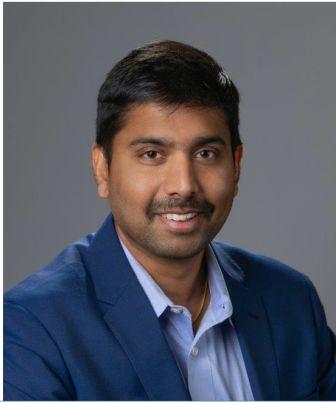
Dr. Dinesh Govindaraj Kamalam is a policy analyst, educator, and writer whose work focuses on environment, governance, constitutional politics, and social justice. He has served on a committee involved in the compilation of Dr. B.R. Ambedkar’s Writings and Speeches in Tamil, and currently serves as a member of a Government of Tamil Nadu committee for book selection and recommendations for public libraries.