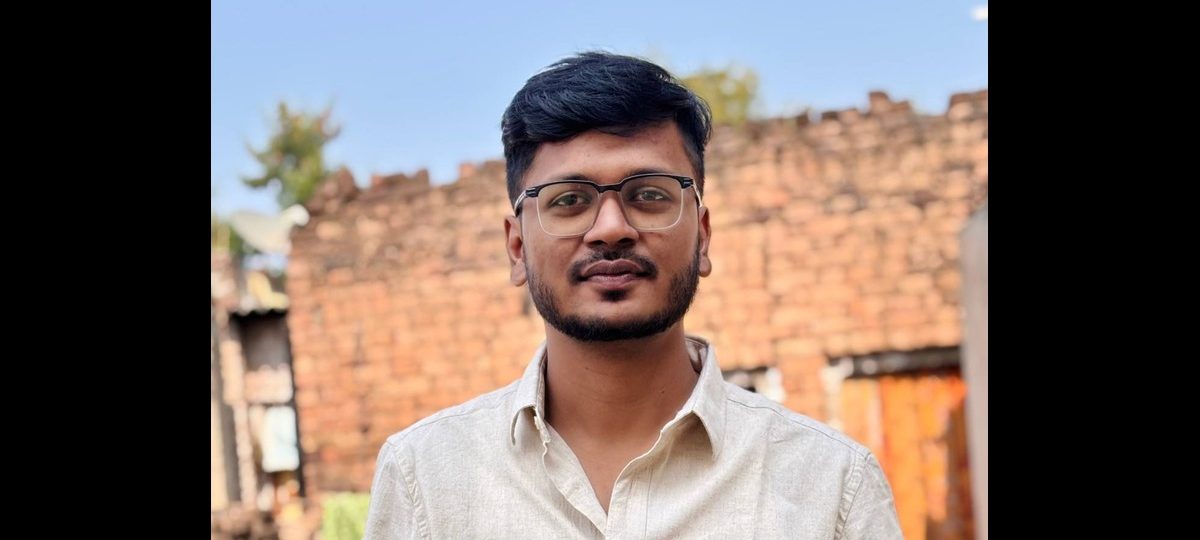
Ajinkya Sanjay Khandizod
I began thinking seriously about the idea of persona not in a classroom or through theory, but by watching how caste operates when power is supposed to change hands. Reservation is often presented as a technical policy or a constitutional safeguard, but in reality, it exposes the deepest anxieties of caste-Hindu society. When seats are unreserved, caste-Hindus perform progressiveness with ease. They speak of democracy, development, competence, and inclusiveness. Caste appears absent, almost irrelevant. But the moment a position is reserved for a Scheduled Caste candidate, this performance cracks—the language changes. The concern shifts from policy to personality, from governance to “behaviour”, from political clarity to “acceptability”. What is really being debated is not ability, but obedience.
Across Maharashtra’s local body elections, including in my own village and constituency, and clearly in places like Beed, where reserved mayoral positions were at stake, a pattern becomes visible. Vocal Scheduled Caste candidates, those who speak clearly about caste, inequality, and power, are quietly sidelined. In their place, parties, including those that claim to be progressive, choose safer Dalit faces. These candidates are not chosen because they are more capable, but because they are less “disruptive”. They are expected to occupy power without “exercising” it. This is where the figure of the ‘Non-assertive Dalit’ becomes central to understanding how caste works today.
The non-assertive Dalit is not submissive by nature. This submission is created and managed. It is shaped by repeated signals from institutions, parties, NGOs, and academic spaces that survival depends on restraint. The non-assertive Dalit learns to speak carefully, to dilute anger, to translate structural violence into polite language. They are praised as “mature”, “balanced”, “responsible”, and “clean”. Their presence is celebrated as evidence of inclusion, even as their politics is emptied of substance. Power is allowed to change hands symbolically, but not materially.
Caste-Hindus play a crucial role in maintaining this arrangement. In progressive sectors like academia, civil society, and policy spaces, they “perform” a “Brahminical persona” that appears ethical and neutral. They speak in abstraction, avoid naming caste directly, and frame themselves as allies rather than beneficiaries of the system. This persona works as long as caste-Hindu dominance is not challenged. But when reservation forces them to step aside, their progressiveness reveals limits. They begin to police the tone. They worry about “polarisation”. They warn against being “too political”. These concerns are presented as technical or strategic, but they function as tools of control.
What is striking is that caste-Hindus rarely oppose Dalit representation openly. Instead, they manage it. They decide which Dalits are suitable for leadership and which are dangerous. A Dalit who speaks softly is framed as cooperative. A Schedule Caste person who speaks clearly is framed as aggressive. A caste-Hindu’s anger is read as “passion”, but a Schedule caste person’s anger is treated as a threat to harmony. In this way, the moral authority of caste-Hindus remains intact even in spaces that claim to challenge caste.
This dynamic extends far beyond elections. In academia and the social sector, Dalits are welcomed as “voices from the margins”, as carriers of lived experience, but rarely as producers of theory or as challengers of institutional norms. Their suffering is made visible, but their analysis is censored. The moment Ambedakarite thought begins to question the legitimacy of Brahminical knowledge itself, it becomes uncomfortable. Progressive spaces are willing to hear about injustice, but not about their own role in sustaining it.
This is where the deeper political loss occurs. The transformation of Dalit politics into a Dalit persona directly contradicts the vision of Buddha, Phule, and Babasaheb. Buddha rejected karma-kand, the idea that suffering is deserved and that moral purity grants authority. Phule attacked Brahminical dominance at its root, refusing to accept its claim to intellectual and moral leadership. Babasaheb did not seek inclusion into caste society; he demanded its annihilation. None of them believed that justice would come through good behaviour or respectability.
Yet in today’s progressive sectors, Dalits are subtly taught the opposite lesson. They are encouraged to believe that if they behave correctly, speak gently, and remain institutionally loyal, they will be rewarded. This is a secular version of karma-kand. It promises justice in exchange for discipline. It replaces political struggle with performance. And it leaves caste-Hindu power largely untouched.
The tragedy is that this arrangement is often defended in the name of pragmatism. Dalits are told that being too vocal will cost them opportunities, platforms, and positions. This is true. But what is rarely acknowledged is the cost of submission. When Dalits internalize the idea that political clarity is a liability, Ambedkarite politics is reduced to symbolism and tokenism. Representation remains, but transformation disappears.
The figure of the non-assertive Dalit is therefore not a failure of individuals. It is a success of the system. It allows caste-Hindus to appear progressive while retaining control. It allows institutions to showcase diversity without redistributing power. And it allows caste to survive under the language of equality.
Watching how reservation plays out in elections makes this impossible to ignore. Caste-Hindus do not fear Dalits in office. They fear Dalits who refuse to perform submission while occupying it. That fear explains why vocal Dalit candidates are filtered out, why anger is disciplined, and why progressiveness ends exactly where power begins.
Understanding the performative persona helps clarify this reality, not as psychology, but as politics. The real struggle today is not just to enter positions of power, but to occupy them without surrendering political voice. Without that, the promise of Buddha, Phule, and Babasaheb remains present in words and absent in practice. To sum up, progressiveness cannot be borrowed from caste-Hindu approval, and justice cannot depend on polite behaviour. The future of Ambedkarite politics lies in reclaiming political voice without seeking comfort, in occupying power without surrendering clarity, and in remembering that dignity comes not from being chosen as “safe”, but from choosing refusal when submission is the price of entry.
~~~
Ajinkya Sanjay Khandizod (B.Tech Chemical, MA Social Work) works as a Development Sector Professional.