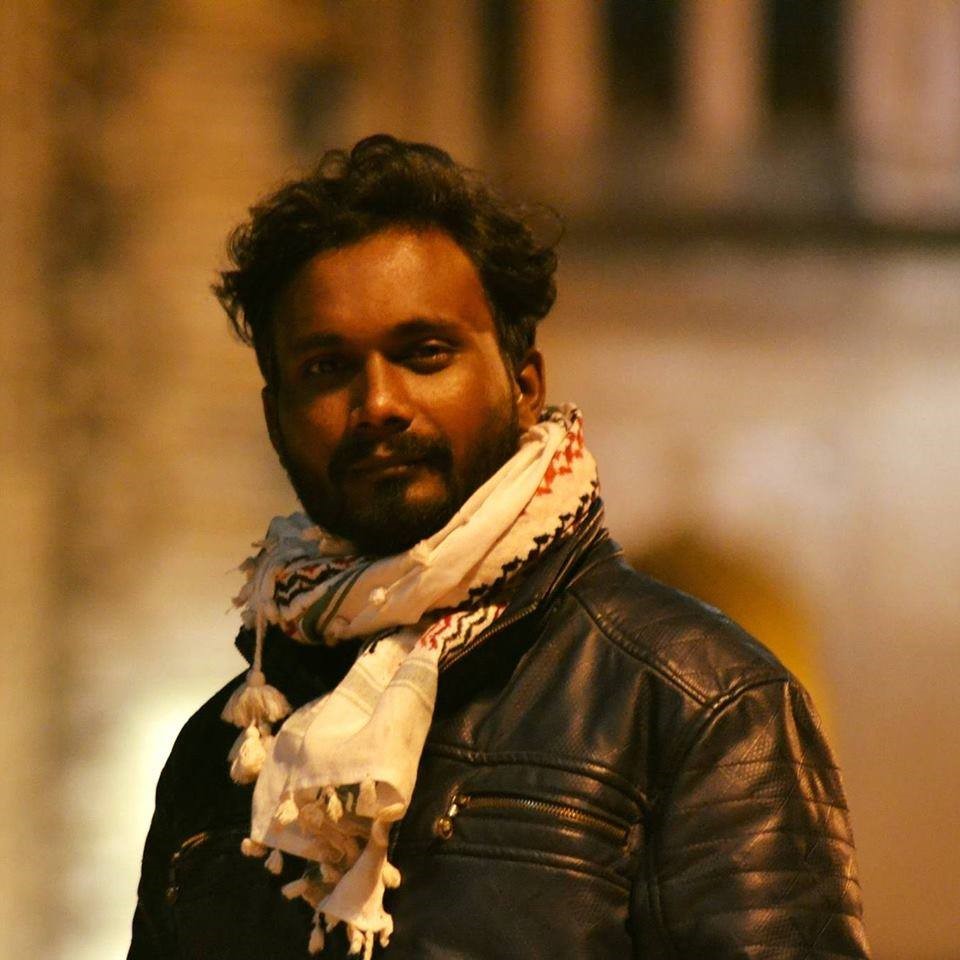

Divyanshu R. Mangariya
“Caste is not a thing of the past. It is a living, breathing structure that denies millions their humanity.”
– Kancha Ilaiah Shepherd
I was a curious boy, mischievous at times, eager to explore new things and adventures. I believed childhood was just about friendship and play. But slowly, the shadow of caste crept in—and it has never left me. since I was in the 7th standard when caste first revealed itself to me in its cruelest form. After a tiring PT period, thirsty and exhausted, I asked a classmate for water. Instead of offering, he asked me, “Which caste do you belong to?” When I replied, “Marvada” (a Scheduled Caste community in Gujarat), the water stopped flowing—not from the bottle, but from his humanity. When I remember this incident I started questioning to myself How can a child, who only asked for water, be denied because of the accident of his birth? What kind of poison must a society carry if even water has to pass through the filter of caste?
Dr. B. R. Ambedkar once said, “Turn in any direction you like, caste is the monster that crosses your path.” For me, that monster arrived in a school classroom. From then on, silence became my refuge. I ate alone when others ate in groups. I lowered my eyes instead of raising my voice. The shame of telling my caste became a burden heavier than any schoolbag. Another time, during an NCC drill I had joined with excitement, a group of boys hurled a caste slur at me— “Dhedh”, a word used in to degrade the Scheduled Castes. That word clung to me like a stone I carried in my pocket—cold, heavy, and impossible to throw away. Some days, it burned against my skin. Other days, it sat inside me like a corpse, reminding me that caste was not just a word—it was a wound. And so, I ask: if a child cannot drink water freely, cannot march proudly, cannot eat without shame—what kind of education system are we building? How many dreams must die quietly in classrooms before we admit that caste is not history but our present poison?
I am not alone in shouldering the hurts caused by caste. Many individuals have had to suffer worse atrocities even than my own, some even paying with their lives. I have heard stories about students in Indian colleges taking their own lives because of the intolerable weight of discrimination based on caste. Their silence is heard in our campuses, a strong reminder that caste is not only a social hierarchy—it is a slow kind of violence, a poison even in those spaces which promise learning and equality. Caste is a multidisciplinary issue; yet resistance to it has always existed. Inspired by the spirit of the Black Panther Movement, where young black African Americans fearlessly challenged racial violence and discrimination, the Dalit Panthers were formed in Maharashtra in 1972 by Namdeo Dhasal and J. V. Pawar. These young people asked not for pity or alms; instead, they demanded respect, equality, and liberation from the oppression of caste. Their cries in verse, in agitation, and in politics declared that Dalits would no longer suffer in secret.
That same fire is needed today. We cannot afford to be remembered only as victims of discrimination—we must also be recognized as fighters. We do not need sympathy; what we need is justice. We must resist, we must speak, and we must continue the unfinished struggle for dignity and equality.”
I think of Rohith Vemula, a PhD scholar at the University of Hyderabad, who left behind the heartbreaking words: “My birth is my fatal accident. He wrote in his suicide note: “I always looked at the stars and wanted to be a writer, a writer of science like Carl Sagan. But in the end, this is the only letter I am going to write. I loved science, stars, nature—but then I loved people without knowing that people have long since divorced from nature. Our feelings are second-hand. Our love is artificial, our beliefs are colored. It has become truly difficult to love without getting hurt.” He described how he was “treated like a pariah” in the very space that promised learning and freedom.
I think of Dr. Payal Tadvi, a young Adivasi Muslim doctor in Mumbai, who was relentlessly harassed by her seniors until she ended her life in 2019. She carried the weight of those humiliations until it broke her spirit.
I think of Fathima Latheef, a bright student at IIT Madras, who died in 2019 after leaving notes naming casteist bias and humiliation as reasons for her despair. And even in the so-called most prestigious spaces of Indian education, like the IITs, the shadow of discrimination thrives.
And so I ask: How many more Rohith, Payal, and Fathima must we lose before we confront the truth? How long will institutions remain complicit in this discrimination? Until when will our universities—temples of supposed knowledge—continue to be graveyards of Dalit, Bahujan, Adivasi, and minority students’ dreams?
If students who cross so many barriers to enter these institutions are still made to feel unwelcome, still treated as “others,” then what does that say about the values of these temples of knowledge? They, too, deserved respect. They, too, dreamed of futures full of dignity and contribution. And if these are only the names we know, how many more stories remain unheard, buried in silence, hidden behind university walls? How many more students are suffering as the poison of caste and discrimination continues to seep into classrooms? Their stories are not isolated tragedies—they are testimonies of how caste continues to murder silently in the halls of higher education.
Caste is not a relic of the past—it is a living wound, a structure that bleeds into every space we inhabit, even into the heart of higher education. My story is only one among thousands. Rohith, Payal, and Fathima remind us that education without equality is just another name for oppression. We cannot allow more dreams to die in silence. To the boy I used to be: you carried shame, you carried silence, you carried names meant to break you. But today, your voice speaks not only for you, but for all those who were silenced. We are not asking for sympathy—we demand dignity. Enough is enough.
References
- Satheesh, Shone. “Payal Tadvi Suicide Case: The Death of a Doctor.” Mint Lounge, LiveMint, 7 June 2019, www.livemint.com/mint-lounge/ideas/payal-tadvi-suicide-case-the-death-of-a-doctor-111641586756645.html
- Farooq, Omer. “Rohith Vemula: The Student Who Died for Dalit Rights.” BBC News, 19 Jan. 2016, www.bbc.com/news/world-asia-india-35349790
- Ara, Ismat. “Suicides in IITs: Students Blame Academic Pressure and Discrimination Based on Caste, Religion.” Newslaundry, 20 Nov. 2019, www.newslaundry.com/2019/11/20/suicides-in-iits-students-blame-academic-pressure-and-discrimination-based-on-caste-religion.
~~~
Divyanshu R. Mangariya is from the Kutch Gujarat India and a student of MA English literature at Maharaja Sayaji Rao University of Baroda.