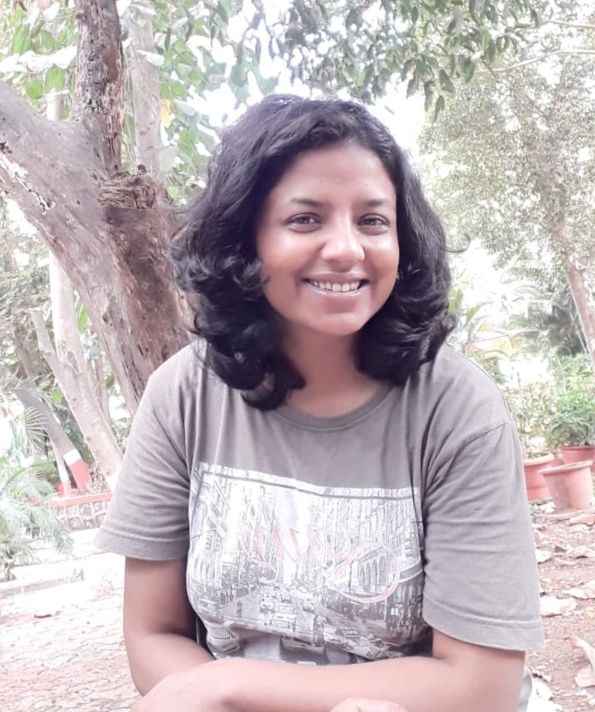
Neha Thombre
When the Union government announced that the National School of Drama (NSD) would stage a play on the life of Sardar Vallabhbhai Patel on his 150th birth anniversary across major Indian cities, it seemed at first glance more like a political agenda than a national tribute. Of course, Patel was one of the key architects of independent India — a leader whose integrity, administrative vision, and role in uniting the nation remain undeniable. But beneath the patriotic packaging of the project lies a far more disturbing reality: the quiet encroachment of the political parties into the country’s cultural and artistic institutions.
History is full of instances where art has always been used as a political tool — right from Mao’s control over cultural production to the recent example in February 2025, when Donald Trump appointed himself chairman of the Kennedy Centre board, fired many of the previous members, and installed loyalists in their place. He expressed a desire to steer programming toward more popular shows, with a particular focus on stopping drag performances — a direct attempt to control cultural production.
In China, the communist government censors all cultural productions. We have examples from China where the ruling government censors theatre, film, and even textbooks, allowing only sanctioned works to be shown. Following the same trend, the Indian ruling party seems to manufacture an ideology in the consciousness of people by controlling content.
During the 1975–1977 Emergency in India, then Prime Minister Indira Gandhi’s government imposed widespread censorship, severely restricting artistic freedom. A system of pre-censorship was imposed on all newspapers, and the government controlled the state-owned radio and television networks. Electricity to newspaper printing presses was famously cut on the first day of the Emergency. The Board of Film Censors was restructured and used to clamp down on cinematic expression. Films critical of the government or the Emergency were either banned outright or forced to undergo cuts. For example, the satirical film ‘Kissa Kursi Ka’ had its prints burned by government agents and was later reshot and released in 1978. Artists, writers, and journalists critical of the government were targeted. South Indian actress and activist Snehalata Reddy was imprisoned under the Maintenance of Internal Security Act (MISA) for her association with a socialist leader. She was reportedly tortured and died shortly after being released on parole. Several literary and artistic figures were jailed for their dissent. Hindi writers and poets such as Murli Manohar Prasad Singh, Nagarjun, and Girdhar Rathi were imprisoned on the night the Emergency was declared. In Maharashtra, writer Durga Bhagwat was also arrested after speaking out. The state actively co-opted the arts for propaganda. The Films Division was tasked with producing documentaries promoting the government’s agenda, and artists were pressured to create works glorifying government policies. Despite intense pressure, many artists found ways to resist censorship.
In the current scenario, the right-wing government has used every possible form of media for its own ideological propaganda. From performances to books, any form of art that conforms to right-wing ideology gets promoted. They started with ‘Mann Ki Baat’, which became the longest-running radio program hosted by a Prime Minister in the world. During the show’s airtime, even private radio channels were required to broadcast it, giving 100% bandwidth to the program with no option left except turning the radio off.
During the lockdown, capitalizing on the rise of social media influencers and to attract the younger generation, the party in power started the ‘National Creator Awards’ — the only one of its kind in the world — and gave awards to those who furthered their ideologies in one way or another. Following the Centre, even politicians started giving “Creator Awards” in their constituencies to attract voters. For example, Raj Thackeray from Maharashtra immediately jumped on this bandwagon and gave the first “Maharashtra Creator Awards” by MNS to selected individuals from his constituency, ignoring the rest of Maharashtra.
They also made their own films like ‘The Kashmir Files’, ‘The Bengal Files’, and ‘The Kerala Story’, propagating certain narratives, and are now targeting theatre institutions. They have already interfered in the administration of cultural institutions by choosing their heads, and now they are interfering in what to teach and what to show. This is cultural murder, and soon India will become like China. I see this as the last attack on democracy as well as a warning sign.
The Role of Cultural Institutions
Cultural institutes like the National School of Drama are not just any other theatre school; they are a national symbol of creative autonomy and artistic excellence. Since its founding, it has produced a generation of actors, playwrights and directors who have pushed the boundaries of Indian theatre and questioned the status quo. Its classrooms, stages, and studios were meant to be spaces of experimentation — free from the dictates of political power. When a government commissions a play directly through such an institution, it alters the purpose of that space. What should have been an artist’s exploration of history becomes a government-sponsored narrative. This is not about celebrating Patel; it is about deciding “who” should be remembered, “how” he should be remembered, and, more importantly, “who” gets to control that memory. Commissioning a play by the ruling government is not only a direct attack on artistic freedom but also an attempt to direct minds and consciousness toward a particular ideology in power. In such practices, where the final output is pre-approved, the artist is left with no creative freedom and naturally becomes part of an extended system, bound to think and produce in a particular way.
Change in Cultural Institutes
Recently, some changes have been observed in the administration of NSD that go against its original image. For example, two months ago, NSD launched a one-year program in cinema acting in Mumbai, with fees of six lakh rupees. NSD is known for its affordable art education — such moves say a lot about the changing image of art schools.
Commissioning a play means promoting an approved script from the party in power and forwarding a set agenda, which is exactly the opposite of what cultural schools should be doing. Students who join institutions like NSD or FTII should be trained to produce art, not propaganda. In a democratic country like India, since the BJP government took power, we have seen efforts to push their ideology through cultural institutions. FTII’s example of banning students from questioning is mocked; even NCERT has not been spared. Commissioning plays through cultural institutions where art and thought should be practiced freely is a concerning step.
Need to celebrate birthdays of political figures
In recent incidents, we clearly see the ruling party’s efforts to influence history. Earlier, we saw NCERT manipulation and rewriting history according to sanctioned narratives. The need to celebrate a two-year-long birth anniversary using public funds clearly shows that the ruling party is dictating the public’s consciousness — deciding what part of history to remember and what to erase. This is a clear attack on history and an attempt to construct the future according to a predetermined agenda. The government has been holding several events to commemorate Patel’s contribution to the freedom movement and the unification of the country. The “Run for Unity,” along with the release of a commemorative coin and stamp on his birth anniversary every year, is one such event. Political parties are often found misusing their position of power.
In conclusion, we must guard our cultural institutions, which are symbols of free thinking and independence from political influence. Once such practices — like commissioning plays from cultural institutions — begin, they will set a precedent for future elected parties to do the same. The freedom of speech has never been as suppressed as it is now. If the idea is to make the younger generation aware of his contribution and his role in shaping modern India, we have many democratic ways of doing it. We may grant funds to theatre groups so that they can develop their own scripts and produce their own plays. This will allow artists to interpret freely, and their creativity will get more exposure. If at all the government wishes to spread the thoughts of Sardar Vallabhbhai Patel, it should dedicate funds from the Ministry of Culture rather than involving NSD. To truly honour him, we must defend the independence of thought and expression that defines India’s democratic spirit. If political parties continue to script the nation’s art, what will remain is not culture but propaganda.
~~~
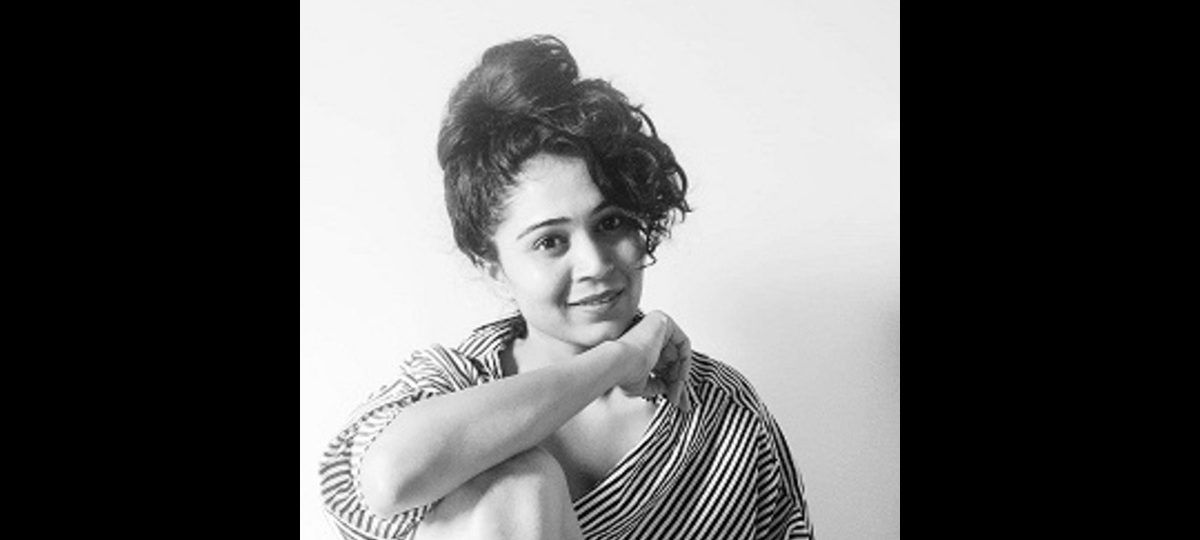
Neha Thombre is a Marathi stand-up comedian and social creator, known for being the first Marathi performer to stage a stand-up show in London. Her popular reel persona, Thombre Bai, offers sharp, satirical commentary on government policies, social inequalities, and everyday political realities. Through humour rooted in Vidarbha’s cultural and social landscape, she uses comedy as a tool for critique, resistance, and community connection.