
Umar Nizarudeen
The cyclical temporality of Indo-Iranian notions of metempsychosis lends itself to speculative fiction. The work of the Iranian thinker Reza Negarestani is interesting for its melding of petro-fiction with carbon lifecycles.
The convoluted movement of energy and life in `Cyclonopedia’ cursorily lingers on theory. This visceral yet short excursus allows us an insight into the fraught scenario of the `Donroe doctrine’ extrapolated to the East as well. The oriental crafting of this work survives a hard landing on present-day geopolitics. It is Negarestani’s veiled critique of extractivist imperialism that facilitates this.
The sheltering sandboxed sphere of `toy philosophy’ offers Negarestani a worm’s eye view or disadvantage point to take potshots at `theory’. Philosophy outside of the Marxian ecosystem shuns polemic and stays clear of seeking validation in sociological moorings. Negarestani shuns the convoluted jargon of Western academia that often masquerades as `theory’. The convolutional mapping of a small kernel of carbon energy futures over the planetary globe allows an atemporal and quasi-mystical exegesis of geopolitics.
The manifestation of Reza Negarestani as an oriental peer and pioneer of `theory fiction’ is consequent upon `Cyclonopedia’ and his blog on `Toy Philosophy’ In his work of theory-fiction titled `Cyclonopedia’, Negarestani tackles the fraught question of monotheistic apocalypticism. According to Slavoj Žižek, we are living in the end of times. This post-apocalyptic futurism offers a future that is no future. The abyss of pessimism from which no light escapes finds its analogue in memory in climate catastrophe and genocidal war. Memory in the age of AI is no longer a remembrance of what has been, but a training of neurons or muscles over and over again. Memory no longer is something stored in the brain, connected by a vague sense of history and linear time, that sometimes edges ahead, waits at the crossroads and surprises you. The future just got cancelled in the profoundest sense for Žižek. The eternity had a moment left over, and that moment is all that is left. As Arundhati Roy puts it rather flowerily, humanity increasingly resembles passengers on a bus hurtling downwards, fighting about which songs to play. In Roy’s world, rosy yet pessimistic, ideological catastrophe has no precedence over the climate one. Memory is something to be observed from the outside. It always has been, in its effects, a gravitational pull that calls you from its abysmal Lede. The memory of Edenic bliss is all that separates the world from being a Trumpian hell.
Negarestani deftly navigates the prehistoric temporalities of fossil genesis and the demise of prehistoric artefacts that would later emerge as carbon fuels. Nagerestani castigates the extractivist cult of `nafta’, as petroleum is known in West Asia. The demoniacal possession of the hollowed-out core of the earth presents itself as a Trumpist nightmare in a world entangled in perpetual planetary crisis.
`Cyclonopedia’ resurrects the ghoul-e-naft or the oil fiend in old West Asian legends of pre-modern oil exploration, analogous to the monstrous Godzilla in the aftermath of the genocide that was Hiroshima. Humans, having turned aliens unto themselves, emerge from the post-apocalyptic horror of microbial sovereignty.
Petroleum as `hydrocarbon corpse juice’ expands its dimensions and acquires geo-political dimensions via the cartelism of OPEC and the genocidal coprophiliac war-machine that interpellates itself into the linear temporality of the Eurasian global everyday. The extinction-level event at the end of the Cretaceous period foretells the advent of fossil modernity. The myth of prehistory accelerates the loss of the present through hydrocarbon futures.
A feedback cycles of memory, myths and materiality produce the political exegesis of the present. Negarestani also introduces the concept of Tysons. The Tysons present an alternative universe of space-time progression. The work is speculative in that revolution is speculative in either its political or cosmic exegeses. The oriental subaltern imagination is allowed to run riot. The planetary thought of Deleuze and Guattari allows Negarestani to segue into a new planet, which is the earth itself, in its manifestation as the `New Earth’.
HP Lovecraft, George Bataille, and Antonin Artaud’s facial matrix of dot-matrix gangrene, and the interstitial signifiers of life occur as an ideology that peppers the narrative, which can be extrapolated to Indian English fiction, as in the case of `Temporary People’, a novel about Malayali workers set in the Gulf, written by Deepak Unnikrishnan. The nomadic articulation of complex spatiality occurs in such `Gulf narratives’ and also in cinematic narratives such as `Dune’, based on the text by Frank Herbert. The puritanism that hampers the nomadicity and its valences, as in the transhumance of desert migrations take us back to pre-history.
Nagerestani instantiates the interstitial geological spaces of Cappadocia while iterating the convevienza of Mediterranean solidarity. The cyclic temporality of the `Cyclonopedia’ composes certain plateau-like `nemat-spaces’ between the state and the nomads. It is in these interstices subtended by the future that the life to come, l’avenir, exists.
~~~
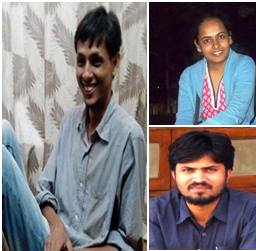
Umar Nizarudeen was at Goldsmiths, University of London. He has a PhD in Bhakti Studies from the Centre for English Studies in JNU, New Delhi. His poems and articles have been published in Round Table India, Vayavya, Muse India, Culture Cafe Journal of the British Library, The Hindu, The New Indian Express, The Bombay Review, The Madras Courier, FemAsia, Sabrang India, India Gazette London, Ibex Press Year’s Best Selection, etc.