

Features

Time to Redraw Reservation Lines in Madhya Pradesh
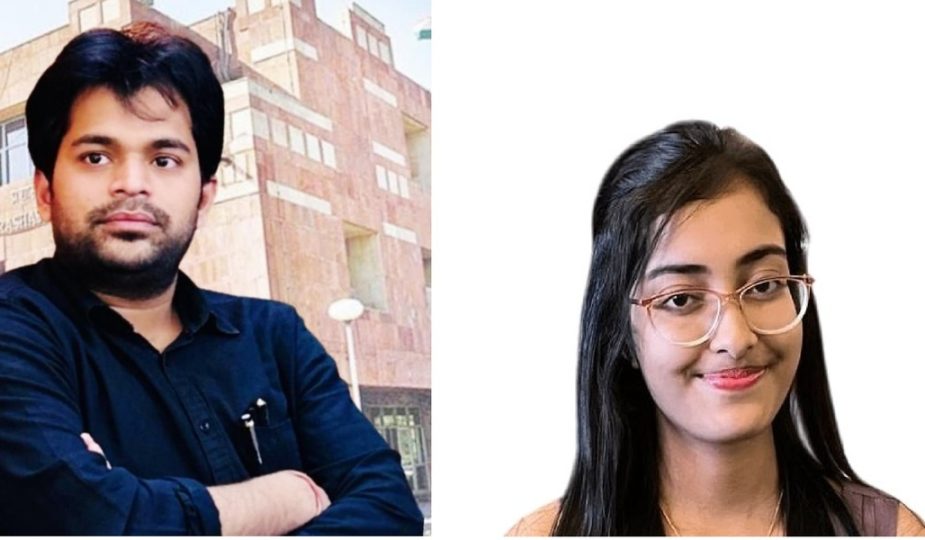
Amit Kumar Yadav, Nayana Goswami Madhya Pradesh has once again found itself at the centre of a national debate on the future of social justice, affirmative action, and the legal limits of representation. The state government’s decision to push for 27 percent reservation for the Other Backward Classes (OBCs) and its subsequent affidavit before the …

Features

Perpetuating Caste: Lord Jaganath’s Myths and Current Temple Practices

Lipun Kumar Sanbad  Lord Jagannath is a renowned Hindu deity not only in the state of Odisha but also throughout India and the world, with millions of devotees and hundreds of temples dedicated to him. The term ‘Jagannath’—Jagat (World) + Nath (Lord)—means the ‘Lord of the World’. The first question that arises is this: Can …

Features

‘The politics of cringe’ is rooted in caste and class bias

Preksha Chaudhary Consider the reach of some Indian influencers with millions of subscribers and followers on Instagram, YouTube, and other platforms. On these accounts, millions of viewers are invited daily to laugh at individuals’ spiked hairstyles, different haircolours,  bright clothes, makeup styles, local accents and dialects, deliberate mispronunciation of words, and romantic gestures coded as …

Assertion

Between History and Politics: Lambadas and the Struggle for Scheduled Tribe Recognition

Rathod Raghuvardhan Broadly classifying the tribal communities based on lifestyle patterns, there are four major kinds of tribes in India: nomadic, semi-nomadic, settled, and Particularly Vulnerable Tribal Groups (PVTGs). Here arises an important question: what makes a community a tribe? How can we classify a community as a tribe? This remains one of the most …

Features

Beyond silence and erasure: A review of the mizo film Ambush (A war story) and the media in India

Ringngheti Khenglawt . . . in 1947 the British empire handed us over to the Indian government and set sail towards their homeland. At the year 1958 and 1959, mautam – the famine caused by the flowering of bamboos and rapid increase of rat population, made us realize that we were just a guest at …

Features

A Sociological Analysis of the Idea Behind Sub-Classification of the Schedule Caste List

Anshul Kumar “The fact is that the governing class in India blinded by self-interest is unmindful of the absurdity of the argument of naked efficiency and being conscious that it has the power to convert its opinion into law does not bother what the servile classes have to say on the point. The governing class …

Features

The Hauntology of Blackness in `The Menon Investigation’

Umar Nizar The Menon Investigation’ by the prize-winning novelist Saharu Nusaiba Kannanari is an absolute cracker of a thriller that, in its socio-political ramifications, is, to use a well-worth cliché, unputdownable. The titular Menon’s interiority and anxieties about his dark skin colour in a racist society form an unlikely backdrop to this work of fiction. …

Features

The non-brahmanical world-building of Lokah: reimagining the subaltern myths

Srutheesh Kannadi The recently released Malayalam movie Lokah Chapter 1 Chandra, which claims to be the first female-led superhero movie in India, has sparked a discussion among a larger audience due to its content, visual experience, and innovative treatment. However, this is not a review of the movie Lokah, but an attempt to interpret the …

Features

Invisible Citizens: How Bihar’s Special Intensive Revision Marginalises Migrants

Anand Raj Article 19 (Clause 1) of the Indian Constitution grants the freedom of movement of its citizens throughout the territory of India, including for work. Due to unequal development, people migrate to other states for work. People from eastern Indian states such as Bengal, Bihar, Jharkhand, and Odisha migrate to comparatively economically developed western …