

Assertion

Guru Teg Bahadur and the Hindu-Rashtra

Dr JasSimran Kehal The Right to freedom of religion was implemented in India in 1950. Articles 25-28 of the Indian Constitution provide the right to freely profess, practice, and propagate one’s religion. They prohibit the state from using public funds to promote any particular religion and prevent religious instruction in state-funded educational institutions. Globally, Article …

Features

Operation Kagar and Internal Fault Lines: The Caste Question in the Decline of CPI(Maoist)

karthik

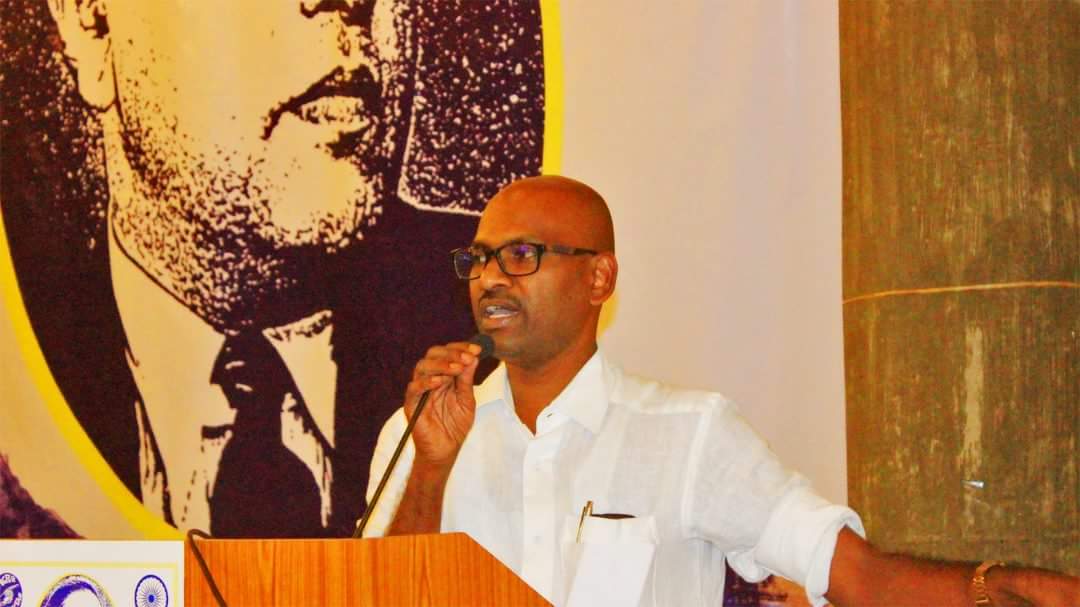
Dr B Karthik Navayan The Communist Party of India (Maoist) has always presented itself as the fiercest enemy of caste oppression. Its programme promises to annihilate caste through a protracted people’s war. Yet, as Operation Kagar (launched 21 April 2025) races toward the March 2026 deadline to wipe out Left-Wing Extremism, the party is collapsing …

Features

Odisha’s Guest Faculty Crisis: The Silent Collapse of Educational Justice

Tapan Kumar Sethi Odisha’s higher-educational system has entered a moral and political crisis, resulting in a persistent educational crisis. Behind the grand promises of the National Education Policy (NEP) 2020, the reality of university and college campuses tells a story of hopelessness—one where guest faculty, the invisible lifeline of classrooms, struggle each day against poverty, …

Assertion

Aestheticising Humiliation: The Savarna Gaze and the Politics of Sexual Slurs

Akanksha Shahi The recent controversy on Instagram, initiated by influencer Divija Bhasin, revolves around the hashtag “#ProudRandi,” which has polarised viewers into two different categories. In her video, Divija Bhasin shares her experiences, explaining that due to her bold nature and her willingness to raise her voice against various issues, some people have commented on …

Features

Beyond Entertainment: Women’s Lives Behind Tamasha

Vishakha Daware  India is a land of immense cultural diversity, where every region expresses its identity through unique languages, traditions, festivals, arts, and cuisines. The state of Maharashtra stands out for its vibrant folk heritage, particularly through Tamasha – a dynamic form of theatre that blends music, dance, and drama. Created to entertain rural audiences, …

Features

Anthropological Debates on Tribal Community Policies – A Note

Shruti Botre Anthropological accounts of tribal communities have largely provided working definitions of the term’ tribe,’ which have often been specific to their site of study. Given that tribes differ considerably in terms of their population size, mode of livelihood and level of integration within the capitalist economy, there is huge differentiation, for example, in …

Assertion

Emancipation in Action: The Marathwada Continuum

Pradnya Jadhav This reflection is shaped by my conversations with long-time movement workers, activists, and community members. It has been written not as an account of someone learning from a living Ambedkarite lineage, that is not an abstract idea from people who have carried forward the labour, dignity, and moral courage that define what social justice is. …

Features

The High-Jack of Cultural Institutions by Ruling Parties

Neha Thombre When the Union government announced that the National School of Drama (NSD) would stage a play on the life of Sardar Vallabhbhai Patel on his 150th birth anniversary across major Indian cities, it seemed at first glance more like a political agenda than a national tribute. Of course, Patel was one of the …

Features

Caste as Capital: Whose Merit? The False Neutrality of Merit in Indian Society

Milind Babasaheb Thokal In 2017, after completing my Higher Secondary Certificate (HSC), I faced the daunting task of securing admission to prestigious and reputed institutes in Pune. What struck me most during the process was the constant mention of the word “merit”—a term I had heard repeatedly but couldn’t fully grasp in context. I had …