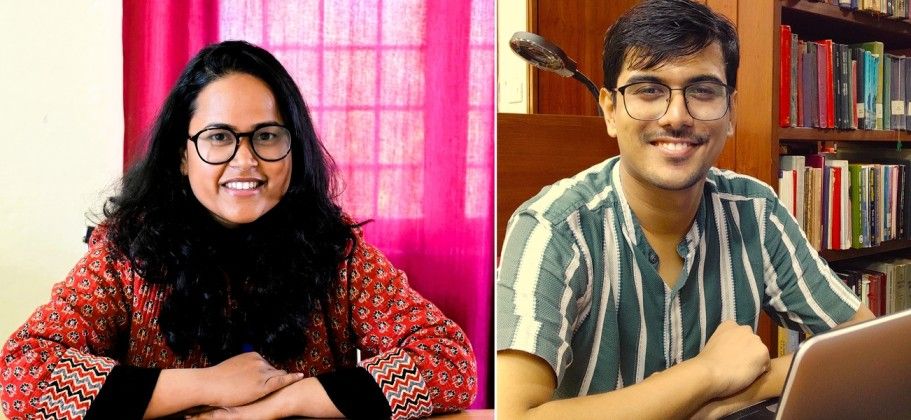
Vivek Kumar Singh, Manisha
In response to a Public Interest Litigation (PIL) filed by Radhika Vemula and Abeda Salim Tadvi—the mothers of Rohith Vemula and Payal Tadvi, who both died by suicide following caste-based discrimination on university campuses—the University Grants Commission (UGC) has released the Draft Regulations 2025 for the ‘Promotion of Equity in Higher Education Institutions’, to replace the 2012 version. Recently, the Supreme Court permitted the UGC to notify these regulations, even as it constituted a separate National Task Force to investigate the causes of student suicides in a separate case. In this context, a close reading of the new regulations is both timely and essential. While the regulations claim to promote “full equity and inclusion,” a detailed analysis suggests that it instead marks a regression.
Narrowing the grounds and scope of discrimination
The 2025 Draft Regulations define discrimination as “any unfair, differential, or biased treatment or any such act against any stakeholder on the grounds only of religion, race, caste, sex, place of birth, or any of them.” This marks a significant dilution from the more inclusive 2012 definition, which recognised discrimination as “depriving a student or a group of students based on caste, creed, religion, language, ethnicity, gender, disability, of access to education of any type or at any level” and “imposing conditions on any student or group of students which are incompatible with the dignity of human.” Instead of broadening the grounds of protection to include discrimination based on sexuality, disability, and gender, the new draft takes a big step back, removing gender, disability, creed, language and ethnicity. No justification is offered, nor are alternative mechanisms for redressal specified.
The new draft also removes several critical terms, such as harassment, victimisation, and unfavourable treatment, which had been clearly defined earlier. The earlier regulations listed explicit examples of what behaviour would constitute discrimination, for instance, breaching reservation policy, discrimination in admission, announcing the caste or category of a student, making them sit separately, not allowing access or assigning work in the lab, etc. The new draft removes all these concrete examples, leaving only a very vague and broad definition of discrimination, which would make it difficult to make claims of discrimination.
While the Regulations claim to protect students, faculty members, and staff, the scope of protection remains ambiguous. The term “staff” is defined as “persons, other than faculty members, who are working for the Higher Education in India (HEI), but it is unclear whether this includes contractual workers such as sanitation staff, security guards, and other outsourced personnel—many of whom belong to marginalised caste communities. If a contractual worker from an SC background faces caste-based discrimination from a professor or student, would these regulations offer any protection or redressal? The absence of clarity raises serious concerns about the inclusivity and enforceability of the proposed framework.
At one place, caste-based discrimination has been misspelt as “Cate-based discrimination”, and preventing is misspelt as “preveniting”. While these may seem minor, such lapses in an official policy document addressing systemic discrimination are revealing.
Equal Opportunity Centres: Toothless body in a new avatar?
The regulations provide for the establishment of Equal Opportunity Centres for effective implementation of policies and to provide “guidance and counselling” and “enquire into discrimination complaints.” It is unclear how the proposed Equal Opportunity Centres will be different and more effective than the Equal Opportunity Cell made under the 2012 Regulations and the other cells already established in the HEIs. Has any review been conducted to assess the functioning or failures of these existing mechanisms? What will happen to them under the new framework? Will they be dismantled or operate in parallel? And what becomes of the pending cases currently under their purview? Instead of offering answers, the draft raises a host of unresolved questions.
Another critical concern is the high degree of power given to the Head of the Institution, who will serve as the ex-officio Chairperson and will nominate a permanent professor as the Coordinator of the Centre. The Equity Committee will also include four senior faculty members, two civil society representatives, and two student representatives (as special invitees). No transparent selection procedure is prescribed here, effectively giving the Head unchecked authority over appointments. Giving such expansive powers to the Head, who would be interested in maintaining the image of the institution and his administration, would be contrary to the principles of natural justice, particularly the rule against bias. Can we reasonably expect such a committee to conduct impartial and objective inquiries into allegations of discrimination against the institution?
Instead of having elected student representatives to ensure accountability and scrutiny, the two student representatives are to be nominated based on academic merit. They are not counted toward the quorum, making this a nominal and symbolic position. Similarly, out of the total members, at least one should be a woman, one from the SC and one from the ST categories, which is nominal representation at best. A body meant to ensure equity must be genuinely representative, remove all possibilities and suspicions of bias, and give power to those excluded so far. Lord Hewart’s famous statement is worth remembering here: “Justice must not only be done but must also be seen to be done.”
The Draft Regulations are conspicuously silent on the decision-making processes of the Equity Committee, especially in the case of disagreements between members. While it states that appropriate action is to be taken by the Equity Committee within 24 hours, it is nowhere defined what these actions could include. Can it include the suspension of a Professor or the Registrar? What are the punishments that the Committee can give? The draft provides no answers.
Instead of setting out clear procedures, mechanisms, and punishments, the UGC has left these to the discretion of individual HEIs. This is likely to lead to a frustrating and incomprehensible variation of procedures, mechanisms and punishments based on the perceptions and bias of the Head of the HEIs. In a country where institutional responses to caste and identity-based discrimination are already uneven, such variations risk undermining the very goal of equity that the regulations claim to promote. Why did the UGC not lay down standard procedures, framework and punishments in such a vital document?
The draft states that the consequence of non-compliance could be the HEI getting debarred from UGC schemes, offering degree programmes, or being removed from the list of HEIs maintained under the UGC Act. While it is essential to have consequences for institutional discrimination, how would punishing the entire HEI redress the harm done to a person who has faced discrimination? The lack of any punishment for individual perpetrators is puzzling.
What would happen if the Head of the Institution does not constitute the committee, call meetings, or conduct an enquiry? The lack of individual accountability measures is concerning and likely to make it difficult to prosecute any person.
The Equity Committee also appears toothless. It is similar to any other inquiry committee set up to inquire and submit its reports. The decision-making power resides with the Head of the institution, who may easily manipulate and not take any action to suppress the case, so that the institution remains ‘casteless’ and its reputation is not compromised.
The draft also proposes to set up ‘Equity Squads’ to ‘maintain vigil’ across the campus. The members will ‘visit the vulnerable spots frequently’ and submit their report to the Centre’s coordinator. It also asks to designate one stakeholder as ‘Equity Ambassador’ who shall work to ‘implement the programmes and activities of the centre.’ However, their role remains restricted to creating awareness and submitting reports.
Shifting Perception
There is a marked shift in the terminology. A telling line lists the function of the Centre as “to promote equity.. eliminate perception of discrimination.” What does the phrase perception of discrimination mean? Are people wrongly perceiving that they are being discriminated against? Eliminating the perception of discrimination seems more important than eliminating discrimination itself. Another shift is invoking the language of “help” instead of asserting the language of rights and human dignity.
There are also protections against false complaints, which can lead to fines and disciplinary proceedings. What exactly would constitute a false complaint? Would any non-conclusive complaint be treated as false? Is there any past data on false complaints that warrants this provision? It creates a threat or fear for anyone filing a complaint, especially considering the inherent power imbalance in instances of discrimination.
Missing Evaluation and Data
As pointed out earlier, there has been no systematic evaluation of the existing Equality Opportunity Cells and SC/ST/OBC cells in HEIs for many years. What is the level of compliance of the HEIs with the 2012 Rules? Has there been an evaluation of their effectiveness in addressing discrimination? What is the consequence for the HEIs for their non-compliance with these rules or for the violation of reservation norms by HEIs?
Due to the lack of consolidated data, the Supreme Court directed the UGC to collect the data and respond. As per reports, the affidavit filed by the UGC in the Supreme Court on 27th Feb 2025 states that it had received 3522 responses from higher education institutions, including 45 Central universities, 293 State universities, 269 private universities, 103 deemed-to-be universities and 2812 colleges. Based on the information received, the UGC said 3067 Equal Opportunity Cells and 3273 SC/ST Cells were set up. “The number of total caste discrimination complaints received by these Cells so far is 1503, out of which 1426 complaints have been resolved,” the UGC informed the top court. The UGC said 1314 complaints were received under the 2012 Regulations, out of which 1276 were resolved. There is no clarification about what resolution means here, and there is no mention of the outcome in these cases. This data needs to be made publicly available for scrutiny.
Many HEIs have not responded to the queries on Equal Opportunity Cells. Anecdotal evidence suggests that EOCs in most HEIs are rarely active and do not maintain any transparent data portal on discrimination. A cursory search for the details of the mandated Anti-Discrimination Officer in several Universities and colleges yields no results, indicating the abysmal implementation of the existing regulations. Instead of creating similar bodies without much power, the focus should have been on finding ways to effectively deal with discrimination by increasing accountability.
While there is a recommendation for an online portal for reporting, there is none for monitoring the cases. It is puzzling why the UGC has not created an online consolidated portal where the number of complaints, their status, number of convictions/acquittals, nature of punishment, etc., is publicly available. While UGC has created a University Activity Monitoring Portal to collect data on the Action Taken Report, the data is not public, marking another lost opportunity for transparency. It shows the reluctance to discuss the vital issue of discrimination in HEIs publicly. The UGC must put the data collected at the UAMP in the public domain (after sufficient anonymisation if required).
Some Suggestions for accountability and effectiveness
The lacunae of the existing and the proposed “Equity Regulations” point to the need for several changes to effectively tackle discrimination. We conclude by discussing a few suggestions that can increase accountability.
Maintaining a public portal to show institute-level as well as consolidated data on the complaints of discrimination, their current status, the results, the punishment given, and other relevant details should be the immediate starting point. This will ensure that the problem receives the deserved acknowledgement and is subject to consistent public scrutiny.
Instead of having a vague definition, the Regulations should include and clearly define discrimination, harassment, and victimisation by explicitly listing the actions that could amount to them. Since the regulations aim at equity and inclusion in general, this can be used as an opportunity to extend provisions of protection against discrimination based on caste and other identities, including disability, sexuality, and religion. Including a detailed list of actions for what may constitute discrimination based on different identities would add the necessary teeth to the regulation and increase the possibility of getting justice. Considering the issue’s importance, the UGC should extend the deadline for feedback on the draft and allow for longer, broader and more detailed consultation with stakeholders instead of passing hastily-made regulations.
To ensure that principles of natural justice are followed, there must be adequate safeguards regarding membership in the proposed Equal Opportunity Centres. The membership should be significantly more representative and democratic, with a higher number from marginalised sections like SC/ST/OBC/PWD/women, with the Chairperson coming from among them. Student members should be elected, and their presence should be mandatory for the quorum. Additionally, there should be members from outside the HEIs with a proven record of working on social issues to reduce the possibility of bias. No person on whom there may be a reasonable suspicion of bias should be appointed as a member. All decisions should be made through majority, with no power of veto to the chairperson.
To ensure accountability, there should be a mandatory requirement for reporting the details of the cases and the actions taken with bodies such as the National Commission for Scheduled Castes/ National Commission for Scheduled Tribes/ National Commission for Minorities/ National Commissions for Backward Classes/Chief Commissioner for Persons with Disabilities, among others. These bodies should supervise the inquiry and offer an appeal mechanism if the complainant feels that HEI has not done justice or been fair.
Procedures, mechanisms, and punishments should be laid down in the regulations to ensure standardisation. There should be strict consequences for discrimination, with a well-defined quantum of punishment for the HEIs and the individuals involved. Non-compliance with these regulations should lead to consequences for the Committee officials. Necessary amendments must be made to the UGC regulations to explicitly recognise ragging based on caste, gender, sexuality, disability, etc.
Another major concern that remains unaddressed is the reserved seats not being filled in the faculty recruitment across institutions. Without ensuring faculty and staff representation from different sections of society, one cannot expect “social inclusion”. UGC must collect the data and make it public. There should be a focus on creating positive attitudes towards reservations and other Affirmative Action policies.
The use of the terms “Full Equity and Inclusion” dilutes the protections to marginalised communities and is a classic case of whitewashing. A sincere and earnest rethink is required to make the Higher Education Institutions genuinely inclusive and fair spaces.
References
Bhatt, R. (2023, November 29). Death by suicide of a 16-year-old queer person: Why don’t you care when we are bullied? The Indian Express. https://indianexpress.com/article/opinion/death-by-suicide-of-a-16-year-old-queer-person-the-politics-of-palatability-and-the-failure-to-protect-children-9044073/
Nesan, L. J. (2025, March 14). Can the 2025 draft regulation ensure equity? Addressing discrimination in higher education. The Hindu. https://www.thehindu.com/education/assessing-the-shortcomings-in-the-2025-draft-ugc-regulation-on-equity/article69329508.ece
Pillai, G. S. (2025, March 1). Does UGC’s Draft Equity Regulations 2025 Fall Short? Students’ Group Highlight OBC Exclusion, Flawed Committees, and More. The Mooknayak English – Voice Of The Voiceless. https://en.themooknayak.com/education/does-ugcs-draft-equity-regulations-2025-truly-promote-inclusion-heres-what-aiobcsa-says
Rajagopal, K. (2025, February 28). Draft anti-discrimination regulations give UGC power to derecognise non-compliant universities: Centre to SC. The Hindu. https://www.thehindu.com/news/national/draft-anti-discrimination-regulations-give-ugc-power-to-derecognise-non-compliant-universities-centre-to-sc/article69274418.ece
Shantha, S. (2024, February 7). UGC’s Committee to Probe Caste Discrimination on Campuses Offers No Solutions. The Wire. https://thewire.in/caste/ugcs-committee-to-probe-caste-discrimination-on-campuses-offers-no-solutions
~~~
Vivek Kumar Singh is a PhD Scholar at the Centre for Political Studies, Jawaharlal Nehru University. Email: vivs.94@gmail.com
Manisha is a PhD Scholar at the Department of Political Science, University of Delhi. Email: asstprofmanisha@gmail.com