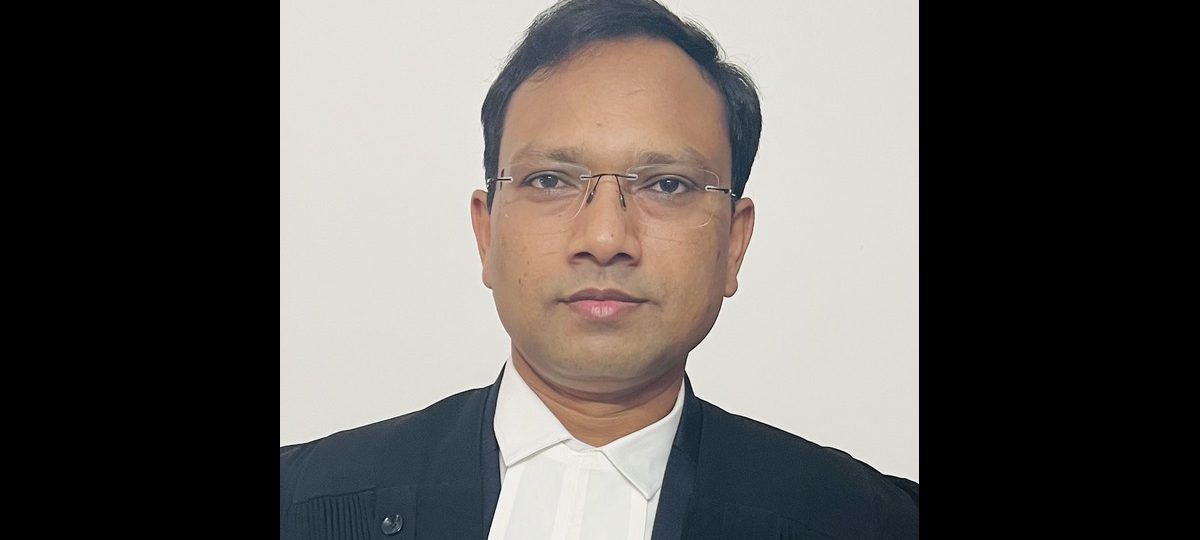
Samaan Shekhar
Dr Ambedkar inherited the legacy of social movements from Jotiba Phule, who pioneered them in modern India. Here, we are referring to social movements that seek to achieve equality, liberty, and justice. For the sake of convenience and brevity, let us call these movements “movements for social equality.” Dr Ambedkar remains the most prominent leader of such movements in the twentieth century. His approach to achieving equality not only defined his own times but also shaped the trajectory of these movements in the seven decades following his death.
To understand the present and future, we must first examine what constituted Dr Ambedkar’s social movement for equality—his approach and strategy. The ultimate objective of his social and political work was the establishment of equality, liberty, justice, and fraternity in society. He was a pragmatist par excellence, and this quality defined his methods. He remained flexible, ready to adopt different paths depending on the situation. He did not confine himself to any one field or method; rather, he remained open to new ways of achieving his goals. He was clear about his ends and adaptable in his means.
If one were to identify the defining characteristics of his movement, they would include: 1. Legal and constitutional methods; 2. Non-violence; 3. Collaboration; 4. Charismatic leadership; 5. Pragmatism; 6. Engagement with religion
Dr Ambedkar achieved several intermediate objectives. While his ultimate vision was only partially realised during his lifetime, even that limited success was transformative. It lifted a large section of society from a life of inhuman deprivation to one of relative dignity—both during his lifetime and in the years that followed.
Over the past seven decades, many social movements have claimed to carry forward his legacy. However, an objective analysis does not fully support this claim. This observation is not meant to diminish the sacrifices, commitment, or hard work of countless individuals involved in these movements. Rather, it is an assessment of their overall direction and achievements.
Post-Ambedkar social movements have largely retained two features of his approach: charismatic leadership and a commitment to non-violence. Most movements, despite claims to the contrary, have been centred around individuals. Beyond these two aspects, however, there has been a noticeable departure.
There has been limited engagement with legal and constitutional mechanisms as instruments of change. While Dr Ambedkar eventually turned to religion as a means of transformation, many later movements have avoided engaging with religion altogether, treating it almost as a taboo. Culture, too, has been neglected, even though the very structures they sought to challenge are deeply rooted in cultural practices and beliefs.
Equally significant has been the failure to collaborate—both with stakeholders whose participation is essential for change and with other movements working toward similar goals. Dr Ambedkar worked with individuals across communities, including Brahmins. He opposed Brahminism as an ideology while collaborating with individuals to dismantle it. In contrast, later movements often drew rigid boundaries, excluding those who could have contributed meaningfully to their cause. In doing so, they sometimes mistook individuals for the ideology they opposed.
Another critical departure has been the lack of pragmatism. Many movements appear to have become rigid, unable to adapt to changing circumstances or to explore new methods. This has limited their effectiveness in a rapidly evolving social context.
The social movements of the present and future must therefore revisit and understand Dr Ambedkar’s approach more deeply. They must adopt what remains relevant and be willing to discard what no longer serves the purpose. Pragmatism must once again become central.
They must actively use legislative and constitutional tools. They must enter the cultural domain and harness its immense power for social transformation. They must also engage with religion thoughtfully, recognising its potential as an instrument of change.
At the same time, certain features of earlier movements may need reconsideration—not because they were inherently flawed, but because they may have become less effective today. Charismatic leadership is one such feature. In contemporary conditions, this model often leads to internal conflicts, organisational fragmentation, and, at times, the capture of movements by individuals. The need of the hour is a shift toward collective and institutional leadership.
Collaboration must become a foundational principle. Movements must engage with all stakeholders, including those perceived as adversaries. They must not close their doors. Partnerships with organisations pursuing similar objectives can create synergy and amplify impact.
Adaptability is equally crucial. Social movements must remain responsive to changing times, adopting new methods and strategies. The use of emerging technologies is indispensable in this regard. Social and digital media offer powerful platforms for outreach, while newer tools such as artificial intelligence present additional opportunities. Art, too, must be harnessed as a medium to communicate ideas and values effectively.
The youth must be at the centre of these efforts. Engagement with children, especially during their formative years, is essential—an area that has largely remained unexplored.
The question—what after Ambedkar?—can be understood through the framework of ends and means. As far as ends are concerned, the objectives he pursued—equality, liberty, justice, and fraternity—remain as relevant today as ever. To these, contemporary movements may add environmental protection, which has become an urgent necessity.
In terms of means, some of Dr Ambedkar’s strategies remain relevant, some have gained even greater importance, and others may no longer be as effective. At the same time, new tools and methods are now available. The success of social movements today will depend on their ability to adapt—to retain clarity of purpose while innovating in practice. That, perhaps, is the true direction of social movements after Ambedkar.
~~~
Samaan Shekhar is a former IAS officer and now works on social, gender and environmental issues. He can be reached at shekharsamaan@gmail.com