Showing 12 Result(s)
Atrocities

Dalit Women in Dalit Movements

joopaka subadra-300x300

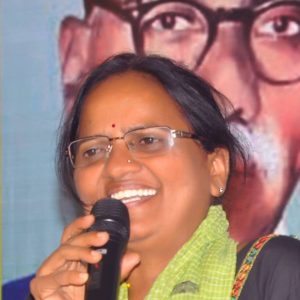
Joopaka Subhadra Dalit women are looked down upon culturally as inferiors and untouchables. They remain away from the village with no education and employment. They are subjected to economic oppression, labour exploitation, authority of the feudal lords outside and of the patriarchy at home. They are slaves of slaves.  Dalit women are expected to remain …

Assertion

Narappa: A critical review

  Bhavani Etikala In Telugu cinema, caste issues and atrocities were untouched concepts on the big screen until late. In 2020, Palasa 1978, a period-revenge-drama set in the 80’s, was released. Debut director Karuna Kumar said that the film was based on real incidents. The movie acknowledged the deep rooted reality of castesim in the …

Features

Rest in power, Bojja Tharakam Sir!

bojja tharakam 1

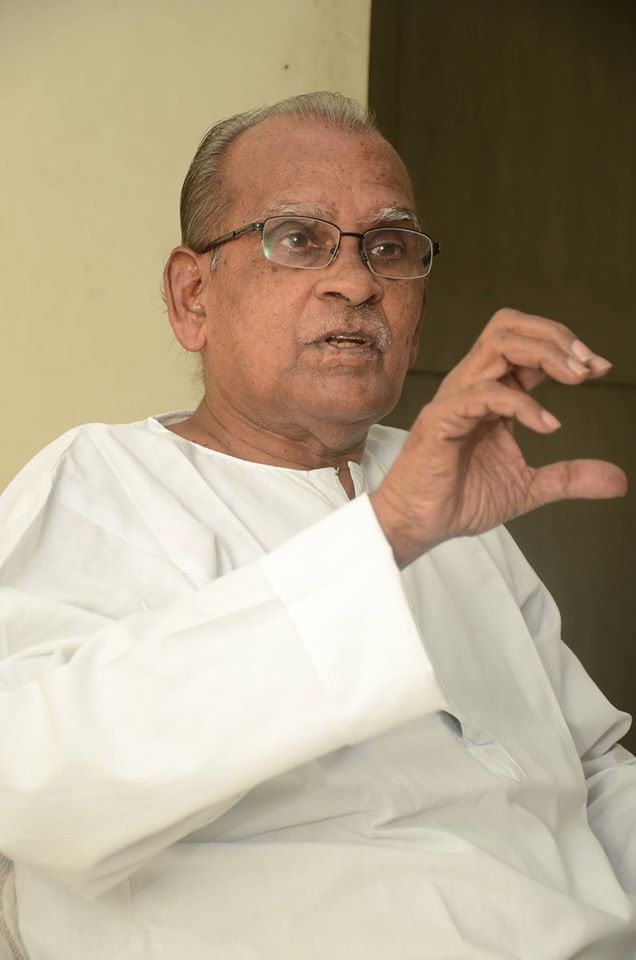
  Karthik Navayan Bojja Tharakam (1939-2016). From Radical Students Union (RSU), Scheduled Castes Federation (SCF), Scheduled Castes Students’ Federation (SCSF), Ambedkar Yuvajana Sangham (AYS), Rythu Coolie Sangham (RCS – Farm Workers’ Union of which he was an advisor), Republican Party of India to Andhra Pradesh Dalita Mahasabha. From a student leader organising a month long …

Features

Duddu Prabhakar: Dalit movement at a crossroads

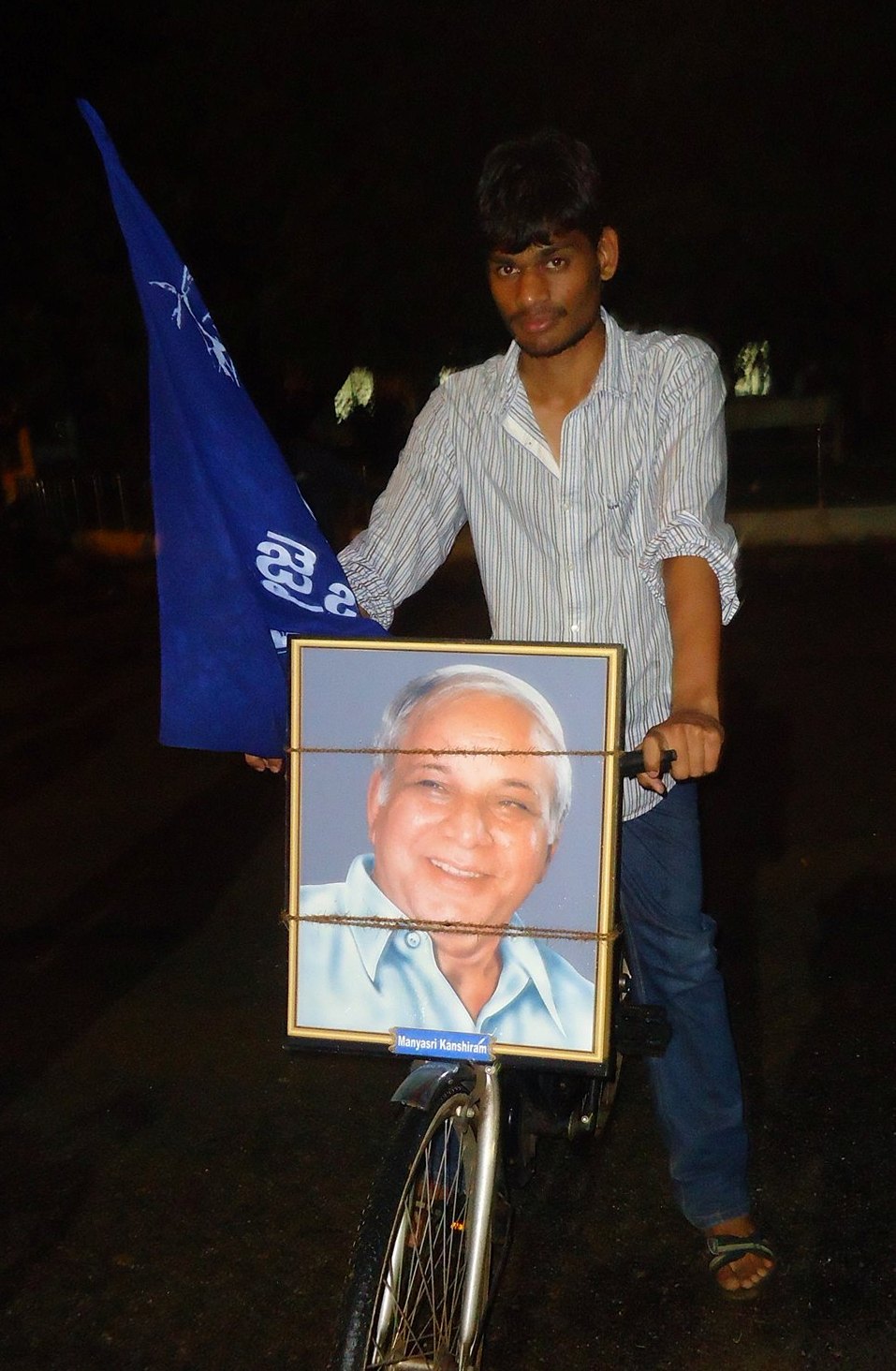
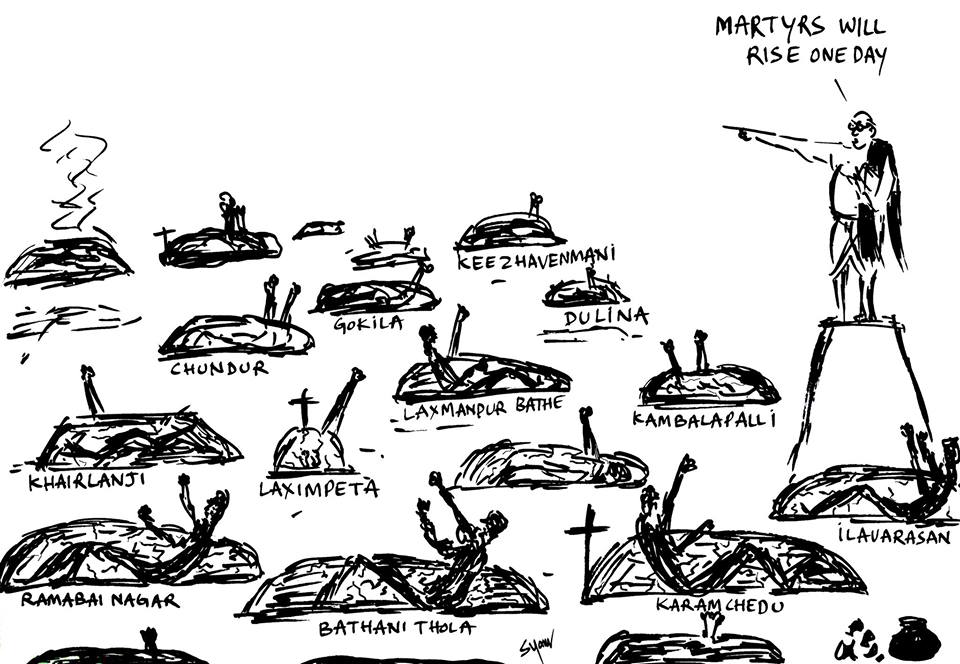
  Dalit Camera: Through Un-Touchable Eyes [In this interview Duddu Prabhakar, veteran Dalit rights activist and President of the ‘Kula Nirmoolana Porata Samithi’ (‘Struggle Committee for Eradication of Caste’, roughly), traces the history of the Dalit movement in Andhra Pradesh from Karamchedu in 1985 to Lakshimpeta in 2012, and says the movement now has to decide …