
Gail Omvedt (First published in September 1990) Any caste based reservation system, in this case the Mandal Commission, has to be judged in terms of what it can do and not in terms of what it is not supposed to do—and in this case its goal is the limited but important one of ending caste …
On Inclusiveness: Challenges of Inclusive Society, Economy and Polity in India
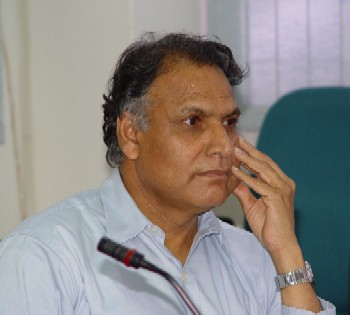
Sukhadeo Thorat (M.N. Roy Memorial Lecture, March 24, 2012) I feel honored to have been invited to deliver the 2012, M.N. Roy Memorial lecture by the Indian Renaissance Institute and Indian Radical Humanist Association. M.N Roy was a great visionary, thinker and a visionary with a particular vision for India. Everybody knows about his contribution …
A paradigm shift called Kanshi Ram
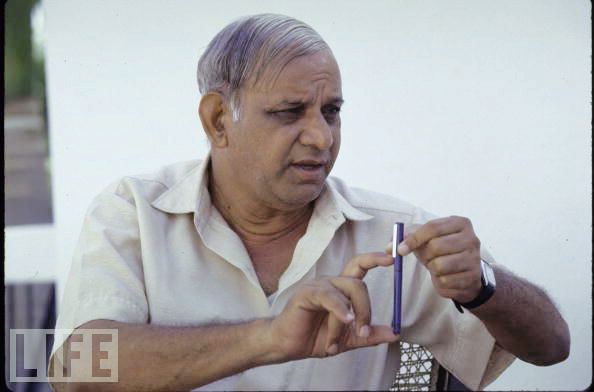
Kancha Ilaiah [This article was first published in two parts, ‘A paradigm shift called Kanshi Ram’ and ‘Dalits and the horizontal ladder’, in 2003; we have combined the two parts into one single piece of writing. We, along with our readers, celebrate the memory of Manyawar Kanshi Ram on his birth anniversary- Round Table …
The Chamcha Age (An Era of the Stooges) – Preface
by Kanshi Ram (Released on 24th September, 1982, on the occasion of the 50th Anniversary of Poona Pact) ~~~~~ Dedicated to Mahatma Jotirao Phule Whose initiation of cultural revolt in colonial India, later taken up by Babasaheb Dr. B.R. Ambedkar, Periyar E.V. Ramaswamy and many other rebellious spirits brought us …
Hindutva and ethnicity
Gail Omvedt (First published in February 2003) The antagonism to conversion rests on an ideological foundation which takes ethnicity, that is a presumed community of blood and heritage, as central. IN 1996, during a six-month employment in Bhubaneshwar, fascinated by the beauty and antiquity of the area, I travelled with friends to Konarak and to …
Neobrahmanism, human rights and social democracy
Braj Ranjan Mani (First published in 2009) The image of India is that of a democratic, multicultural, inclusive society. But more often than not, appearances are not reality. India is a republic—a secular, socialist, democratic republic—where millions of children, women and men remain demoralised, enslaved to the powerful, crying out for fundamentals of life. Fragmented …
Buddhism and Politics in Uttar Pradesh: Recent Developments (Part II)
Shiv Shankar Das ( Continued from here) The promotion of Buddhist cultural symbols in public sphere by Mayawati led government is driven by the following three strong factors. 1. The Ideology of Kanshi Ram (1934-2006): Cultural Change is a Durable Change Kanshi Ram’s ideology to emancipate the Bahujan Samaj is very important to understand …
Buddhism and Politics in Uttar Pradesh: Recent Developments
Shiv Shankar Das Abstract: The present research note highlights the relationship and the reasons behind the association between the lower caste politics and Buddhism in Uttar Pradesh, the most populated state in India next only to China, United States, Brazil and Russia. There are three reasons behind this association. First, the currently ruling Bahujan Samaj Party’s founder …
4.5 Percent OBC Religious Minority Sub-quota: A Disservice To Secular Nationalism
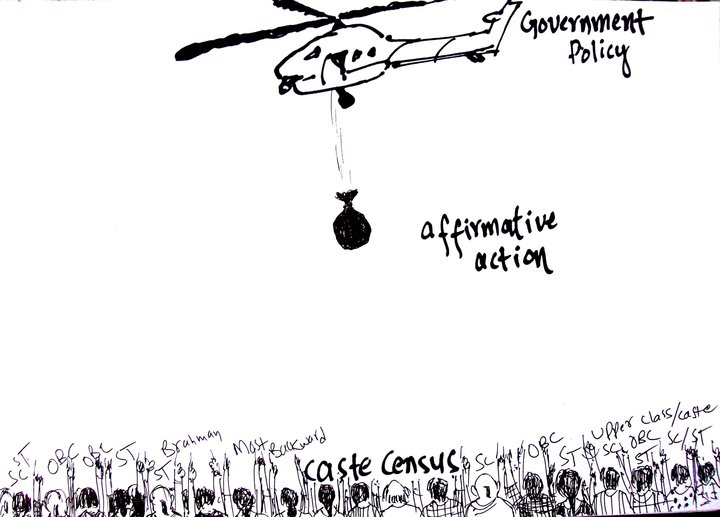
Ashok Yadav 01. Overwhelming majority of population who have been discriminated against and oppressed on the basis of their caste identity since time immemorial and the history of bloody religious conflicts before, during and after independence in 1947 make social justice and secularism the two pillars on which the entire democratic structure of our …