Ankita Chatterjee
My father has a mental health issue that I could never pronounce at my young age. I saw my mother’s tensed face as she was running from one psychiatrist to another to make sense of what was happening to him. My mother, who had completed her graduation, was married off with the hope that her husband would take care of her needs. But the role was reversed, where she experienced constant accusations of degrading her husband’s mental health. She became the sole caregiver of her husband and her daughters. As a mother of two young daughters who were still in their infancy in the 1990s, she could not give up on her daughters.
My father’s illness defined what it means to be a semi-outcasted in a brahmin family. At a neoliberal time in a brahmin family, statues and respect were tied to one’s occupation, and honour was tied to the caste position. My father was a government employee before his mental illness was detected. His work and promotion suffered due to the heavy dosage of psychiatric medicines. The occupational status is tied to someone’s personal attributes of carrying out their duty and taking care of the family. He failed as the structure of the office is based on an able-bodied man with no diagnosed mental health issues. Schizophrenia was closely tied to his identity. One ascriptive attribute that kept him safe was his caste position of being a Brahmin man.
My mind as a child grappled with the stigma associated with my father’s mental health in various ways. It was there in my mother’s constant vigilance of my father’s behaviour and trying to regulate him in social events. I remember that my grandparents, uncle, and aunt would initially not invite us to any social gathering, as my father would be a source of stigma for the whole family. The psychiatrist only prescribed a heavy dosage of medicines and never looked at the biography and the experiences of the person. Therapy was a remote concept, and even the psychiatrists were ignorant in the metropolitan city of Kolkata during the 1990s. My father’s mental health was something to hide. I often saw my father’s fingers crooked, an effect of the heavy medication that he used to take. There were times as a child when I kept straightening his fingers, but it would again go back to their crooked state. My mother strictly told me not to reveal my father’s mental health condition in school for fear of being targeted. Mental illness was seen as a disability, and its knowledge brought shame to the family. It showed that genetically the family was afflicted with the curse that was passed on during birth, and for a long time, I thought that there was something wrong with our family, and as a child, I carried the stigma around with the fear of not revealing it to anyone in school and even in college.
The safeguards My Father got as a Brahmin Man
It was later, when I came to Jawaharlal Nehru University, that I realised the greater stigma attached to untouchability (the caste question) that is also ascriptive in nature. Even though there was stigma related to my father’s mental health, he was in a government job that he got on his father’s recommendation. The generational connection of being from a Brahmin caste helped him to secure a job that safeguarded our future by finishing our school education in a precarious situation where we always feared the loss of his job. His caste position also made some people perceive him as a pious person, especially among his colleagues who believed in the brahmin superiority of the Hindu religion. Ramkrishna Paramhamsa, the revered Indian mystic of the 19th century, born into a brahmin family and followed by many Bengalis, often exhibited eccentric behaviours, and these were associated with his vision of seeing God. Although there were occasional insults and complaints that my father received from his relatives and colleagues, he was considered incompetent because of his mental health. His parents believed that had he been of a sound mind, he would have worked well because he belonged to the superior caste status of brahmin, who are known for their intellectualism and creativity. This made me question later in life, what if my father belonged to an oppressed category? This was a result of my long stay at Jawaharlal Nehru University, where Ambedkarite politics emerged as a powerful platform for articulating the oppression and advancing the rights of the marginalized groups, even in an egalitarian university space. I often thought, what if a first-generation learner from marginalized castes had the same mental health problems as my father, would he get the support and help from the people around, or the awareness that the mental health issue needs psychiatric treatment with counselling that comes with a higher financial cost?
Mental Health in the Margins
The public world is seen as the world of strength, performance, and production, where the Dalit Bahujan and Adivasi bodies are more under surveillance because of the incompetence attached to their marginalized identity. Mental health is often termed as a middle-class problem. This is not to say that the marginalised people do not experience mental health issues, but the matrix of stigma attached to their identity and mental health issues is compounded by the hyper-productivity of capitalism, where they have to prove their merit in institutional structures and policies pitted against them. Therefore, it is essential to engage in discussions surrounding the structural determinants of mental health issues. While genetic factors may predispose a person to mental health issues, these conditions are often exacerbated by the structural inequalities and the cultural stereotypes that are present in society
Conclusion
Today, as a Brahmin woman, I could afford to take a break for a few months because of my health condition and extreme anxiety of working in a counterproductive environment where research ideas are suppressed for managerial work and shadow writing is promoted for eminent people in positions of power. As someone from a privileged caste, I could still afford to stay at home and get support from my family and friends. My goal is to show how mental health privilege is also embedded in caste structure, where marginalised caste groups are still affected by a reduction in their life chances for a better opportunity in occupations, and also psychological well-being. My father still boasts that even after his mental health issue, he continued in his life somehow and did not stop. I point out to him that it is because of the social capital that came with caste privilege and the innumerable sacrifices and services that my mother provided. This is a result of Brahmanical patriarchy, where women’s identity was only tied to the services they could provide in the private sphere when she was financially dependent with less social support.
~~~
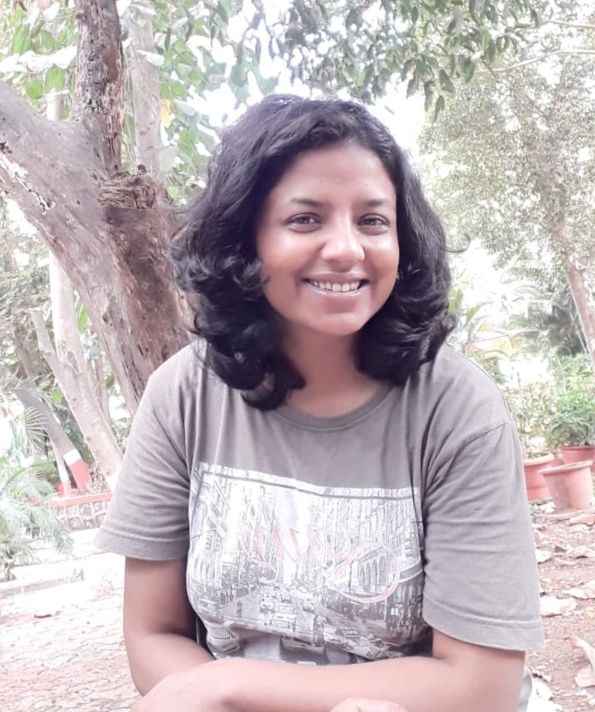
Dr. Ankita Chatterjee completed her PhD from Jawaharlal Nehru University. 2022. Her discipline is Sociology.
Note: The author has permission from her father to share health-related information.
.